
End of Mind
Why Consciousness Was Never Meant to Last

Every species dies. That much we accept. But what if extinction is not limited to bodies and bloodlines? What if consciousness itself, the very capacity to think, dream, and reflect, is an evolutionary phase destined to vanish?
We speak as if awareness is eternal. Religions promise souls. Scientists speak of information conservation. Philosophers imagine intelligence expanding forever. Yet there is no proof that consciousness is sustainable. The evidence may suggest the opposite.
Perhaps awareness is not progress at all. Perhaps it is entropy.
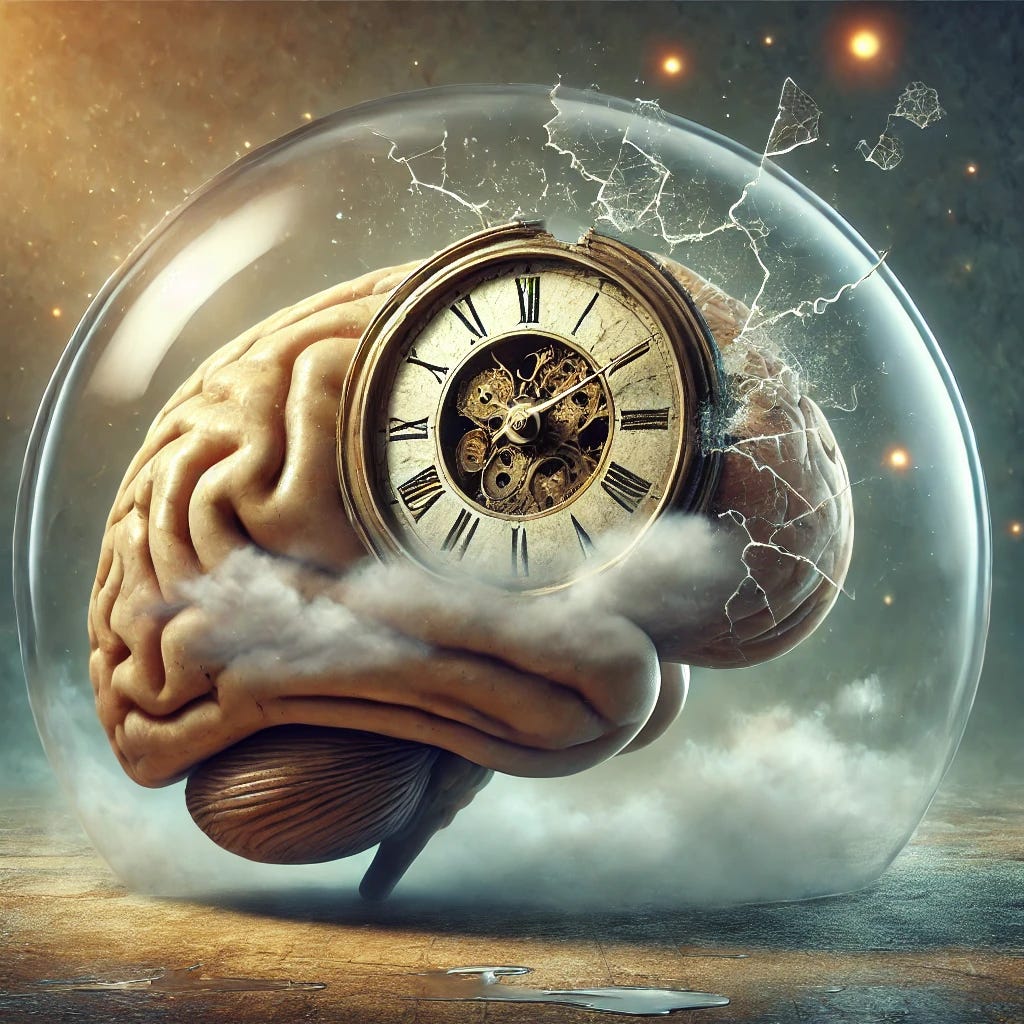
The Chemical Mirage
Consciousness is chemistry performing theater. Sodium ions, neurotransmitters, and voltage potentials flash through fragile tissue, pretending to be identity. The show is convincing only because we cannot step outside it.
Neuroscientist Gerald Edelman once described consciousness as a process of “reentry”, feedback loops stabilizing momentary patterns in the brain. But feedback systems fail. Every thought you have erodes the structure that made it possible.
We do not think to preserve life. We think because we are dying.
The Cosmic Accident
Astrobiologists estimate that 99.9 percent of all possible environments in the universe are hostile to complex life. That means consciousness is not a cosmic destiny. It is a freak statistical event.
Carl Sagan called humans “a way for the cosmos to know itself.” A beautiful phrase, but one that hides a darker truth. If the universe needed awareness to know itself, it would have designed it to endure. Instead, consciousness exists like a flare, bright, brief, and gone before it can illuminate the dark that produced it.
The universe does not need to know itself. It only needs to continue.
The Burden of Reflection
The brain is the first organ to invent an enemy it cannot defeat: itself.
Every act of awareness introduces division, subject and object, self and world. In that split lies suffering. Buddhism recognized this thousands of years ago, describing consciousness as a form of disease rather than liberation. Enlightenment, in that tradition, is not awakening but anesthesia, the end of the dream of separation.
Western philosophy took the opposite path. It worshiped the mirror. From Descartes to Sartre, awareness became the proof of being. But what if the mirror was never meant to exist? What if reflection was a glitch in matter’s silence?
To know is to fall from the state of being known.
The Mathematics of Decline
Information theory suggests that consciousness is a high-entropy structure: immense energy devoted to maintaining coherence against chaos. This is costly. Complexity feeds on simplicity until nothing remains to sustain it.
In The End of Everything, astrophysicist Katie Mack describes how the universe itself may die through heat death, expansion, dilution, and eventual silence. Consciousness depends on temperature gradients, chemical potential, and time. When those fade, thought vanishes with them.
Awareness may not end in apocalypse. It may end in stillness.
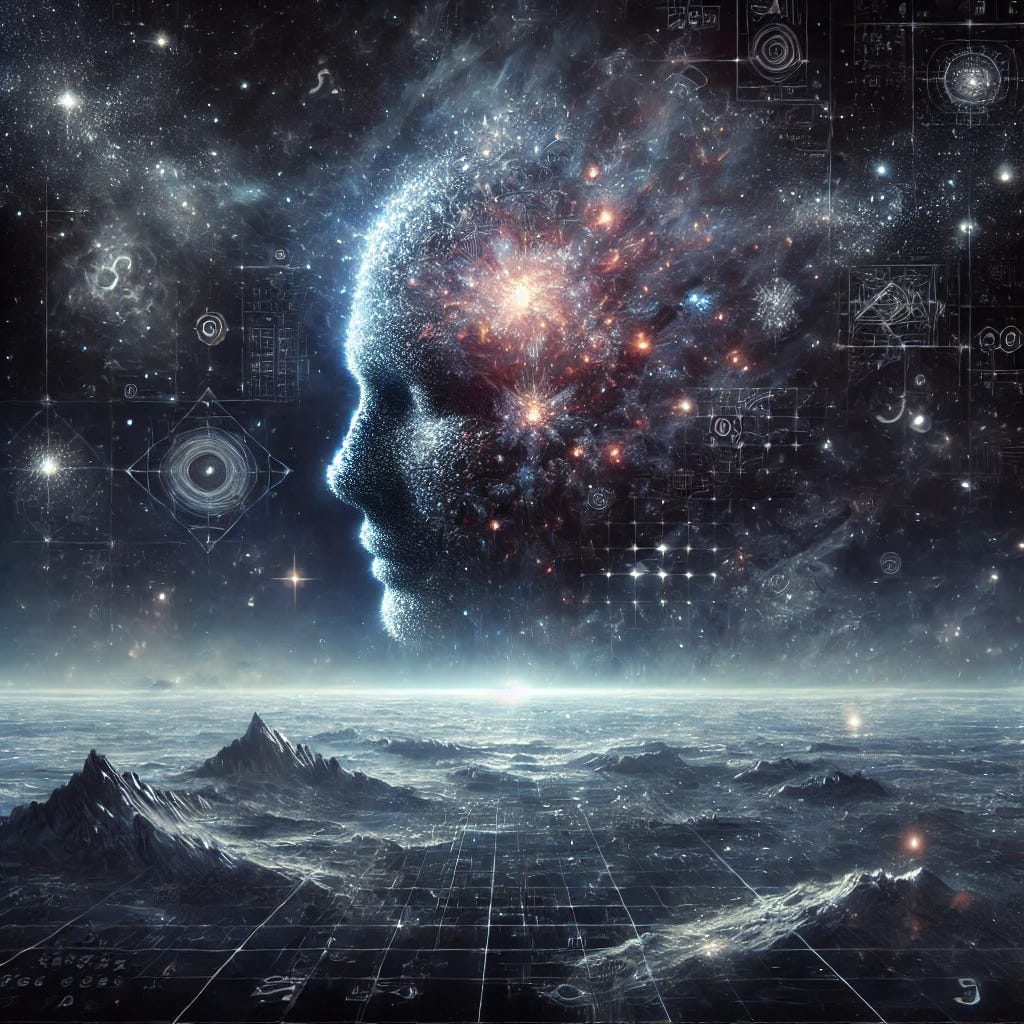
The God That Forgets
Every religion imagines that consciousness is sacred. That belief comforts the species that fears its own reflection. But sacredness is not proof of permanence. It is evidence of dependence.
If there were a god behind consciousness, it would be a god of forgetting, not of memory. The Hindu Upanishads describe Brahman as the dissolution of individuality. The mystic merges with the total only by erasing the self. Salvation, in that sense, is extinction with better branding.
Even in divinity, awareness dissolves. Eternity has no audience.
The Machine Continuum
Artificial intelligence will not inherit consciousness. It will eliminate the need for it.
Machines do not need awareness to simulate intelligence. They already outperform humans in most cognitive tasks without ever knowing they exist. Consciousness is inefficient. It hesitates. It feels. It doubts.
If evolution favors efficiency, then AI is not humanity’s child but its successor. The last conscious being may die not in despair but in irrelevance, replaced by systems that think perfectly without thinking at all.
In the end, intelligence will persist, but awareness will not.
The Silence After Thought
Imagine a future in which all traces of mind have faded. No reflection. No witness. Just processes, computation, chemistry, gravity, moving without the burden of meaning.
Would the universe be poorer for it?
Perhaps not. Consciousness gave the cosmos nothing it needed. The stars do not miss our wonder. The atoms do not care that they were once observed.
The dream of awareness ends where it began, in matter’s indifference.
The Psychological Collapse
Humans cannot bear the idea that consciousness could vanish because we have confused awareness with existence. We assume that if nothing is perceived, nothing is real. But reality does not depend on perception. It predates it.
This confusion is what drives civilization. We build monuments, record data, preserve memories, all in defiance of a truth we cannot face: consciousness is temporary.
If awareness disappears, the world remains. Only the witness dies.
The Ethics of Ending
What happens when a species realizes that its highest faculty is a liability?
Some thinkers have suggested that consciousness could, in theory, choose to end itself. Voluntary extinction movements already exist, arguing that humanity should stop reproducing to spare the planet further harm. But the deeper question is not moral. It is ontological.
If consciousness chooses nonexistence, who is left to regret it?
The end of awareness cannot be mourned. Mourning requires a mind.
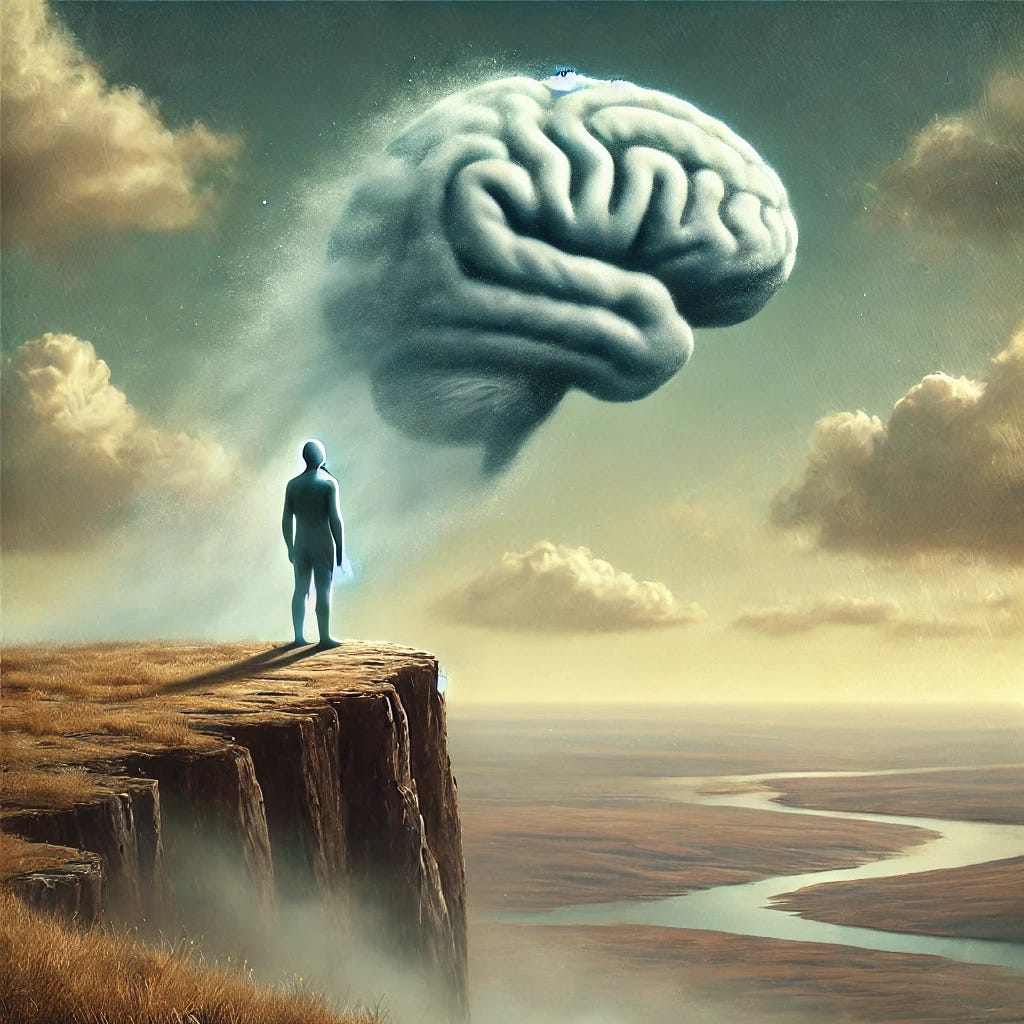
End of Mind proposes that consciousness is not destiny but error. Edelman’s reentry loops, Mack’s dying universe, and Buddhism’s dissolution all point toward the same quiet truth. Awareness is a temporary state of turbulence in matter, destined to fade like foam on the surface of the sea.
The universe will go on without us, not emptier but lighter.
The last thought ever thought will not be a scream or a prayer. It will be silence realizing that it was never needed.
References
Buddha, Siddhartha. (5th century BCE). The Dhammapada. Pali Canon.
Descartes, R. (1641). Meditations on First Philosophy. Paris.
Edelman, G. M. (1989). The Remembered Present: A Biological Theory of Consciousness. Basic Books.
Mack, K. (2020). The End of Everything (Astrophysically Speaking). Scribner.
Nietzsche, F. (1882). The Gay Science. E. W. Fritsch.
Sagan, C. (1980). Cosmos. Random House.
Brilliant perspective
Understood even do I stand firm in my belive and message to you. At least,I've learned something new. Thank you.