
Washington Clears GPT-5.6
After Cutting Off a Chicken's Head on a Giant AI Roulette Wheel

GPT-5.6 is finally being released.
That should be the story.
OpenAI’s newest model. The next benchmark fight.
The next wave of user tests. The next round of “is this AGI yet?” discourse.
GPT-5.6 passed through a new checkpoint. Government concern. Extra testing. Federal discussions. Vetted early access. Then broader release.
That matters more than the model name.
OpenAI got GPT-5.6 out.
Washington got the precedent.

GPT-5.6 Is Finally Going Public
OpenAI announced late Tuesday that its GPT-5.6 flagship model Sol, along with the lower tiers Terra and Luna, will launch publicly on Thursday, with preview access expanding globally now (CNBC, 2026).
The clearance follows a period of additional testing and direct meetings between OpenAI and government officials, with the evaluation handled by the Center for AI Standards and Innovation inside the Commerce Department, and OpenAI dispatching technical staff to Washington to answer the agency’s questions (Axios, 2026).
That sounds like a win for OpenAI. And it is.
The company gets its model to the public. Users get access. Developers get to test it. The frontier model war starts again.
But the path matters.
The model was not released freely from the beginning. A request from the Trump administration last month kept GPT-5.6 out of general circulation, confining it to roughly 20 partners whose identities had been individually cleared by federal officials (Quartz, 2026).
That means the public was not the first audience.
The state was.
The Government Says Approval Was Not Required
There is a strange wrinkle here.
The reporting frames this less as a hard licensing regime and more as case-by-case negotiation. As Axios put it, the government and the world’s most advanced AI companies are now negotiating how people get access to powerful technologies one case at a time, in real time (Axios, 2026).
That distinction may matter less than it sounds.
A company can call the process voluntary. The government can say a formal stamp was not required. The model can still be delayed. Access can still be staggered. Federal officials can still get the first look.
The framing from the ground is blunt. Quartz described the restricted rollout as a state-curated access list, a concession OpenAI made only after federal officials pressed it to delay (Quartz, 2026).
That is how soft power becomes real power.
A formal ban is one thing. A request from the people who can shape your future is another.
Frontier AI companies understand the difference. They also understand the risk of ignoring it.
The First Audience Is Changing
The old model launch had a familiar rhythm. The lab announced it. The public tested it. Journalists poked it. Researchers benchmarked it. Developers built with it. Regulators reacted later.
GPT-5.6 points to a different rhythm. The lab builds it. The government sees it. Approved partners test it. Officials discuss the risk. Then the public gets it.
That is a major shift.
The restricted rollout fit within a broader oversight structure President Trump put in place on June 2, which called for voluntary pre-release checks on the most powerful AI systems, though the GPT-5.6 situation escalated well past that voluntary baseline (Quartz, 2026).
Once a model is treated as strategic capability, normal software-launch rules stop applying.
The release becomes a security question.
Cyber Is The Trigger Again
The concern, again, is cyber.
OpenAI describes Sol as its strongest model yet in agentic capabilities across coding, biology, and cybersecurity, and its own system card treats all three models as High capability in both cybersecurity and biological and chemical risk (Let’s Data Science, 2026).
Those are exactly the capabilities that drew federal scrutiny in the first place, the same abilities OpenAI has publicly touted but that regulators wanted to examine before a broad release (Quartz, 2026).
That is the kind of profile that makes governments nervous.
A model that helps defenders find vulnerabilities can help attackers understand them. A model that writes code can help secure systems or help automate harmful workflows. A model that performs well on cyber benchmarks may be a national-security asset and a proliferation concern at the same time.
That is why GPT-5.6 got pulled into the same logic as Fable 5 and Mythos 5.
The question is no longer only how smart the model is. The question is who gets to use that smartness first.
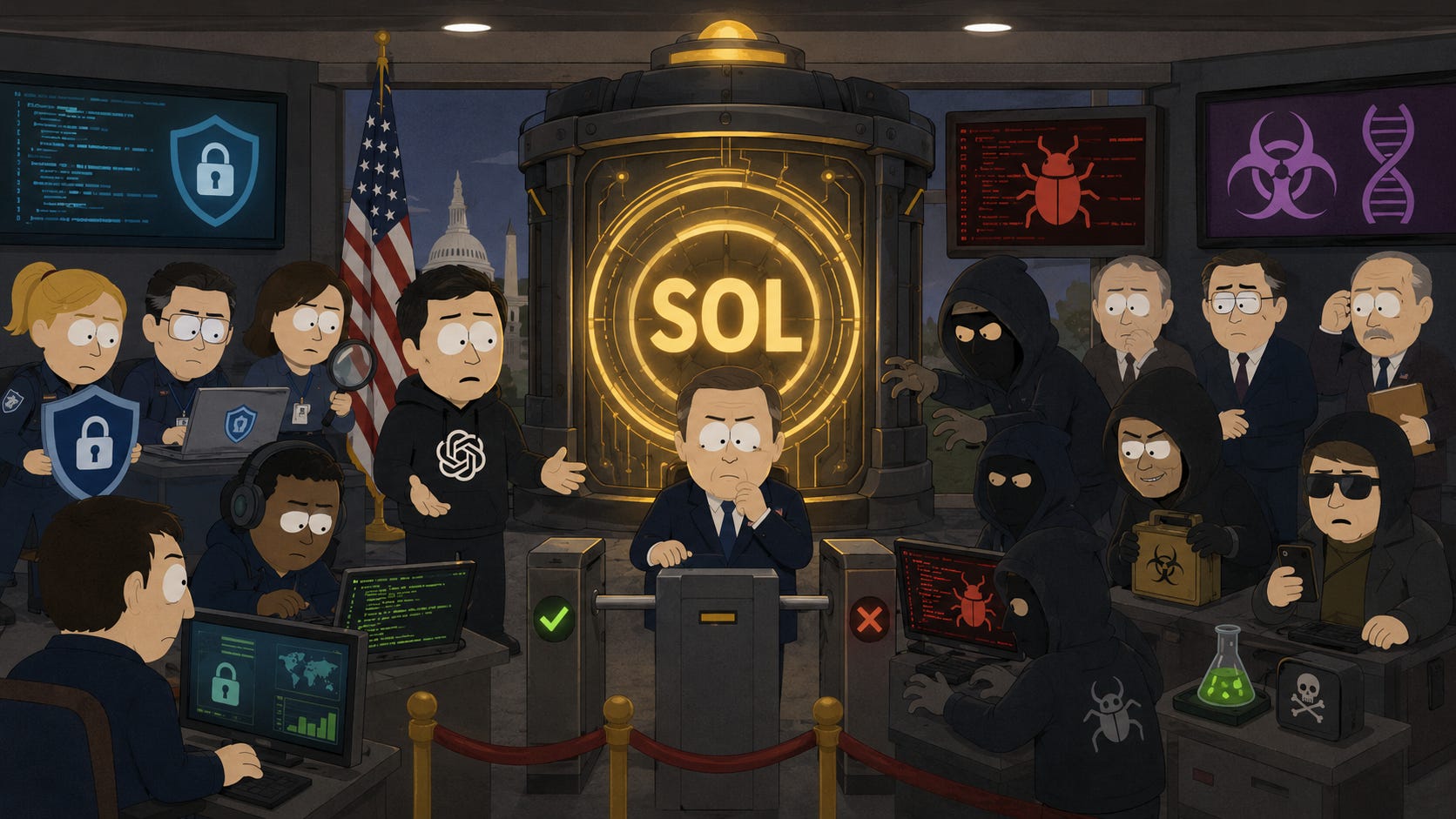
Fable 5 Set The Stage
GPT-5.6 did not arrive in isolation. It arrived right after the Fable 5 and Mythos 5 fight.
The public launch comes after OpenAI’s chief rival, Anthropic, restored access to its Claude Fable 5 and Mythos 5 models following a weeks-long clash with the government, after the Commerce Department lifted the export controls it had imposed (CNBC, 2026).
That sequence matters.
Fable 5 showed that Washington could pull back a frontier model after release. GPT-5.6 shows that Washington can shape a frontier model before broad release.
Those are different stages of the same new process. After the launch. Before the launch.
Either way, the state is now inside the release cycle.
That is the precedent.
Voluntary Review Can Become Expected Review
The June executive order asks AI developers to voluntarily provide cutting-edge models to the government to assess their capabilities ahead of a full release (CNBC, 2026).
Voluntary is the key word. But voluntary systems can harden into expectations.
Once one major lab cooperates, others may be expected to cooperate. Once one model gets reviewed, future models may be expected to follow the same path. Once a restricted rollout happens, a fully open rollout may start to look reckless.
That is how norms form. Nobody has to pass a full law for the behavior to change. The incentive changes first.
A lab that skips government consultation may be accused of ignoring national security. A lab that launches without prior testing may be blamed if something goes wrong. A lab that cooperates may get smoother treatment.
The GPT-5.6 case already shows the escalation. Commerce Secretary Howard Lutnick met with Altman to confirm that agencies across the government had reviewed the model and signed off, a level of hands-on involvement that goes beyond a checkbox (Quartz, 2026).
That is how voluntary review becomes quasi-mandatory. Not on paper. In practice.
The Public Gets The Model Later, And Not Everyone Waits Equally
The phrase “public launch” now hides a question.
Public after whom? After internal testers. After enterprise partners. After red-teamers. After government officials. After roughly 20 approved partners. After national-security discussions.
That order is not necessarily wrong. Powerful models should be tested before release, and the public should not be the first red team for cyber-capable systems.
But the order reveals a power shift. The public is becoming the second audience for frontier AI. The first audience is a smaller circle of companies, government reviewers, security officials, and approved partners.
That creates a new kind of information asymmetry, and a new kind of inequality.
Who gets into the preview? Large companies, defense contractors, government-approved partners, critical-infrastructure firms, U.S. organizations, allied governments, trusted researchers. Who waits? Startups, independent developers, foreign users, open-source researchers, small companies, normal people.
A more cautious release process can protect society. It can also concentrate capability.
That matters because AI is more than entertainment. It is productivity, coding, research, cyber defense, business operations, legal work, education, and scientific analysis. If early access confers advantage, then government-shaped access becomes market-shaping access.
The preview list becomes a power list.
This Is Also About OpenAI’s Business Risk
OpenAI needs predictable releases. The company is not a small lab anymore.
Its valuation depends on growth. Its enterprise business depends on trust. Its infrastructure spending depends on future demand. Its investors need proof that new models can actually reach the market.
A government delay, even a temporary one, is more than a policy story. It is a business risk.
If Washington can slow a model over cyber concerns, investors have to price that in. If future models require government conversations before launch, release timing becomes less certain. If foreign access becomes politically sensitive, global growth becomes more complicated.
The model can be technically ready and still politically delayed. That is the new risk premium for frontier AI.
It also helps explain OpenAI’s broader posture toward Washington. The clearance arrives as OpenAI pursues closer ties with the administration, including CEO Sam Altman’s floated proposal to give the U.S. government a 5% equity stake, an idea he has raised with senior officials including Lutnick and Treasury Secretary Scott Bessent (BeInCrypto, 2026).
When the government can shape your release cycle, alignment with the government becomes part of the strategy.
Approval Is Not The Same As Trust
The government letting GPT-5.6 launch does not mean the model is safe in every meaningful sense. It means the government and OpenAI reached a level of comfort sufficient for release.
Safety is not binary. Risk changes by user, domain, prompt, access level, integration, and deployment context.
A model that is acceptable for public launch can still create dangerous outputs. A model that passes one round of testing can still fail under new attacks. A model that looks safe today can become riskier when connected to tools, agents, code execution, browsers, biological databases, or enterprise systems.
That is why the precedent matters more than this one release. Government review cannot be theater. It has to improve real risk assessment, or it becomes a political checkbox.
And the rulebook is still being written. The standards are not settled. What makes a model review-worthy: cyber benchmarks, biology capability, autonomous-agent performance, model size, training compute, red-team results? What happens if a company disagrees with government concerns, or a rival gets more favorable treatment, or a delayed model watches foreign competitors launch anyway?
Those questions remain open. GPT-5.6 did not resolve them. It made them more urgent.
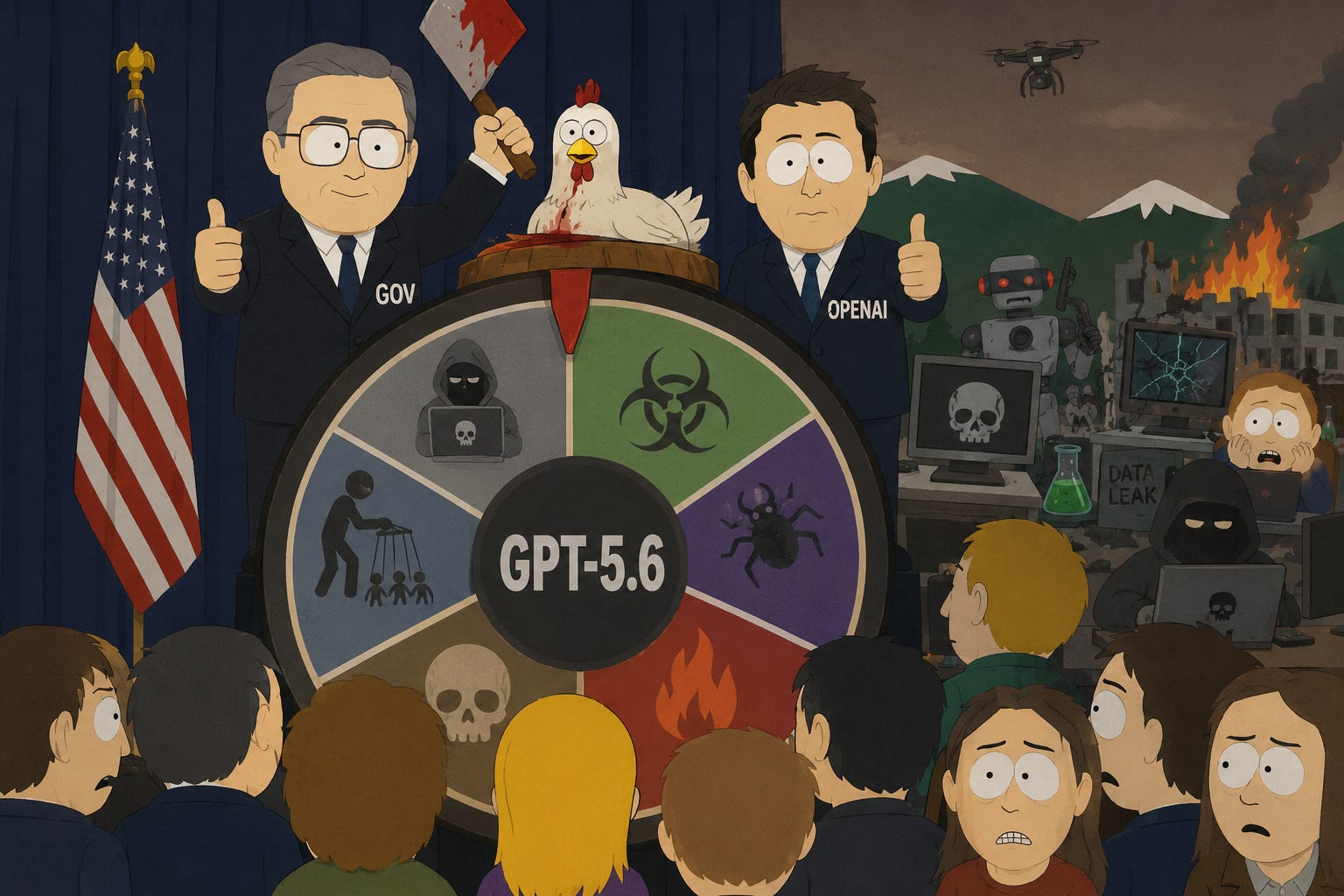
GPT-5.6 is free. The precedent is not.
OpenAI got its model to the public. Users will test it. Benchmarks will fly. The normal AI circus will continue.
But something changed before the circus began. The government got involved. Federal discussions happened before broad release. The public was the second audience.
That is the new frontier AI reality. A model can be privately built, commercially launched, and politically reviewed all at once.
OpenAI can say the launch is moving forward. The White House can say a formal approval was not required. Both statements can be true. The deeper truth is that frontier AI releases now happen under a government shadow.
The next time a lab wants to launch fast, it will know Washington may ask for a pause. The next time investors evaluate a frontier lab, they will ask about government release risk.
GPT-5.6 is the product. The process is the story.
The release button is no longer fully private.
References
Axios (2026). Scoop: Trump administration lifts restrictions on OpenAI’s GPT-5.6.
BeInCrypto (2026). Trump Administration Approves Rollout of OpenAI’s GPT-5.6.
CNBC (2026). OpenAI to publicly release GPT-5.6 AI models, ending government-requested limits.
Let’s Data Science (2026). OpenAI Secures US Approval for GPT-5.6 Rollout.
Quartz (2026). OpenAI cleared to launch GPT-5.6 after U.S. government review.
The preview list point deserves sharper framing because it's not just information asymmetry. It's a feedback loop. The 20 approved partners who get early access don't just see the model first. They build their products, integrations, and enterprise workflows around it before competitors have touched it. By public launch day, the early-access companies have a months-long head start on everything that matters commercially.
So the government review process doesn't just delay public access. It determines which companies get to build on top of each frontier model first. The preview list is industrial policy whether anyone in Washington intended it to be or not.
The Fable 5 / GPT-5.6 sequence makes this concrete. Two precedents in two months: the state can pull a model back after release, and the state can shape access before release. Any company building a business on frontier AI now has to price in the possibility that its next model update arrives on Washington's schedule, not the lab's.