
Time Feels Broken
AI Is Rewriting Patience

Something subtle is happening to your sense of time.
Not clocks.
Not calendars.
You.
The wait time your brain considers acceptable is shrinking. Fast.
Five seconds feels long.
Ten seconds feels broken.
Thirty seconds feels unacceptable.
This didn’t happen randomly.
AI is training you.
Not by force.
By convenience.
And once your internal clock recalibrates to instant answers, the world that still runs on delay starts to feel wrong.
That shift sounds small.
It isn’t.
Because patience is not just a personality trait.
It’s a cognitive setting.
And AI is quietly changing it.
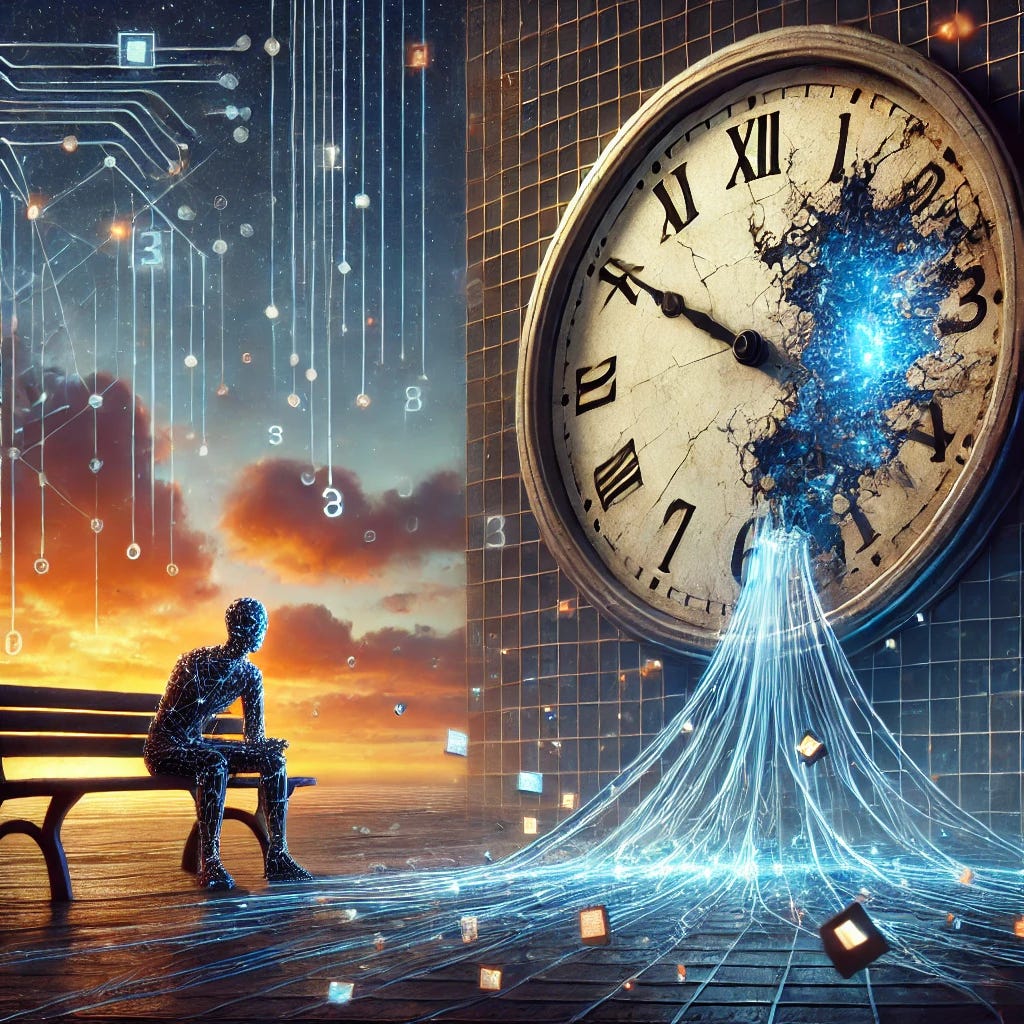
Patience Is Learned, Not Fixed
People often treat patience like temperament. Some people have it. Others don’t.
Psychology shows that patience is heavily shaped by environment. Humans adapt their expectations of delay based on what they experience repeatedly. When response times shorten, tolerance shrinks with them (Zakay & Block, 1997).
In other words, patience is elastic.
Technology has been tightening that elasticity for decades. Instant messaging. Streaming. One-click purchases. Real-time maps.
AI is different.
It removes delay from thinking itself.
The First Technology That Speeds Up Thought
Most technologies sped up action.
Cars made travel faster.
Email made communication faster.
Search engines made information retrieval faster.
AI speeds up cognition.
You don’t just get information faster. You get reasoning faster. Drafting faster. Deciding faster. Understanding faster.
This matters because time perception is strongly tied to cognitive effort. Tasks that require more mental processing feel longer, even if they take the same objective time (Eagleman, 2008).
AI reduces that effort.
Less effort means less perceived time.
Which means anything slow now feels slower than it used to.
The Hidden Feedback Loop
Here’s where it compounds.
The faster answers arrive, the less tolerance you have for delay.
The less tolerance you have, the more you rely on fast systems.
The more you rely on fast systems, the more your expectations shrink.
This is a classic behavioral reinforcement loop. Behavioral research shows that immediate rewards strengthen habits far more effectively than delayed ones (Skinner, 1953).
AI delivers immediate rewards constantly.
Answer.
Response.
Solution.
Done.
Your brain learns the new rule quickly.
Slow equals broken.
When Speed Becomes the Baseline
The real shift isn’t that AI is fast.
It’s that fast is becoming normal.
Once speed becomes baseline, anything slower feels like friction rather than reality.
Reading a long paper feels slow.
Thinking through a problem feels slow.
Listening fully feels slow.
Learning deeply feels slow.
None of those things actually changed.
Your expectation did.
Economists call this hedonic adaptation. People quickly adjust to new conditions and treat them as normal (Brickman & Campbell, 1971).
AI accelerates that adaptation cycle.
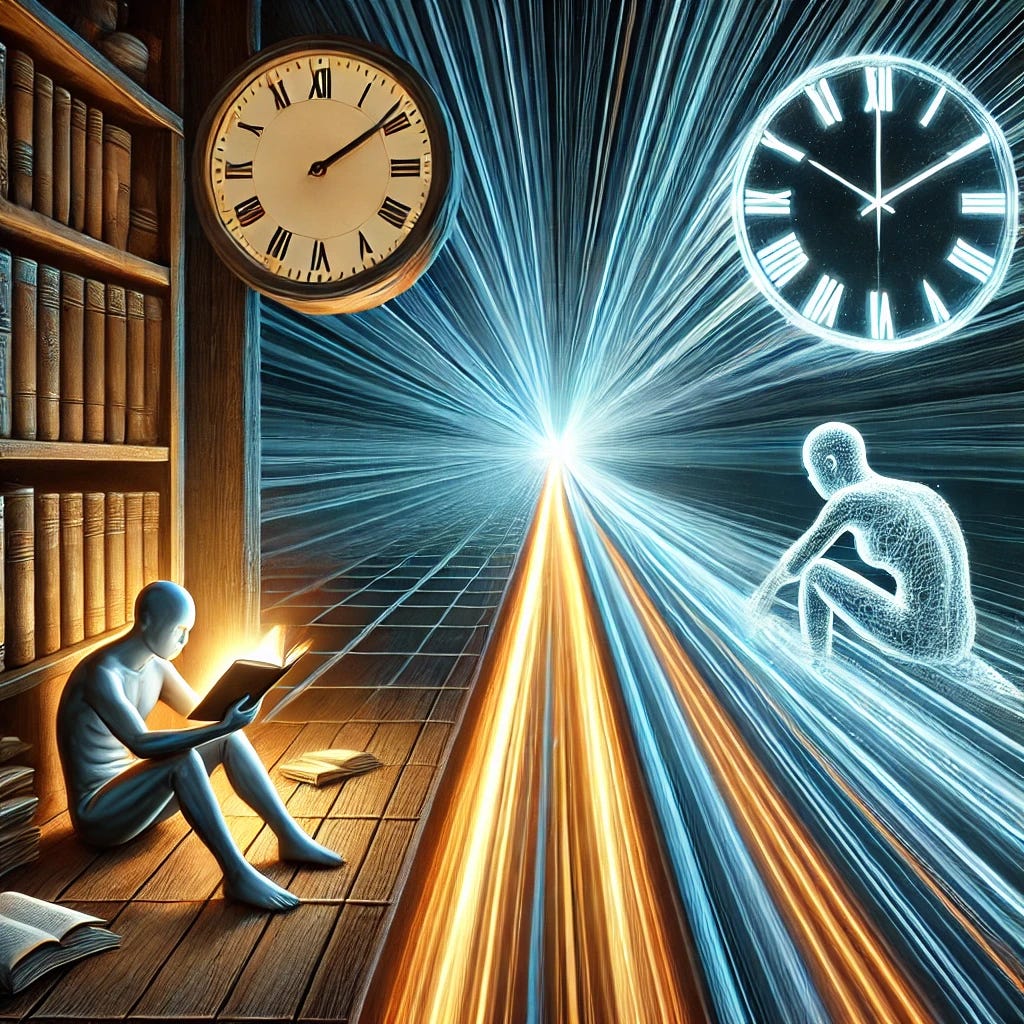
The Cultural Consequence
Patience used to signal seriousness.
If you were willing to spend hours learning something, people assumed you cared. If you stuck with a difficult problem, people assumed it mattered.
That signal weakens when answers are instant.
Effort becomes invisible.
Depth becomes optional.
Speed becomes impressive.
This shifts social incentives.
People start optimizing for responsiveness rather than understanding. For output rather than process.
The danger is not that people become less intelligent.
It’s that environments stop rewarding depth.
Why This Feels Like Progress
To be clear, faster thinking tools are not inherently bad.
They reduce friction.
They increase productivity.
They expand access.
They democratize capability.
Studies already show measurable performance gains when people use AI systems for certain tasks (Noy & Zhang, 2023).
The gains are real.
The tradeoff is subtle.
When everything speeds up, reflection becomes the bottleneck.
And bottlenecks get bypassed.
The Real Risk
The deepest risk is not distraction.
It’s impatience with reality itself.
Reality runs at physical speed.
Learning runs at biological speed.
Trust runs at social speed.
Mastery runs at human speed.
AI runs at machine speed.
The more time you spend in machine-speed environments, the more human-speed processes start to feel inefficient.
Not wrong.
Inefficient.
That’s a psychological shift with civilizational consequences.
Because civilizations are built by people willing to tolerate slow progress.
What Changes Next
When patience declines, decision patterns change.
People interrupt sooner.
Abandon projects sooner.
Switch directions sooner.
Dismiss ideas sooner.
Not because they’re careless.
Because delay now feels like failure.
This is already visible in digital behavior. Research shows that even small increases in loading time significantly reduce engagement and persistence (Google/SOASTA Research, 2017).
AI is the ultimate load-time reducer.
Which means it is also a patience reducer.
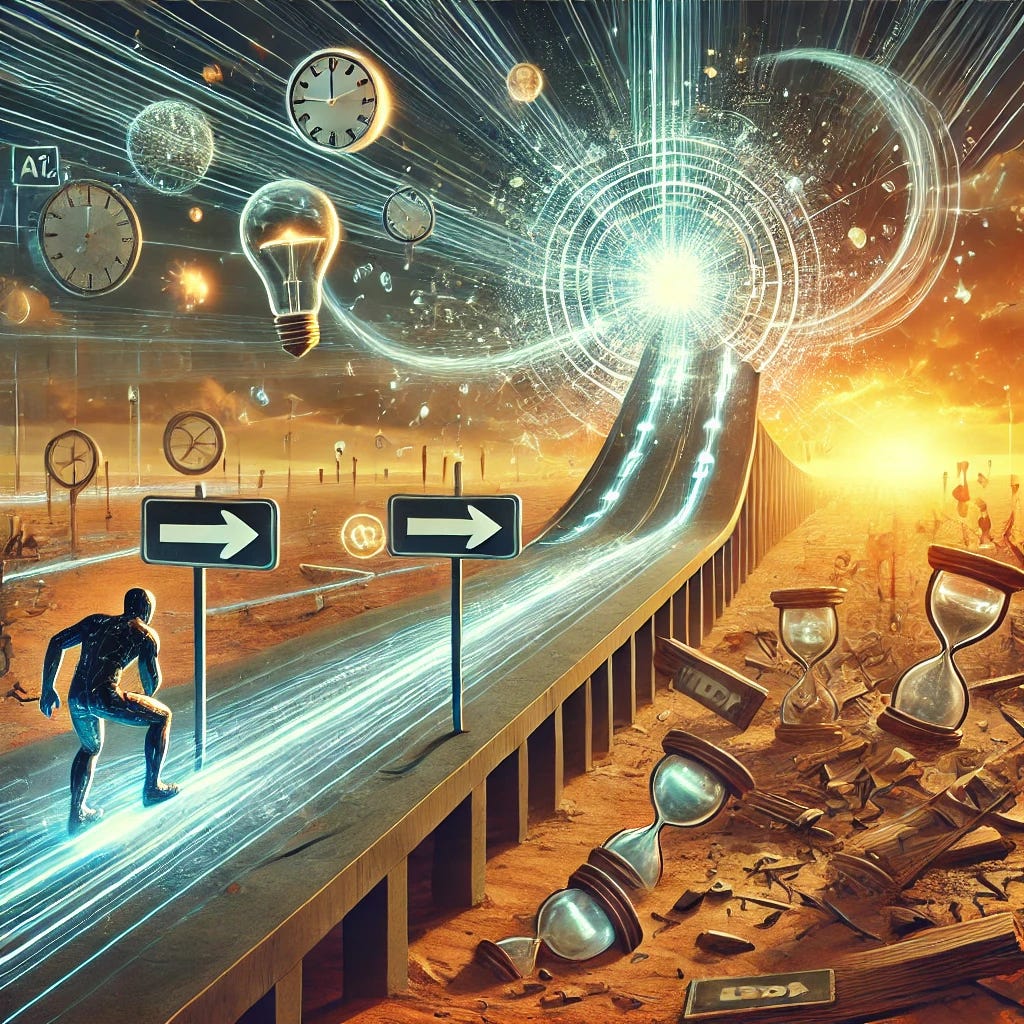
AI is not just changing what we can do.
It is changing how long we are willing to wait.
That sounds minor.
It isn’t.
Patience determines whether you explore or quit.
Whether you think or react.
Whether you build or abandon.
Technology has always shaped behavior.
AI is shaping tempo.
And once your internal tempo accelerates, the world that moves slowly doesn’t just feel slow.
It feels broken.
References
Brickman, P., & Campbell, D. T. (1971). Hedonic relativism and planning the good society.
Eagleman, D. (2008). Human time perception and its illusions. Current Opinion in Neurobiology, 18(2), 131–136.
Noy, S., & Zhang, W. (2023). Experimental evidence on the productivity effects of generative artificial intelligence.
Skinner, B. F. (1953). Science and Human Behavior.
Zakay, D., & Block, R. A. (1997). Temporal cognition. Current Directions in Psychological Science, 6(1), 12–16.
Google/SOASTA. (2017). The Need for Mobile Speed.
Good read. I enjoyed the analysis.