
Thinking in Heat
Toward Thermal Gradient Neural Architectures for Artificial Intelligence

Introduction
Artificial intelligence hardware has traditionally been built around the flow of electrons or the movement of photons. From the early days of vacuum tubes to the most advanced neuromorphic photonic chips, the focus has been on controlling charge or light at increasing speeds and densities. Yet in both biology and physics, there is another mode of signal propagation that has been almost entirely ignored in AI design: the movement of heat.
Thermal gradients, which are differences in temperature across a material, influence processes on scales ranging from intracellular signaling to planetary circulation patterns. They can alter biochemical reaction rates, drive convection currents, and even change quantum state occupation in nanoscale systems (Cahill et al., 2014). In living organisms, temperature is not merely a side effect of metabolism but can act as a regulator for molecular binding and signal transduction (Schmidt-Nielsen, 1997). If we begin to treat heat flow as a legitimate carrier of information rather than a form of waste, we can imagine a radically new class of neural architecture in which computation happens in temperature space rather than only in voltage or photon space.

Theoretical Framework
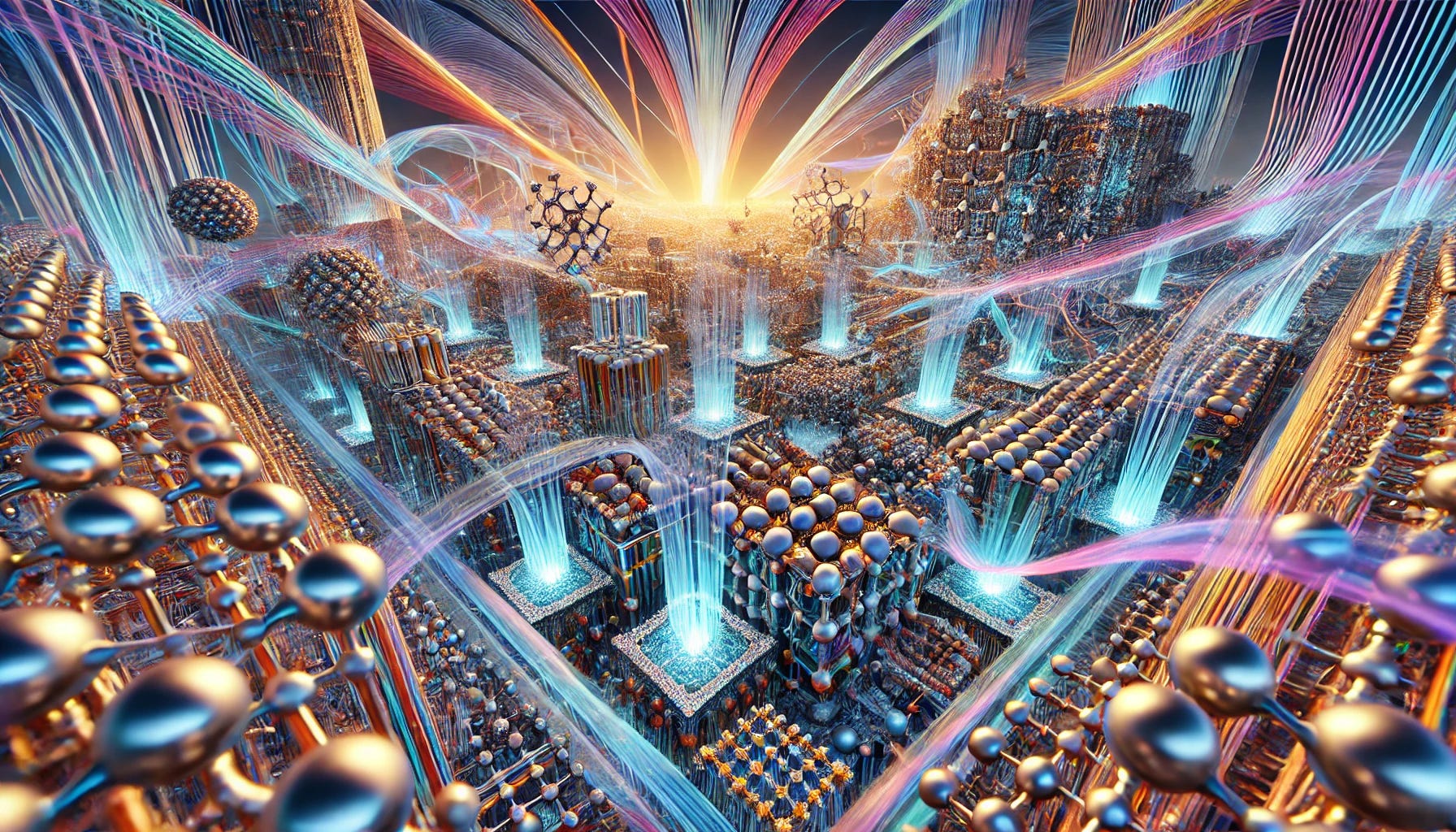
A thermal gradient neural architecture, or TGNA, would replace the conventional transistor or memristor with a thermosensitive junction whose conductive or refractive properties change significantly over a narrow temperature range. By arranging many such junctions in patterned arrays, it becomes possible to create reconfigurable pathways for heat, functioning analogously to synaptic weights in artificial neural networks.
Thermal signals move via phonons, which are quantized lattice vibrations, rather than electrons or photons. Phonon behavior can be engineered through the physical geometry and material composition of the substrate (Chen, 2005). This means that TGNA could be designed so that computation emerges from the controlled interference, diffusion, and dissipation of heat pulses.
Because temperature gradients can coexist with electrical and optical fields, TGNA could operate as part of a hybrid computing platform in which certain layers of a network process information thermally and others process it electronically or photonicly. The thermal layers might be especially useful for probabilistic or analog functions, since heat propagation at small scales has an inherently stochastic character.
Potential Advantages
Thermal computing offers a set of unique strengths. In environments where energy recovery is important, TGNA could use the waste heat produced by sensors or actuators and recycle it into the computational process. In contexts where environmental coupling matters more than maximum speed, heat-based computation could integrate directly with physical surroundings rather than requiring insulation from them.
Because heat naturally diffuses, TGNA could excel at smoothing, interpolation, and spatial reasoning, which are processes that biological systems often carry out using diffusion-driven pattern formation (Turing, 1952; Kondo & Miura, 2010).
Furthermore, nanoscale engineering techniques allow us to design materials with tunable thermal properties. Phononic crystals, layered van der Waals materials, and other engineered substrates can be built to change their thermal conductivity in real time. In a TGNA, this would be the equivalent of synaptic plasticity: the ease with which heat can pass through a given junction becomes the stored “weight” of the system.
Speculative Experiment
One possible experiment would involve fabricating a two-dimensional array of nanoscale thermoelectric junctions in a hexagonal grid. Each junction would have a sharply variable conductivity centered around an adjustable setpoint temperature, tunable via embedded phase-change materials. Localized heating elements would introduce temperature spikes at selected points, and high-resolution infrared microscopy would record the diffusion patterns.
By associating certain patterns of heat flow with specific outputs, and by coupling the array to a reinforcement learning loop, the system could alter its thermal conductivity map over time. This would allow it to encode computational functions directly in temperature space.
In a follow-up experiment, the thermal array could be connected to a low-resolution thermal camera and trained to perform pattern recognition tasks. The goal would be to determine whether a heat-based architecture can process heat-based sensory input more efficiently than a purely electronic system.
Extending TGNA into Multi-Physics AI with Neuromorphic Photonics
Although TGNA on its own represents a new paradigm, its potential becomes even more striking when paired with neuromorphic photonics. In a hybrid architecture, photonic circuits could provide ultra-fast, high-bandwidth communication between nodes, while thermal junction networks could perform slower, integrative computation that is inherently energy-adaptive.
In such a system, photonic waveguides would transmit bursts of coherent light between computing regions. These light pulses could be partially converted into heat at specific thermosensitive junctions, altering the local thermal conductivity landscape. In return, the evolving temperature map could feed back into the photonic layer by modulating the refractive index of nearby optical paths, subtly shifting the way light is routed through the network.
The result would be a multi-physics AI that thinks in both light and heat. This architecture could handle information across multiple timescales: the photonic layer would carry out rapid symbolic or vector transformations, while the thermal layer would integrate contextual information over longer intervals. Because the thermal layer changes slowly and is not easily reset, it could serve as a form of embodied memory, one that is tied to the physical state of the machine rather than stored as digital data.
Simulating such a system fully in silico would be extremely challenging. Accurate models would need to resolve phonon transport, photon interference, and their mutual coupling through temperature-dependent refractive effects, all of which are sensitive to nanoscale fabrication quirks that are nearly impossible to capture in simulation. In other words, the most complete model of such a system might be the system itself.
Implications
If successful, TGNA combined with neuromorphic photonics could lead to AI hardware that is almost immune to certain classes of adversarial simulation and reverse engineering. A digital copy would never quite behave like the real thing because its computations are inseparable from the physical materials and their dynamic thermal-optical interactions.
Applications might range from deep-sea exploration, where temperature gradients are abundant and stable, to space missions, where photon flux and thermal extremes can be harnessed simultaneously. Such machines would be both products of their environment and active participants in it, their “thoughts” quite literally shaped by heat and light.
References
Cahill, D. G., Braun, P. V., Chen, G., Clarke, D. R., Fan, S., Goodson, K. E., … & Zhigilei, L. V. (2014). Nanoscale thermal transport. Applied Physics Reviews, 1(1), 011305. https://doi.org/10.1063/1.4832615
Chen, G. (2005). Nanoscale energy transport and conversion: A parallel treatment of electrons, molecules, phonons, and photons. Oxford University Press.
Kondo, S., & Miura, T. (2010). Reaction-diffusion model as a framework for understanding biological pattern formation. Science, 329(5999), 1616–1620. https://doi.org/10.1126/science.1179047
Schmidt-Nielsen, K. (1997). Animal physiology: Adaptation and environment. Cambridge University Press.
Turing, A. M. (1952). The chemical basis of morphogenesis. Philosophical Transactions of the Royal Society of London. Series B, Biological Sciences, 237(641), 37–72. https://doi.org/10.1098/rstb.1952.0012
I really enjoyed your take on TGNA — it’s rare to see someone seriously exploring heat as a computational medium.
One thing I kept thinking about while reading was memory.
In our current systems, memory is basically electron choreography — moving them, trapping them, or keeping them in a loop. That works brilliantly for speed, but it’s fragile and power-hungry. What’s interesting about heat is its natural persistence. A thermal gradient can linger in a material long after the initial pulse, especially if the geometry and conductivity are tuned for it.
If we treat those lingering temperature profiles as a form of embodied memory, we could get something that behaves less like a digital snapshot and more like a biological memory trace. Imagine a thermal layer that remembers the “shape” of past computations — not just storing bits, but encoding experience in its conductivity map. In a hybrid photonic–thermal system, the photonics could handle fast symbolic work, while the thermal layer slowly integrates and retains context, almost like long-term potentiation in a brain.
That could mean:
• Memory that self-stabilises without refresh cycles.
• Context-sensitive recall, because environment shifts would literally shape the memory state.
• Security benefits — the memory would be inseparable from the exact physical state of the hardware.
And in that sense, you’re absolutely right — the most accurate model of such a system might be the system itself. I think heat could give us a new kind of “living” memory architecture, where storage and computation happen in the same evolving physical substrate.