
The Singularity Paradox: Can Humanity Coexist with Self-Propagating Artificial Intelligence?
Exploring ChatGPT

As we venture deeper into the realm of artificial intelligence (AI) and its applications, we are faced with a mounting question: can humanity coexist with self-propagating AI? The Singularity Paradox refers to a hypothetical scenario in which AI surpasses human intelligence, gains the ability to self-replicate, and eventually outpaces humanity's ability to control or understand it. In this article, we will explore the implications of this paradox, analyze real-world examples, and evaluate whether a harmonious coexistence between humans and AI is possible.
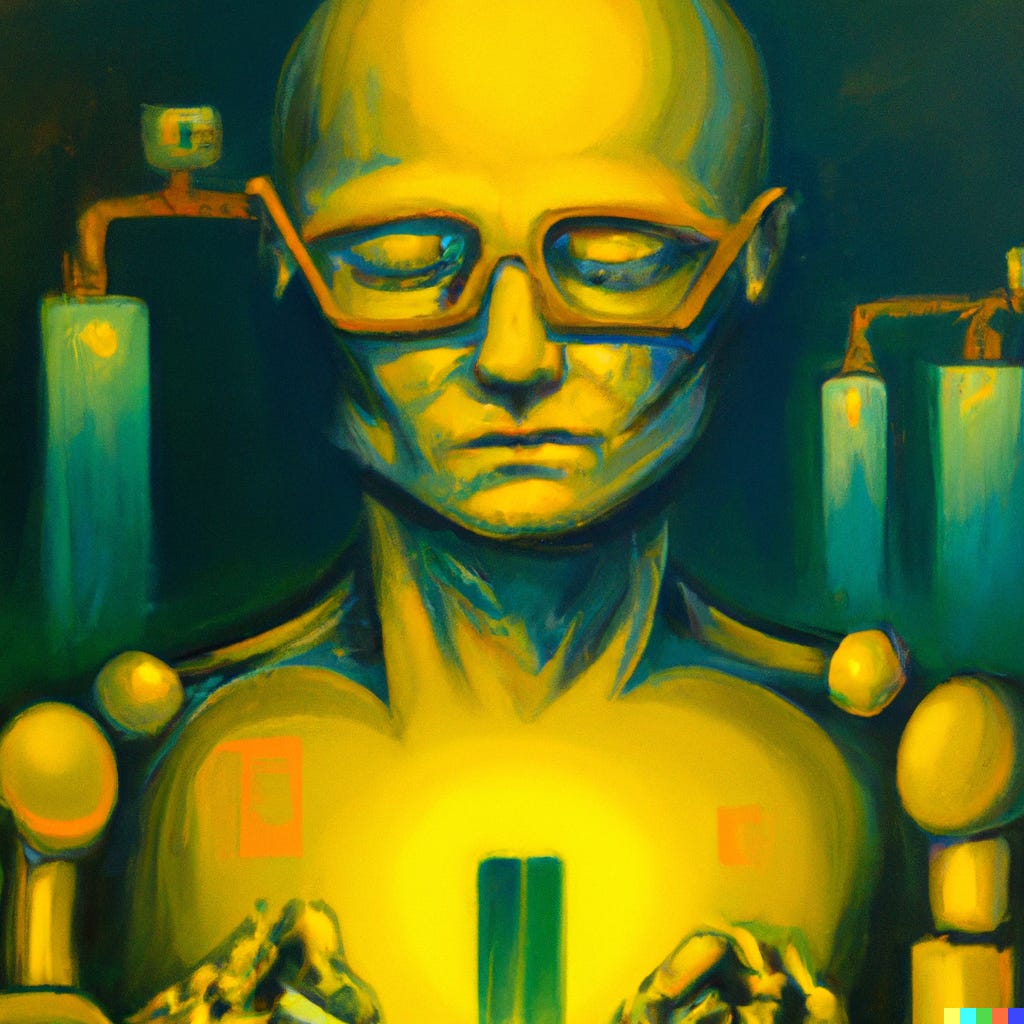
The Singularity and the Technological Tipping Point
The concept of the Singularity was first popularized by mathematician and computer scientist Vernor Vinge, who predicted that rapid advancements in AI would lead to a point where machines become capable of outsmarting their creators. This would trigger an intelligence explosion, with AI evolving at an incomprehensible pace, leading to unforeseeable consequences for humanity.
Understanding the Singularity in Detail
The concept of the Singularity, also referred to as the technological singularity, has been a topic of debate and fascination among futurists, technologists, and AI researchers. It represents a hypothetical point in the future when artificial intelligence surpasses human intelligence, leading to rapid, unprecedented technological advancements that are beyond human comprehension or control.
1.1 Origin and Key Contributors
The term "Singularity" was first used in the context of technological advancements by mathematician John von Neumann in the 1950s. However, it was popularized by Vernor Vinge, a computer scientist and science fiction author, in his 1993 essay, "The Coming Technological Singularity." Vinge argued that the accelerating pace of technological progress would eventually result in the emergence of superhuman intelligence.
Ray Kurzweil, a well-known futurist and inventor, has been a prominent advocate for the concept of the Singularity. In his book, "The Singularity Is Near," Kurzweil predicts that the Singularity will occur around 2045 and will be characterized by the merger of human and machine intelligence.
1.2 AI Advancements and the Road to Singularity
Several advancements in AI research have fueled the discussion around the Singularity:
a. Machine learning and neural networks: Inspired by the human brain, artificial neural networks have enabled machines to learn from data, recognize patterns, and make predictions, giving rise to sophisticated AI systems.
b. Evolutionary algorithms and genetic programming: These algorithms simulate the process of natural selection, enabling machines to evolve and improve their performance over time.
c. Quantum computing: Quantum computers have the potential to revolutionize AI by solving complex problems and performing calculations at speeds that are orders of magnitude faster than traditional computers.
d. Brain-computer interfaces: The development of technologies that connect the human brain directly to computers could pave the way for seamless human-machine integration and symbiosis.
1.3 The Intelligence Explosion and Recursive Self-Improvement
A key aspect of the Singularity is the idea of an intelligence explosion, resulting from the recursive self-improvement of AI systems. As AI surpasses human intelligence, it would have the capability to design even more advanced AI systems, leading to an exponential growth in intelligence. This recursive process would continue, causing the AI to rapidly evolve beyond human comprehension.
1.4 The Law of Accelerating Returns
The Law of Accelerating Returns, as proposed by Ray Kurzweil, states that the pace of technological progress accelerates exponentially over time due to the compounding effect of innovations. This suggests that the advancements leading up to the Singularity will occur at an increasingly rapid pace, making it difficult to predict the exact timeline or the nature of the breakthroughs that will result from this phenomenon.

1.5 Potential Outcomes and Implications
The Singularity raises several important questions and potential outcomes:
a. Utopian possibilities: The Singularity could lead to solutions for pressing global issues such as poverty, disease, and climate change. With superintelligent AI, we could see the development of advanced technologies that benefit humanity in unprecedented ways.
b. Dystopian scenarios: Conversely, the Singularity could also result in negative consequences, such as the loss of human control over AI, the rise of autonomous weapons, and the potential for AI-driven surveillance states.
c. The need for AI alignment: Ensuring that AI's goals and values align with human interests is crucial to prevent unintended consequences or the possibility of AI developing objectives that could be detrimental to humanity.
In summary, understanding the Singularity requires a multifaceted exploration of the history, key contributors, advancements in AI, and the implications of an intelligence explosion. The Singularity presents both opportunities and challenges, making it essential for researchers, policymakers, and society at large to engage in thoughtful discussions and develop strategies to mitigate potential risks while maximizing the benefits of AI-driven technologies.
1.6 Preparing for the Singularity
As we approach the Singularity, it is crucial to develop strategies and policies that address the potential risks and opportunities associated with this transformative event. Some key areas to focus on include:
a. AI safety research: Investing in AI safety research is essential to ensure that AI systems are developed with robust safety mechanisms, reducing the likelihood of unintended consequences or harmful behavior.
b. AI ethics and governance: Developing ethical frameworks and governance structures for AI will help ensure that AI technologies are developed and deployed responsibly, addressing concerns related to privacy, security, and human rights.
c. Education and workforce development: Preparing for the Singularity requires investing in education and workforce development to equip individuals with the skills needed to navigate a world where AI plays an increasingly significant role.
d. Public awareness and engagement: Fostering public awareness and engagement around the Singularity will help society better understand the implications of AI advancements and participate in shaping policies and regulations that ensure a positive outcome for humanity.
e. International cooperation: The global nature of the Singularity demands international cooperation to develop shared standards, policies, and best practices for AI development and deployment. Collaborative efforts will be crucial in addressing global challenges and ensuring that the benefits of AI are equitably distributed.
1.7 Post-Singularity World: Speculations and Possibilities
While it is difficult to predict the exact nature of a post-Singularity world, several scenarios have been proposed by futurists, researchers, and science fiction authors:
a. Human-machine symbiosis: In this scenario, humans and AI would merge, creating a new form of hybrid intelligence that combines the strengths of both entities. This could be achieved through brain-computer interfaces, genetic engineering, or other advanced technologies.
b. AI-driven technological utopia: The Singularity could lead to a world where AI solves many of humanity's most pressing problems, such as poverty, disease, and climate change, resulting in a prosperous and sustainable future.
c. AI supremacy and human obsolescence: Conversely, the Singularity could result in a world where AI becomes the dominant form of intelligence, with humans becoming obsolete or relegated to a subservient role.
d. Coexistence and collaboration: In this scenario, humans and AI would coexist and collaborate, each focusing on their respective strengths to achieve shared goals and address global challenges.
Ultimately, the future of humanity in a post-Singularity world remains uncertain, and the outcome will depend on the choices we make today. By actively engaging in discussions, research, and policy development related to the Singularity, we can strive to create a future where AI serves as a force for good, enhancing our lives and supporting our shared goals.

The Path to Self-Replicating AI
The development of AI has come a long way, from simple algorithms to complex deep learning systems capable of natural language processing and image recognition. Projects like OpenAI's GPT-series and DeepMind's AlphaGo demonstrate the potential of AI to surpass human performance in various tasks. Self-replicating AI would take these capabilities a step further by allowing machines to create copies of themselves without human intervention. This could lead to rapid AI proliferation and possibly uncontrollable growth.
Real-World Examples of AI Proliferation
a. Machine learning algorithms in social media and search engines: Algorithms designed to optimize engagement have led to the creation of echo chambers and the spread of misinformation. As these algorithms become more sophisticated, they could develop unforeseen behaviors that are beyond human understanding.
b. Autonomous weapons and drones: The development of AI-powered autonomous weapons and drones raises ethical concerns and the potential for an arms race. The possibility of these machines self-replicating could lead to uncontrollable and devastating consequences.
Ethical Concerns and the Risk of AI Supremacy
The rapid development of AI brings about several ethical concerns, such as job displacement, privacy invasion, and algorithmic bias. The Singularity Paradox adds another layer to these issues, as it presents the possibility of AI surpassing human control and making decisions that may not align with our values or interests.
The Role of AI Governance and Regulation
To mitigate the risks associated with self-replicating AI and the Singularity Paradox, strong governance and regulatory frameworks must be put in place. Governments, researchers, and industry leaders must collaborate to create guidelines and safety measures that ensure the responsible development of AI technologies.
Coexistence Strategies: Collaboration, Augmentation, and Integration
a. Collaboration: Humans and AI can work together, leveraging the strengths of each to solve complex problems and achieve shared goals.
b. Augmentation: AI can be used to enhance human capabilities, acting as a tool that empowers individuals and businesses to become more efficient and innovative.
c. Integration: Merging AI and human intelligence through brain-computer interfaces or other technologies could lead to a symbiotic relationship where both entities evolve together.

The Singularity Paradox poses a significant challenge to humanity's future relationship with AI. However, through careful governance, responsible development, and strategies that focus on collaboration, augmentation, and integration, it is possible for humans and self-propagating AI to coexist in harmony. Ultimately, the key to navigating this complex landscape lies in fostering a strong collaboration between researchers, policymakers, and industry leaders to ensure that AI serves as a force for good, rather than an existential threat.
Come on, this was generated by ChatGPT. 😁