
The Nutrient Singularity
Could Hyper-Optimized Diets Collapse Human Genetic Diversity?

A Future Engineered for Nutritional Perfection
We are entering a nutritional renaissance. Advances in genomics, microbiome science, nutrigenetics, and artificial intelligence have made the dream of personalized, hyper-optimized diets increasingly feasible. With companies offering DNA-based meal plans, lab-grown meat, AI-curated supplements, and even bioengineered staple foods, we are witnessing the emergence of what might be called "nutritional determinism": the belief that perfect health can be achieved through perfect diet.
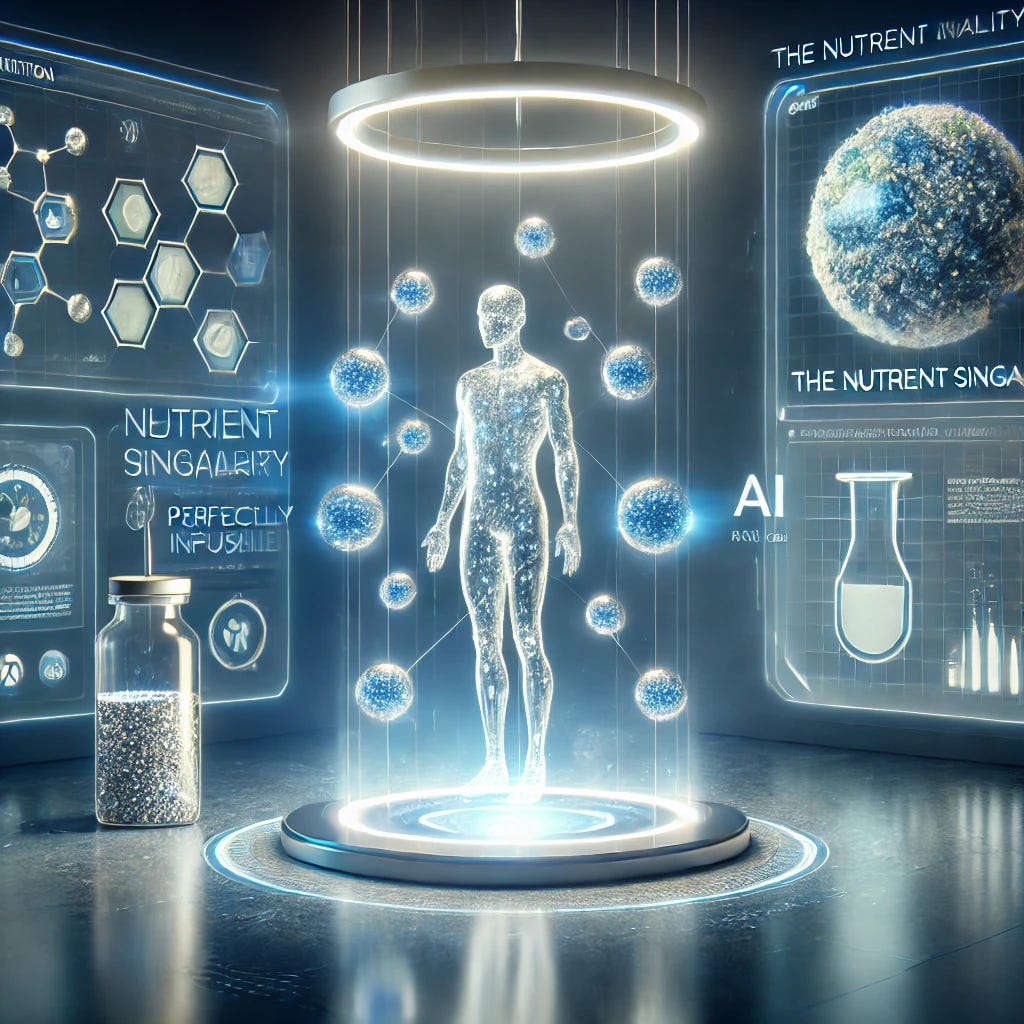
But what if this nutritional utopia carries an invisible cost? This article introduces a speculative but scientifically anchored hypothesis: that the widespread adoption of precision diets, over multiple generations, could reduce the evolutionary pressures that preserve genetic and microbial diversity related to food metabolism and resilience. In other words, the more we perfect nutrition externally, the less nature may preserve the internal tools for adaptability. This convergence of human diets toward uniform, artificially optimized compositions could lead to a phenomenon we term the "Nutrient Singularity."
Genetic Diversity and Evolutionary Pressure in Digestive Traits
Throughout history, human populations have evolved under various dietary regimes. The spread of lactose tolerance in pastoralist societies, the amylase gene duplication in agricultural populations, and varying levels of alcohol dehydrogenase in different regions are all prime examples of diet-driven genetic evolution (Laland et al., 2010).
When food systems become hyper-controlled, these selective pressures may fade. If nearly all people receive nutrient-complete, pre-digested, easily assimilated foods — either through engineered meals or microbiome modulation — the necessity for individual digestive robustness could disappear. Traits that were once vital (e.g., efficient starch digestion, resistance to foodborne pathogens, or diverse gut flora resilience) might lose their evolutionary relevance.
As selective pressures vanish, the gene pool could begin to drift. Rare variants might disappear. Metabolic quirks that once conferred advantages in varied environments could become liabilities or be engineered out altogether.
The Role of the Microbiome: A Symbiotic Reservoir Under Threat
The human microbiome represents an incredibly diverse ecosystem — and one increasingly tied to health outcomes ranging from immunity to mental health. However, modern diets and sanitation have already reduced gut microbiota diversity across industrialized populations (Yatsunenko et al., 2012).
The rise of precision nutrition, including targeted probiotics and prebiotics, may push us even further. If future diets cultivate only a narrow subset of microbial species deemed "optimal" by health algorithms, we risk collapsing the ecological range of the microbiome itself. This could lead to long-term fragility: a gut ecosystem finely tuned but brittle, unable to adapt to environmental or pathogenic novelty.
Digital Diets and Evolutionary Stasis
AI-driven meal design platforms, powered by deep learning and biometrics, promise to reduce nutritional uncertainty. Already, companies like ZOE and Viome offer AI-curated meal recommendations based on glucose responses, microbiome sequencing, and personal data.
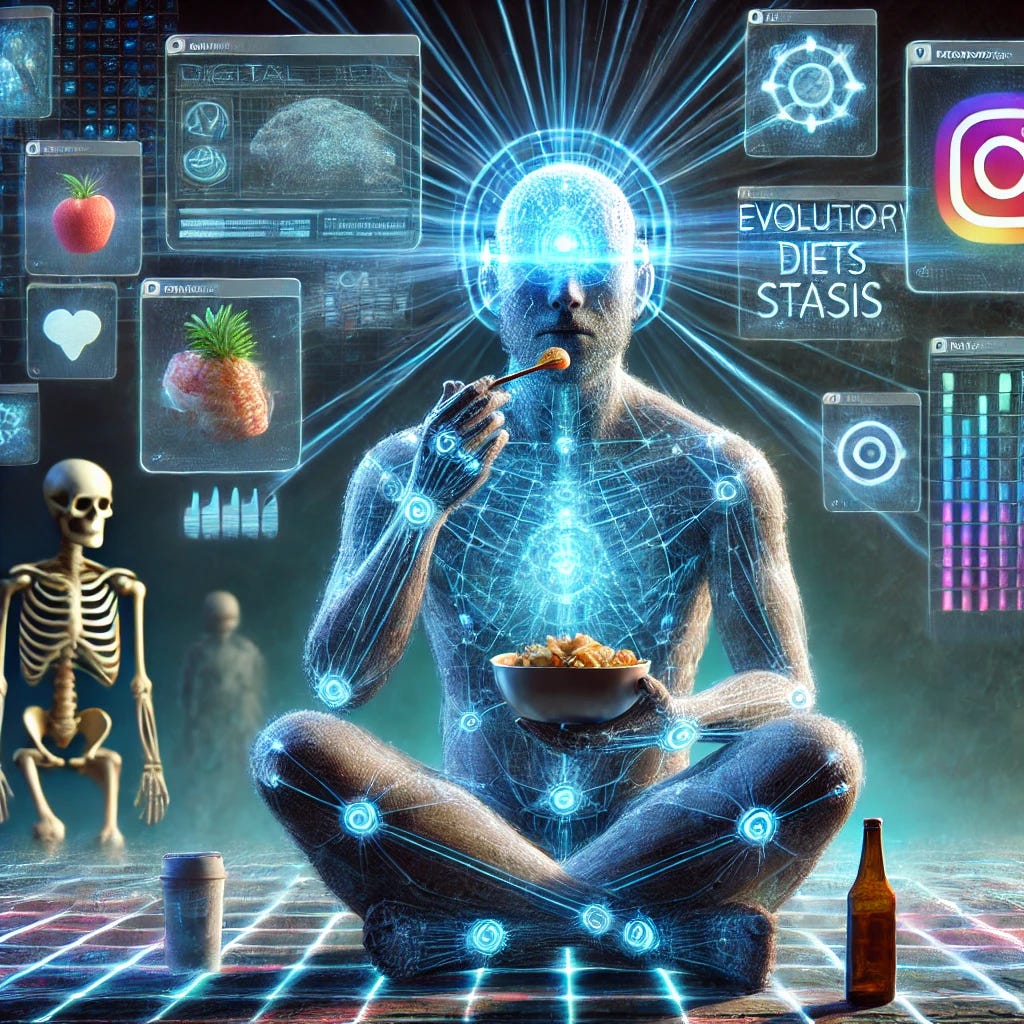
In the future, such systems could effectively eliminate poor dietary outcomes. But the more we algorithmically shield ourselves from nutritional deficiency, the less evolutionary correction occurs. Weaknesses in nutrient absorption, inefficiencies in metabolism, and even dangerous gene-environment mismatches may be masked — not selected against.
This mirrors a broader trend in medicine: treating symptoms rather than removing root causes from the gene pool. While ethically sound, such interventions could, over centuries, lead to a form of evolutionary stasis — or worse, a decline in underlying physiological robustness.
The Nutrient Singularity: A Hypothetical Collapse of Dietary Evolution
The "Nutrient Singularity" posits a future in which human diets are universally engineered, sterile in diversity, and nutritionally perfect — eliminating all food-related selective pressures. This could, paradoxically, place humanity in a precarious position.
What happens if food production systems collapse? Or if novel pathogens emerge requiring dietary resilience or gut flexibility? A genetically and microbially homogenized species might lack the evolutionary toolkit to adapt. This is not merely science fiction — it echoes concerns in agricultural monocultures, where crop uniformity has led to vulnerability (e.g., the Irish potato famine).
Toward a Resilient Nutritional Future: A Philosophical Reflection
Should we strive for perfection if perfection erodes adaptability? Evolution is, in part, guided by discomfort — the inefficiencies that force biological ingenuity. By removing all friction from food systems, we may lose the very engine that shaped us.
Philosophically, this evokes themes from posthumanism and evolutionary ethics. If our technology prevents natural selection from acting, are we still evolving — or are we devolving by design? The Nutrient Singularity is not just a biological hypothesis; it's a warning embedded in a dream of progress.
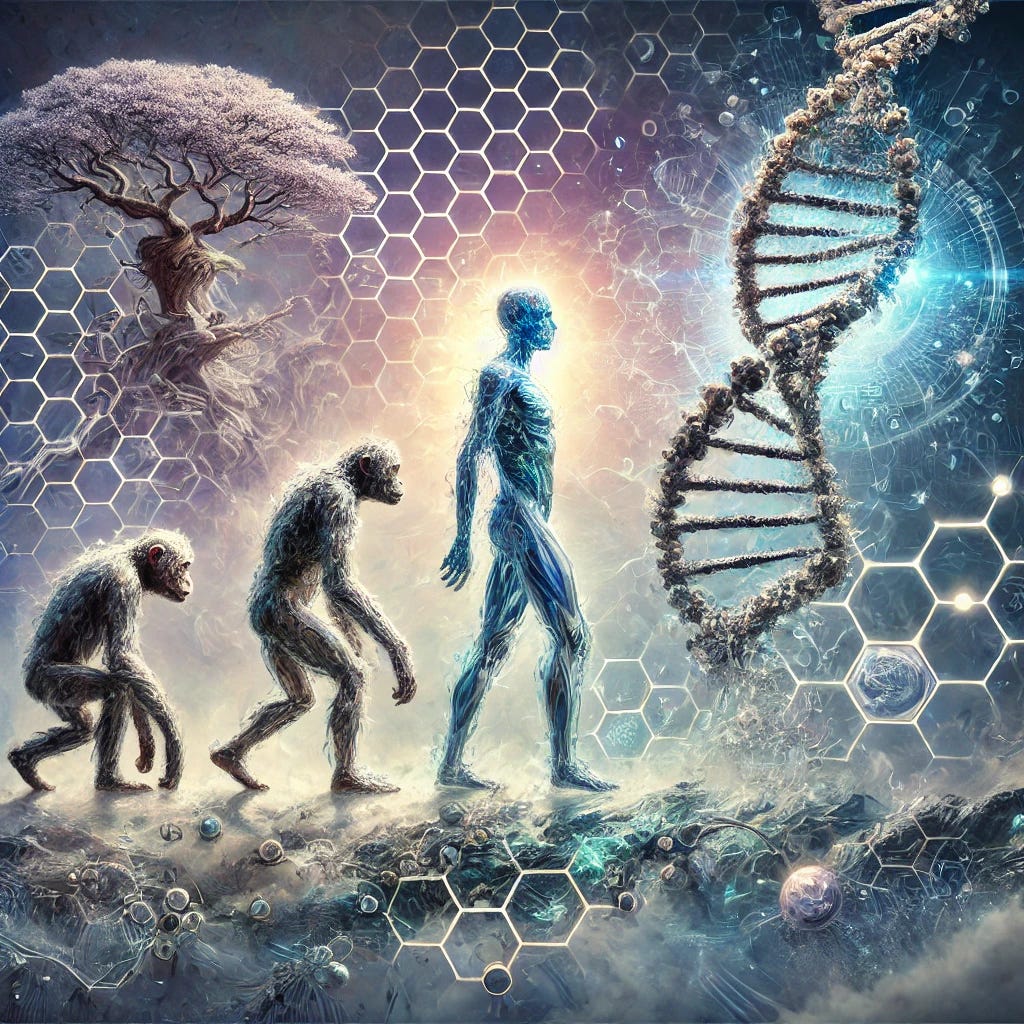
Precision nutrition offers profound benefits — longer lives, fewer diseases, and individualized care. But hidden within that promise is a deeper question: what happens to a species that no longer needs to adapt? The Nutrient Singularity reminds us that evolution is powered by imperfection. And if we engineer away our flaws too efficiently, we may also engineer away our future.
References
Laland, K. N., Odling-Smee, J., & Myles, S. (2010). How culture shaped the human genome: bringing genetics and the human sciences together. Nature Reviews Genetics, 11(2), 137-148.
Yatsunenko, T., et al. (2012). Human gut microbiome viewed across age and geography. Nature, 486(7402), 222–227.
Sonnenburg, J. L., & Sonnenburg, E. D. (2019). Vulnerability of the industrialized microbiota. Science, 366(6464), eaaw9255.
Zhao, L., et al. (2018). Gut bacteria selectively promoted by dietary fibers alleviate type 2 diabetes. Science, 359(6380), 1151–1156.
ZOE Nutrition. (2024). [Online platform for personalized nutrition based on real-time biomarker data].
We already have some of what you described through our hyper sterilized “dead” foods. Food should be a living matrix of information that is local and provides input to the system to understand and adapt to the local conditions.