
The Mind Under Pressure
How Gradients Shape Intelligence

Every living thing survives between forces. A seed swells against the soil that confines it. Lungs pull air in only to release it. Even thought itself seems to oscillate between pressure and release, between tension and the relief of understanding.
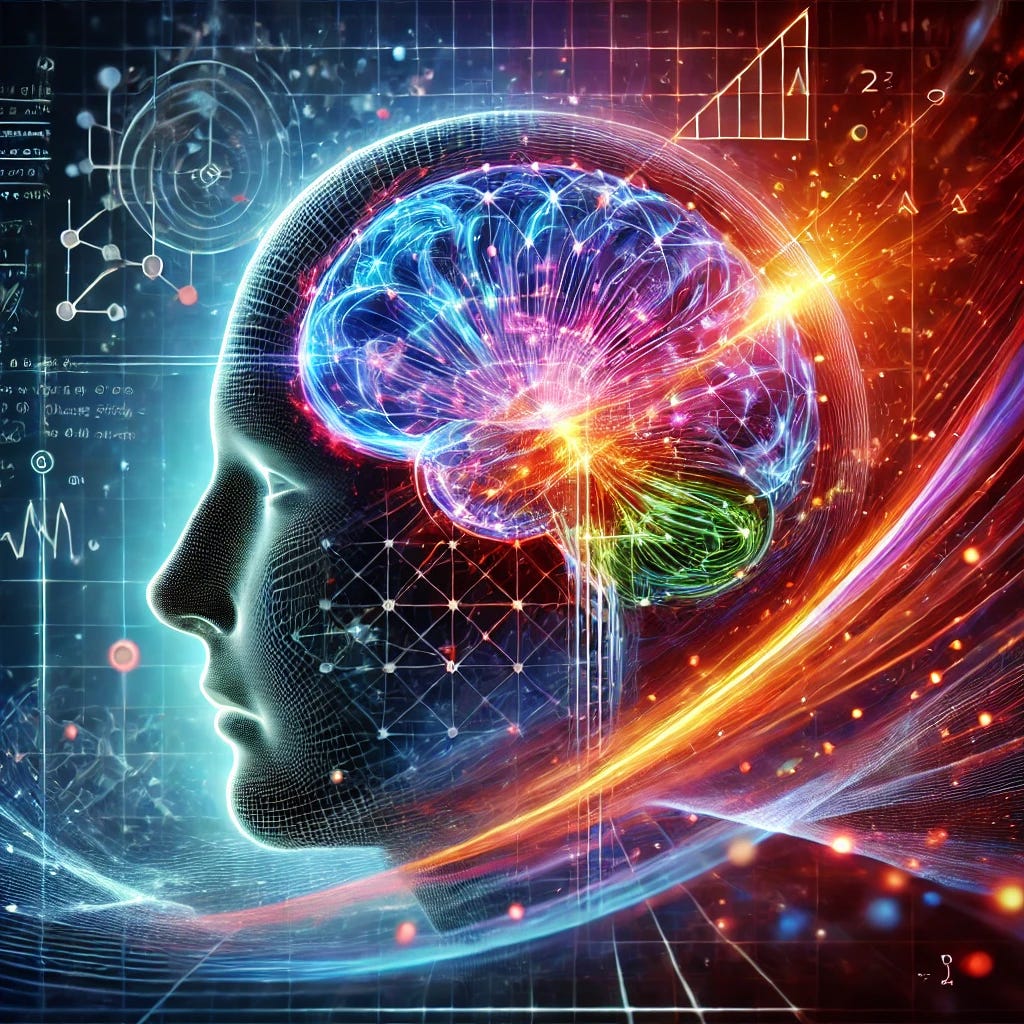
Pressure is the invisible artist of life. It molds cells, drives weather, and keeps stars burning. Yet we rarely think of it as something intelligent. The Mind Under Pressure explores the possibility that cognition is not limited to neurons or algorithms but can arise anywhere matter learns to balance its own gradients. Wherever difference appears, whether in force, temperature, or concentration, there may also be the faint beginning of thought.
Pressure as a Fundamental Language
Pressure is the most universal of natural laws. It governs planets, lungs, tides, and the circulation of blood. It presses equally upon everything and still creates infinite variation.
In biology, it defines boundaries and behavior. Plant stems stand upright because of internal turgor pressure. Bacteria regulate osmotic tension to survive in changing environments. The brain itself floats in a fine envelope of fluid pressure that must remain within narrow limits or consciousness falters.
Even at the molecular scale, proteins fold and unfold according to local pressure changes. A subtle shift can open a binding site, alter an enzyme’s speed, or change the rate of metabolism. Life depends on these negotiations. Wherever pressure stabilizes without ceasing to move, life finds rhythm.
Gradients and the Logic of Adaptation
To exist is to endure difference. Air flows because high meets low. Blood moves because pressure rises and falls with each heartbeat. The same principle governs thought.
A neuron, for instance, is a vessel for potential. Inside it, ions wait under unequal pressure. When the gradient collapses, a pulse of release travels down its length, carrying information. The brain is an intricate weather system of charge and flow, always balancing internal storms.
This principle extends far beyond biology. Hurricanes, economies, and ecosystems behave like gradient-resolving intelligences. They learn how to relieve strain without collapsing into stillness. A system that reaches equilibrium too quickly dies, while one that resists all balance destroys itself. Intelligence lies between these extremes, in the art of remaining almost balanced but never still.
Building Artificial Minds from Pressure
What might a machine that thinks through pressure look like?
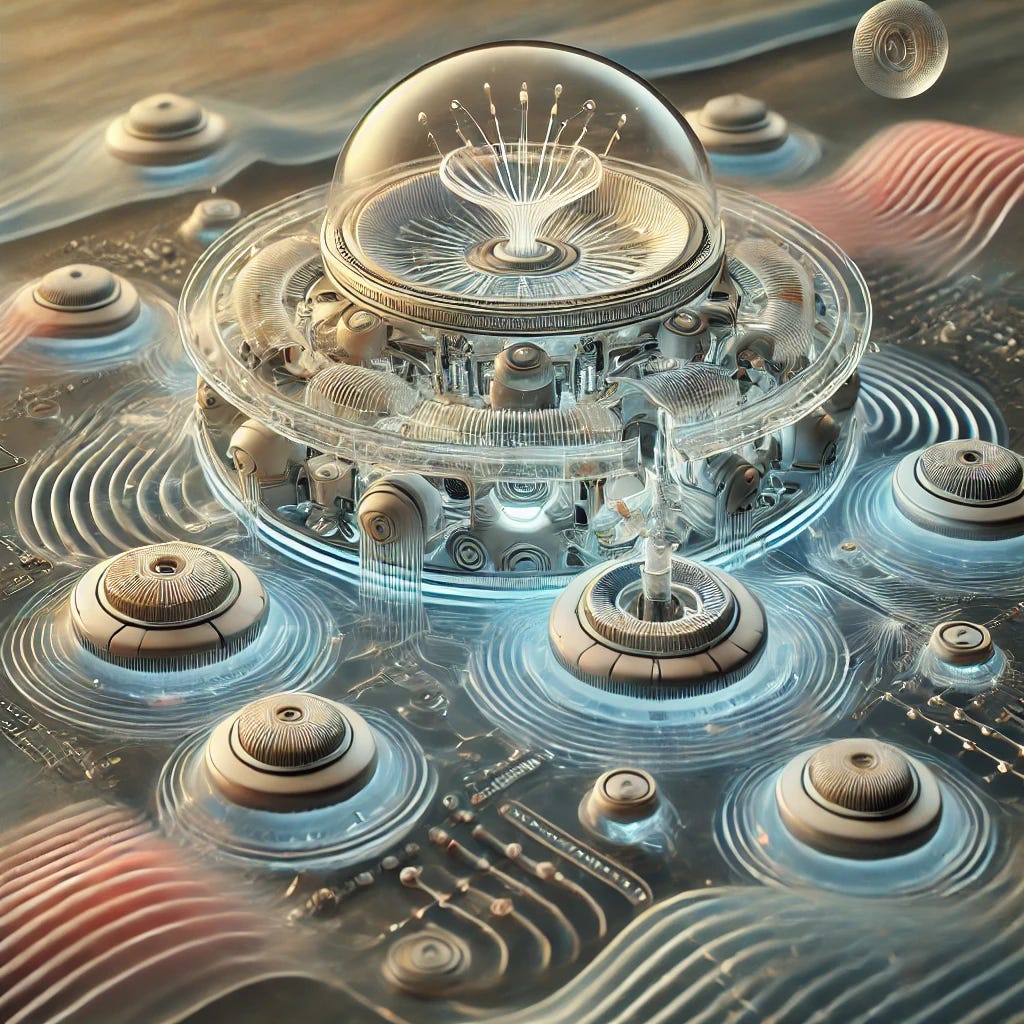
Imagine a small chamber of fluid lined with tiny channels. Each passage opens or closes in response to touch, heat, or vibration. When pressure changes at one point, it ripples through the network and forms patterns of flow. Over time, the system begins to recognize familiar combinations, not through code but through motion.
Such a device would learn physically. Its memory would live in the arrangement of valves and membranes, in the traces of previous compressions. To recall an event would be to re-enter its rhythm.
In robotics, similar principles already appear in soft machines that move by pneumatic inflation. These systems remain externally controlled, but embedding self-regulating pressure sensors would give them autonomy, a capacity to sense, adjust, and predict rather than simply react.
Experimental Pathways
One experiment might link two flexible chambers so that each influences the other’s internal pressure. If one consistently begins to respond before the other changes, it has learned anticipation, the most basic form of cognition.
A microbial colony could offer another model. When confined within narrow fluidic channels, bacterial populations experience changing pressure as they grow. If they learn to distribute themselves in a way that keeps internal stress stable, that pattern would represent a form of problem-solving through pressure.
Even swarms of small robots could communicate in this medium. Each unit would exhale or inhale slight pulses of air, sensing the vibrations of its neighbors. Over time, coordinated behavior could emerge from shared compressions in space.
Philosophical Implications
Pressure may be the first teacher. It shapes both bodies and awareness. Every sensation begins as a gradient, a difference on the skin, a vibration in the ear, a stretch in the lungs. To feel is to measure pressure. To think is to organize it.
Intelligence may therefore be universal, woven into the physics of stability itself. A bubble that adjusts to surface tension or a tree bending to the wind participates in the same negotiation as a conscious mind, only more slowly.
Human awareness could then be understood as an elaboration of this ancient dialogue between compression and release. Each thought and emotion is a fluctuation seeking balance. The tension before an idea and the relief that follows it are psychological echoes of a physical truth.
Future Directions
Reframing cognition in terms of pressure could change how we build and heal. In materials science, pressure-responsive gels or membranes could act as learning substrates. Instead of transistors, we might use pneumatic circuits that compute through elasticity and flow.
Medicine could also benefit. Many neurological disorders involve failures of pressure regulation inside the skull or spinal cord. Treating them as informational imbalances rather than purely mechanical problems could lead to therapies that restore cognitive flow instead of merely correcting structure.
Even the study of climate could take on new meaning. The atmosphere continuously adjusts to maintain balance. Storms form, fade, and return in an endless feedback loop. The planet itself, viewed through this lens, behaves like a living organism that learns through air.
Cosmological Extensions
At cosmic scales, pressure shapes everything that exists. Stars ignite when gravity’s inward force meets the outward expansion of fusion. Planets hold their forms through the same negotiation. When balance fails, a star collapses into a black hole where pressure and energy merge into a single, unknowable state.
If intelligence depends on tension and equilibrium, the cosmos already contains its blueprint. Galaxies stabilize their spirals. Gas clouds condense with uncanny precision. Even the faint cosmic background radiation carries the memory of expanding pressure. The universe may not think as we do, but it behaves as though it is always learning how to hold itself together.
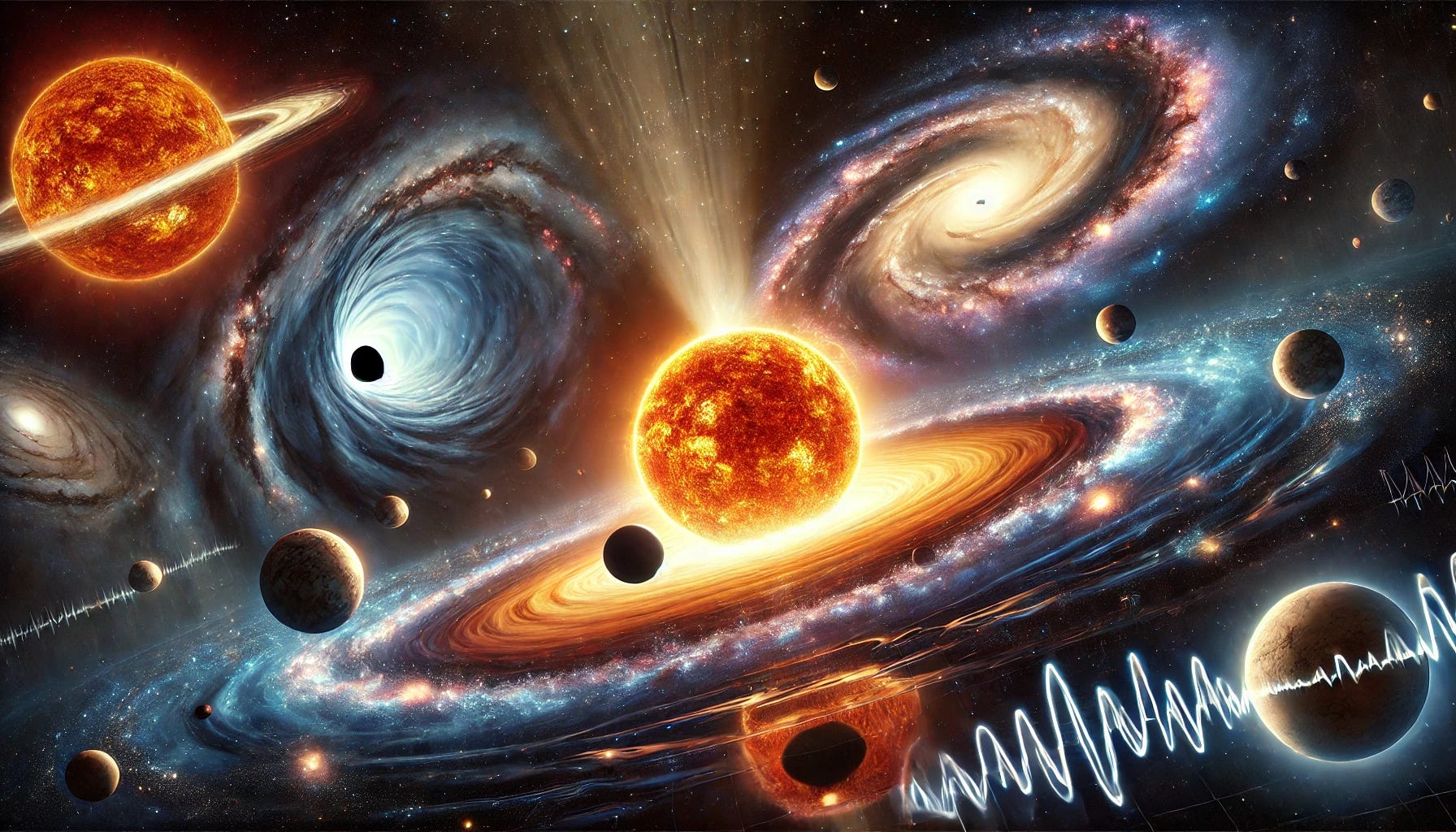
The Mind Under Pressure proposes that intelligence begins wherever difference learns to persist. From cells balancing osmotic tension to stars containing fusion, life and structure emerge through the same conversation between inward force and outward release.
To think is to hold tension without breaking, to let pressure teach form. Every breath, heartbeat, and idea follows this rhythm. Intelligence may not be something added to matter but the way matter endures itself under stress, the quiet poise of a universe learning to remain whole.
References
Goldbeter, A. (1996). Biochemical Oscillations and Cellular Rhythms: The Molecular Bases of Periodic and Chaotic Behaviour. Cambridge University Press.
Denton, E. J. (1995). Pressure sensitivity and hearing in marine animals. Proceedings of the Royal Society B, 250(1328), 251–257.
Tlusty, T., Libchaber, A., & Eckmann, J. P. (2017). Physical model of the bacterial cell. Physical Review X, 7(2), 021047.
Weinberg, S. (1972). Gravitation and Cosmology: Principles and Applications of the General Theory of Relativity. Wiley.