
The Memory Paradox
Exploring ChatGPT

In an era where technology provides instant access to vast amounts of information, human memory is evolving in ways we never anticipated. From search engines to cloud storage, we have outsourced much of our memory to digital devices. But does this reliance on technology enhance our ability to retain information, or is it causing us to forget more than ever? This paradox raises critical questions about the future of human cognition, the role of artificial intelligence in memory enhancement, and the philosophical implications of perfect recall.

The Science of Memory: How Do We Remember?
Human memory is a complex process that involves encoding, storing, and retrieving information. Neuroscientists distinguish between different types of memory:
Sensory Memory: The shortest form of memory, lasting only milliseconds, helping us process our environment.
Short-Term Memory (Working Memory): Holds limited information for brief periods, crucial for daily tasks like mental calculations and conversations.
Long-Term Memory: Stores information indefinitely, divided into explicit (declarative) memory, which includes facts and events, and implicit memory, which involves unconscious skills and habits.
The hippocampus, a key brain structure, plays a crucial role in converting short-term memories into long-term ones. However, studies suggest that the way we use memory is changing due to technological advances.
The Google Effect: Are We Forgetting More?
In 2011, researchers Betsy Sparrow, Jenny Liu, and Daniel Wegner published a groundbreaking study on what is now called the Google Effect, or digital amnesia. They found that when people expect to have access to information later (e.g., via the internet), they are less likely to remember it. Instead of memorizing facts, people remember where to find them.
This phenomenon raises concerns about our ability to retain knowledge over time. Some argue that if we depend too much on technology, our ability to engage in deep learning and critical thinking may diminish.
The Role of AI in Memory Enhancement
While some fear that technology weakens memory, others believe it could enhance our cognitive abilities. Researchers are developing AI-driven tools and brain-computer interfaces (BCIs) designed to augment memory.
Neural Implants and Memory Prosthetics
Scientists at the University of Southern California have developed a memory prosthetic that uses electrodes implanted in the brain to enhance recall. In experiments, test subjects with implanted electrodes showed a 35% improvement in memory performance.
Elon Musk’s company Neuralink is working on brain-chip interfaces that could eventually store and retrieve memories like a computer.
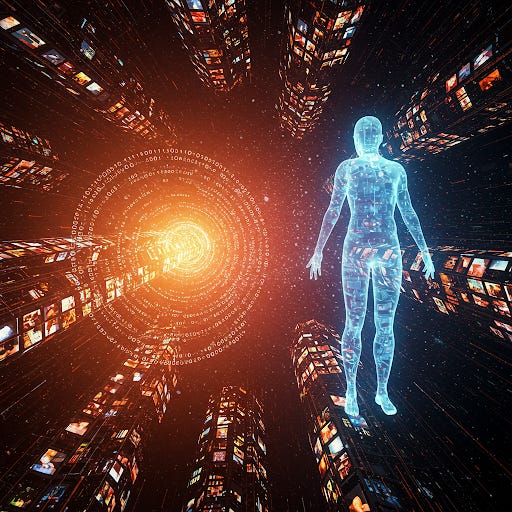
External Memory Storage: The Rise of Digital Immortality
Companies like Replika and Eternime aim to create AI-powered avatars that can store memories, thoughts, and even personalities, allowing people to interact with digital versions of deceased loved ones.
Some researchers speculate that in the future, human memory could be fully externalized, allowing for perfect recall without biological limitations.
The Dark Side of Perfect Recall
While enhancing memory seems advantageous, too much memory might be detrimental.
The Case of Solomon Shereshevsky: The Man Who Couldn’t Forget
Solomon Shereshevsky, a Russian journalist, had an extraordinary memory, capable of recalling complex details years after first encountering them. However, his perfect recall made it difficult for him to extract important information from trivial details, demonstrating that forgetting is sometimes essential for effective thinking.
PTSD and Hyperthymesia
Individuals with Post-Traumatic Stress Disorder (PTSD) struggle with painful, intrusive memories that they cannot forget.
People with Hyperthymesia, a rare condition where individuals remember nearly every day of their lives, often describe it as exhausting, with their minds constantly flooded with past events.
These cases highlight the importance of selective memory—the ability to forget unimportant details and focus on what matters.
Philosophical Implications: Does Memory Define Us?
Memory plays a crucial role in shaping identity. If technology allows us to offload memories, how does that impact our sense of self? Some questions to consider:
If we can erase painful memories, would that change our personal growth?
If AI can store and retrieve memories for us, does that reduce the need for firsthand experience?
Could external memory storage create a digital afterlife, where people live on through their stored memories?

Technology is undeniably transforming human memory. While AI and neural implants offer the potential for enhanced recall, they also introduce risks such as over-reliance, loss of deep learning skills, and ethical concerns. The balance between remembering and forgetting is crucial for human cognition, and the way we navigate this paradox will shape the future of how we store, retrieve, and experience knowledge.
As we move toward an era of memory augmentation and digital immortality, we must ask ourselves: Are we truly enhancing our intelligence, or are we outsourcing the very essence of what it means to be human?
My lecturer in college told us we don't need to learn everything, we just need to learn how to Google correctly...and it was true! As a programmer it's almost impossible to learn every solution to every problem, so it is perfectly normal to spend your day googling!