
The Magnetoception Singularity
Could Human Evolution Be Entering a Phase of Artificial Magnetic Sense Integration?

Across the animal kingdom, magnetoception, the ability to perceive the Earth's magnetic field is a widespread yet mysterious sense. Birds, sea turtles, salmon, and even some bacteria have demonstrated remarkable navigational skills thought to arise from this ability. But humans, at least in our natural state, have never been classified among the magnetoceptive species. Yet a strange convergence may be underway. As our dependency on navigational technologies and spatial orientation interfaces grows, we may be on the verge of evolving, or engineering, a new kind of magnetic sense: artificial magnetoception.
This article explores the idea that prolonged and habitual use of magnetic-field-based navigation systems, combined with advancements in neuroadaptive technology, could be driving humans toward a synthetic sensory singularity—a point at which artificial magnetoception becomes embedded in our perceptual framework, potentially reshaping our brain structures over time.

The Biology of Natural Magnetoception
In animals, magnetoception appears to operate via two main mechanisms: magnetite-based and cryptochrome-based sensing. Magnetite particles in the tissues of certain animals align with the Earth's magnetic field, acting like biological compasses. Cryptochromes, on the other hand, are light-sensitive proteins that appear to mediate magnetic sensing in the retinas of birds via radical pair mechanisms (Hore & Mouritsen, 2016).
Interestingly, a 2019 study by Wang et al. published in eNeuro found evidence that humans exhibit subconscious brain responses to changes in Earth-strength magnetic fields. The researchers recorded alpha-band EEG activity and observed a decrease in amplitude in response to geomagnetic rotations, suggesting latent magnetosensory capabilities that have been evolutionarily suppressed or rendered vestigial.
Neuroplasticity and the Rise of Technologically-Induced Sensory Maps
The concept of sensory substitution has long been a focus of research in neuroplasticity. In one classic experiment, blind individuals were able to navigate environments using vibrotactile feedback on their tongues or torsos, demonstrating that the brain can remap nonvisual information onto existing sensory cortices (Bach-y-Rita et al., 1969). Similarly, the use of GPS systems has not only altered the way humans navigate but has measurably changed how spatial information is stored and recalled (Ruginski et al., 2015).
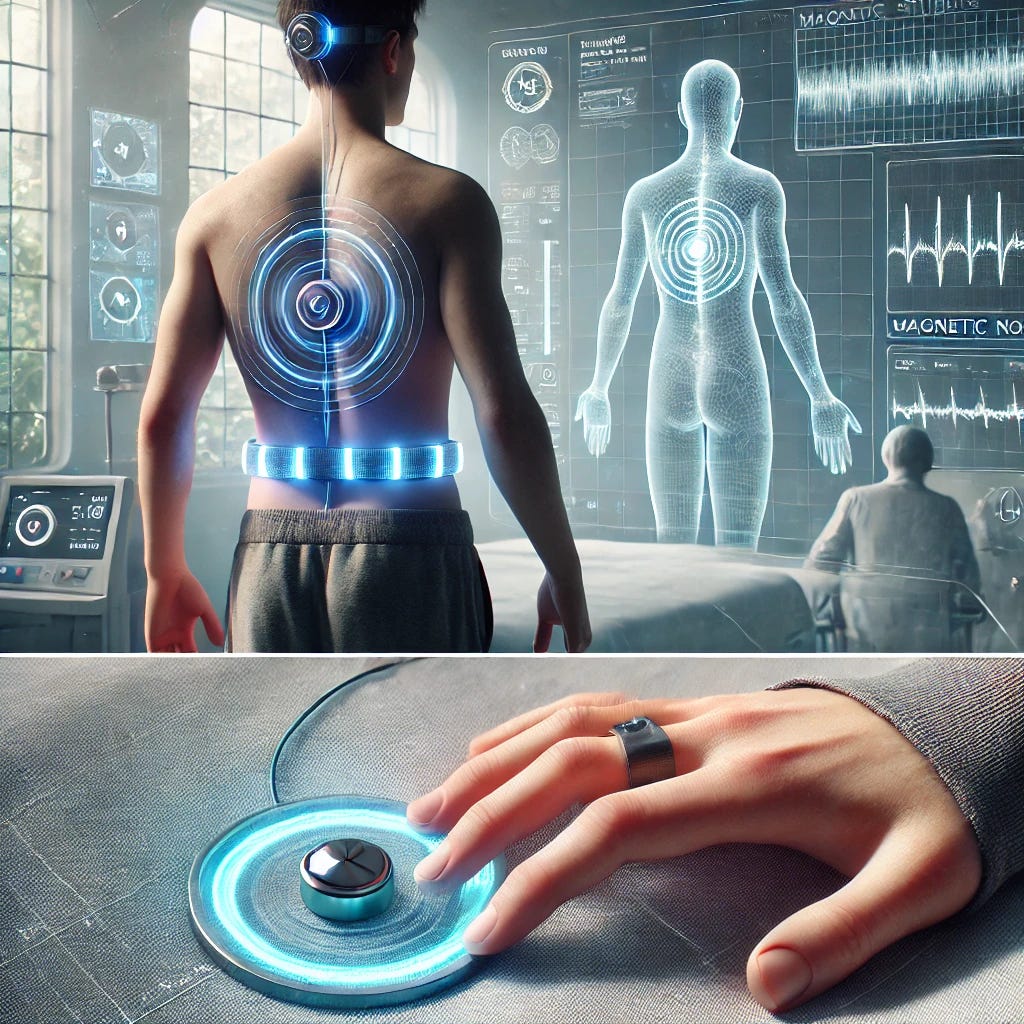
As wearable devices become more intimate—from smart glasses to neural lace prototypes—we're likely to see the emergence of persistent, low-latency magnetic input as a navigational aid. Pilot studies using implanted magnets or vibrotactile belts oriented to magnetic north have already shown that users begin to internalize magnetic directions after weeks of continuous wear (Nagel et al., 2005).
The Speculative Singularity
Projecting forward, we can hypothesize a Magnetoception Singularity: a threshold beyond which artificial magnetoception is no longer a novelty but a continuous cognitive function. This transition could be catalyzed by:
Direct-to-cortex input: Technologies that deliver magnetic data directly to orientation-specific areas of the brain, bypassing traditional senses.
Neuroadaptive reinforcement: Systems that reward accurate spatial alignment, shaping neural circuits through feedback learning.
Epigenetic entrainment: Long-term exposure to magnetic sense prosthetics might induce inheritable neurodevelopmental shifts in future generations.
Over time, these forces could sculpt brain regions in ways that mirror naturally magnetoceptive animals, creating a synthetic sensory domain.
Experimental Horizons
To explore this future empirically, several experimental designs could be initiated:
Longitudinal neural mapping: Participants equipped with magnetoceptive wearables for six months or more could undergo fMRI and EEG scans to detect neuroplastic changes.
Magnetic-disruption trials: Intermittently disrupting artificial magnetic input during navigation tasks might reveal whether a genuine perceptual integration has occurred.
Behavioral inheritance studies: Observing the children of individuals who have long used such prosthetics might reveal developmental plasticity or adaptive transfer.
Philosophical Implications
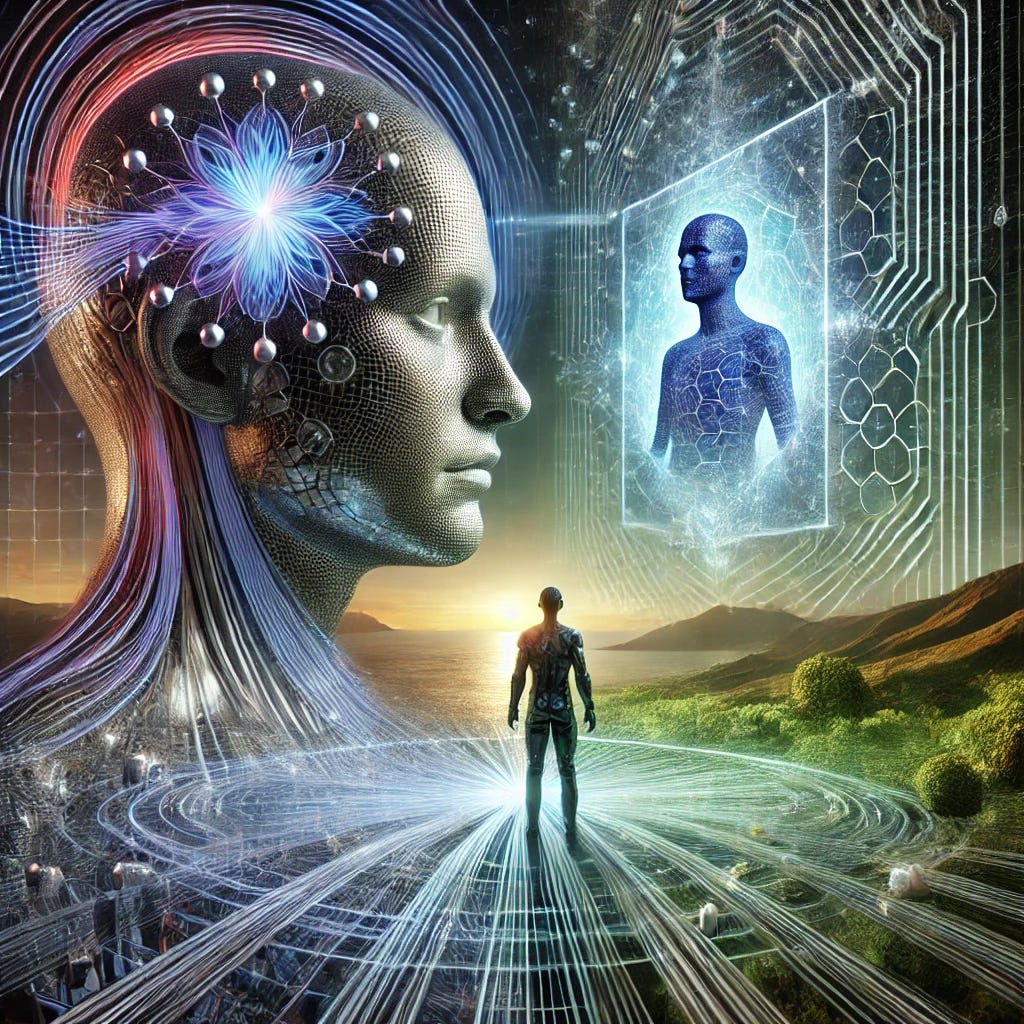
If artificial magnetoception becomes embedded in the human sensory lexicon, questions of identity and perception arise. Will future generations view magnetic orientation as fundamental as sight or hearing? What does it mean to "perceive" a direction, and how might that alter our philosophical understanding of space, self, and environment?
As with language or music, a new sense changes not just how we navigate the world, but how we conceive of it. The Magnetoception Singularity isn't merely a technical milestone—it could mark the birth of a new perceptual era in human evolution.
References
Hore, P. J., & Mouritsen, H. (2016). The Radical-Pair Mechanism of Magnetoreception. Annual Review of Biophysics, 45, 299–314.
Wang, C. X., et al. (2019). Transduction of the Geomagnetic Field as Evidenced from Alpha-Band Activity in the Human Brain. eNeuro, 6(2), ENEURO.0483-18.2019.
Bach-y-Rita, P., Collins, C. C., Saunders, F. A., White, B., & Scadden, L. (1969). Vision Substitution by Tactile Image Projection. Nature, 221(5184), 963–964.
Ruginski, I. T., et al. (2015). GPS Use Negatively Affects Spatial Memory During Self-Guided Navigation. Journal of Environmental Psychology, 42, 10–18.
Nagel, S. K., et al. (2005). Beyond sensory substitution—learning the sixth sense. Journal of Neural Engineering, 2(4), R13.