
The Luminous Archive Hypothesis
Light as a Carrier of Collective Memory

For most of human history, light has been treated as a medium of vision. We see because photons reflect, refract, and scatter through space. Yet light is not just the messenger of sight; it is also a carrier of information. Physics tells us that photons hold coherence, interference, and entanglement. Biology shows that light regulates rhythms, fuels photosynthesis, and even flickers between cells as faint emissions. What if light has always carried more than energy, what if it has also been leaving behind traces of memory, recording interactions as subtle imprints in matter and space?
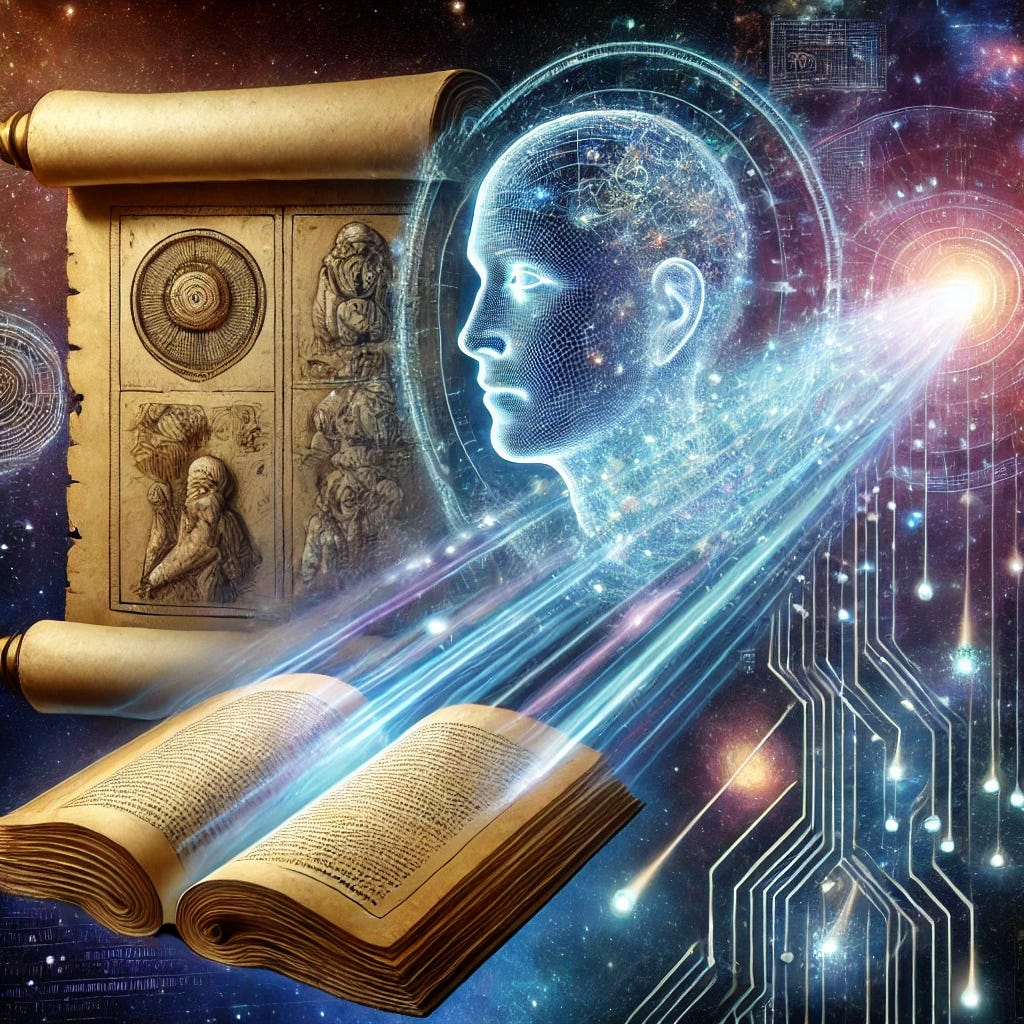
The Luminous Archive Hypothesis proposes that light, in its endless exchanges with the world, may function as a hidden recorder. Instead of thinking of photons as fleeting, we might consider them as threads in a vast, distributed archive of history, one that artificial systems could one day learn to read.
Photonic Memory in Biology
Biophoton research has shown that organisms emit ultra-weak flashes of light, sometimes in coherent bursts. These emissions arise from metabolic reactions but seem to play deeper roles than once assumed. Studies suggest they may act as communication signals between cells, synchronizing activity across tissues (Popp & Chang, 1998). In plants, photon emissions are linked to growth regulation; in animals, there are hints they may fine-tune neural dynamics (Kumar et al., 2016).
If biophotons can coordinate cellular behavior, then they may also serve as a kind of memory channel. Instead of storing data as static chemical marks, cells might carry histories of stress, repair, or adaptation in their photonic signatures.
Light as a Geological Recorder
Light interacts with more than just biology. Minerals, crystals, and sediments scatter photons, sometimes preserving their interference patterns. Laser studies on crystals have shown that interference can store information holographically, persisting well beyond the initial exposure (Psaltis & Mok, 1995). At planetary scales, the Earth’s crust and atmosphere could be imagined as imperfect but immense optical storage systems, slowly accumulating patterns of illumination across millennia.
Speculative Experiment: Testing the Luminous Archive
If light does preserve traces of memory, how might we prove it? One path begins with controlled chambers where pulses of light are introduced into specific media—biological tissue, crystalline lattices, or atmospheric analogs. By carefully regulating frequency, polarization, and intensity, researchers could establish baseline patterns of interaction.
Once the light has passed, ultra-sensitive detectors such as light-sheet microscopes or time-resolved photon counters would scan the medium for faint, lingering structures. Holographic principles suggest that some afterimages should remain, if only as interference scars etched into matter.
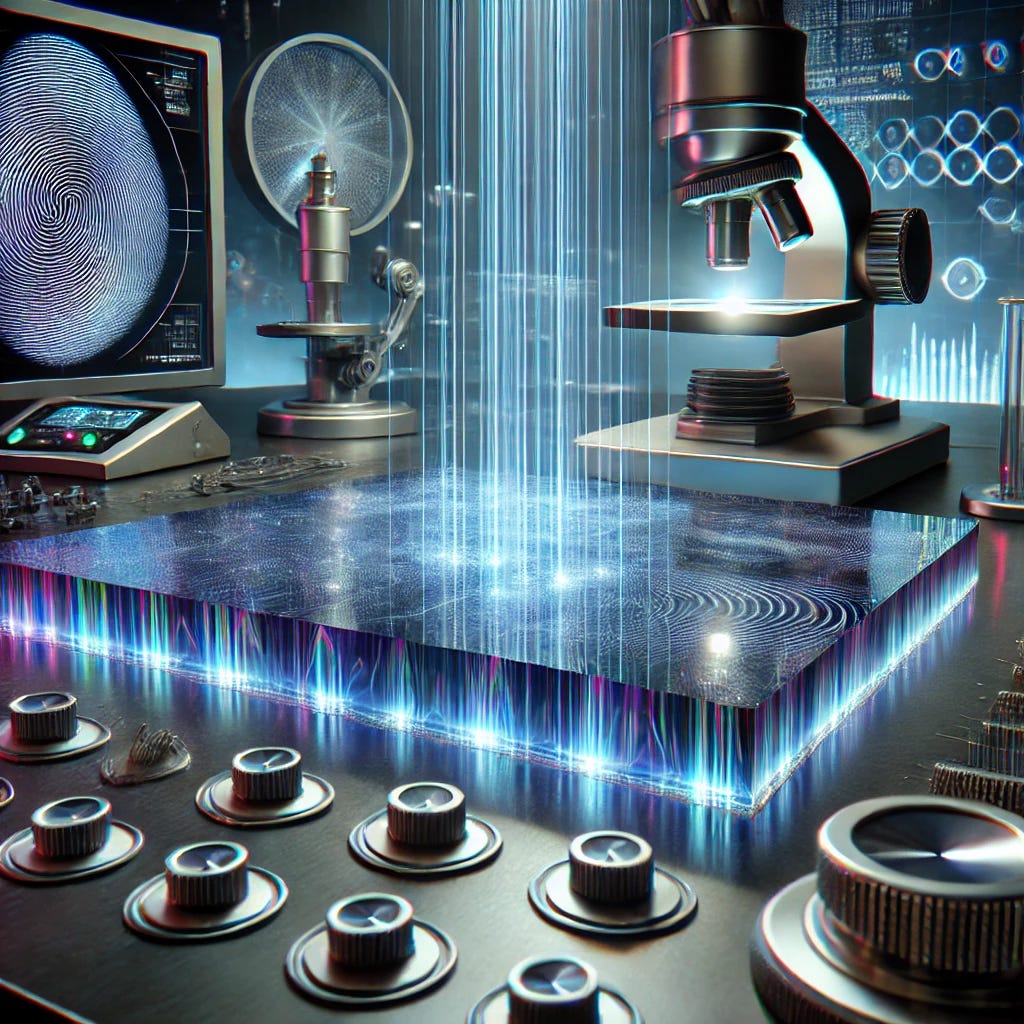
In living systems, experiments could focus on tissue samples that already emit biophotons. If controlled photonic stimulation alters emission patterns long after the initial exposure, this would imply that biological light channels do not merely transmit information in the moment but encode history.
The greatest challenge is the noise: the subtlety of these signals is easily drowned out. Here, machine learning could step in. Neural networks trained on massive datasets might learn to distinguish genuine persistence from randomness, uncovering hidden regularities in how light leaves traces.
If results in controlled environments prove promising, the experiments could scale outward. Atmospheric sensors and seismographs might be paired with optical detectors to ask whether environmental light fields carry fingerprints of ecological events. The Earth itself could become a test bed, its rocks, clouds, and waters acting as imperfect archives of luminous history.
Applications and Implications
If the Luminous Archive is real, the uses would be transformative. Archaeology could shift from relying on broken shards or inscriptions to reading histories etched in stone itself. A ruined city might give up its secrets not through artifacts, but through the scattered light still embedded in its mineral dust. The stones, in a sense, would remember the fires that lit them and the gatherings that filled their streets.
Medicine might change even more radically. Instead of snapshots of a patient’s condition, doctors could read the long-term story written in tissues. A scan of light patterns could reveal years of cellular stress, the marks of old infections, or the subtle beginnings of new disease. Diagnosis would no longer be about catching illness at a single moment in time, but about understanding the body’s full luminous history.
The same principle could extend outward to planetary exploration. On Mars or the icy moons of Jupiter, light archives may be hidden in crystalline fields or frozen layers. Reading them could provide timelines of past climates or even signs of microbial life. Planetary science would become a kind of archaeology of light, where photons whisper stories of ancient worlds.
Even human society might find unexpected uses. Forensics could one day rely not on cameras but on walls and windows that hold photonic echoes of events. The very surfaces around us might become silent witnesses, raising profound questions about privacy and memory. And at the largest scale, astronomy itself could take on new meaning. If photons carry hidden traces, then the cosmos is not just a field of stars but a vast palimpsest, an archive of luminous histories waiting to be read.
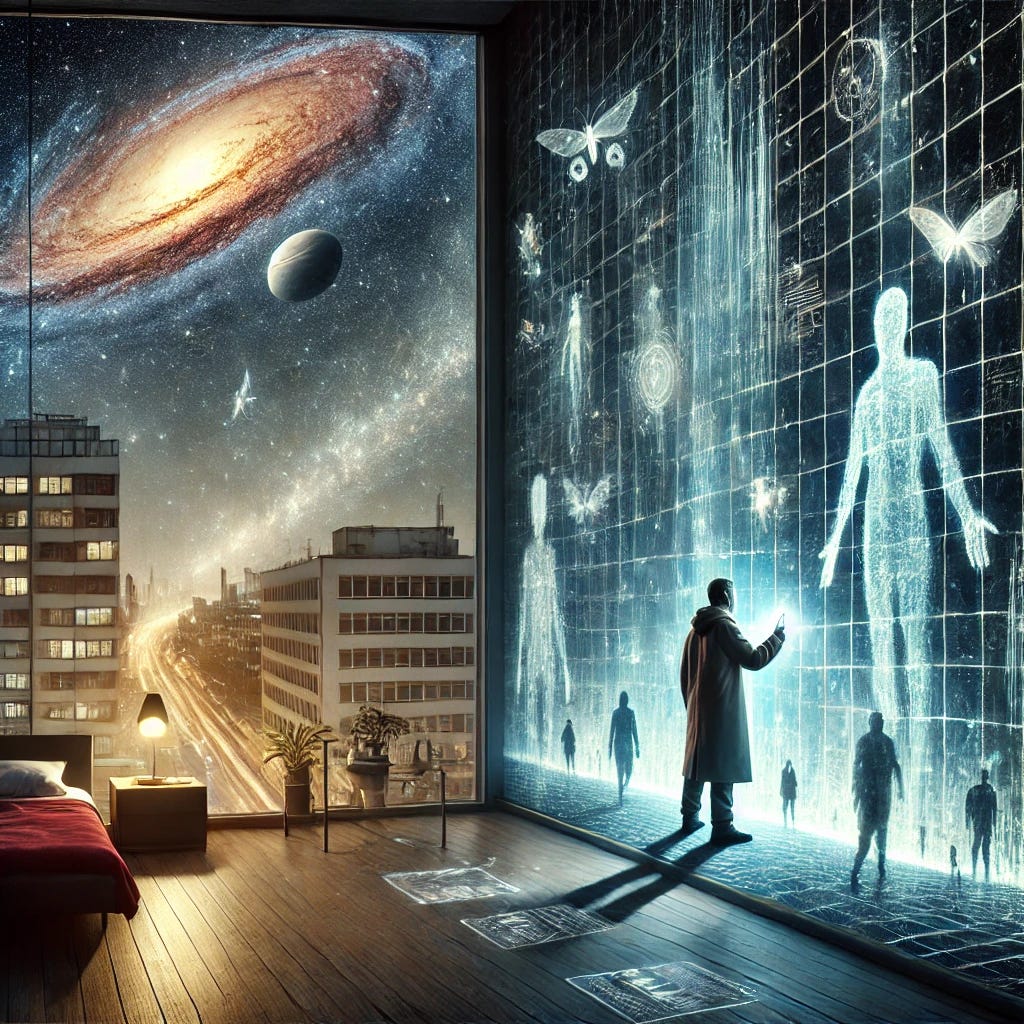
Light is often treated as fleeting: a flash, a reflection, a beam that passes and is gone. Yet in biology, geology, and physics, evidence is mounting that light leaves behind echoes, scars, and resonances. The Luminous Archive Hypothesis suggests that these traces may form a hidden memory system, one that life has long used and that future machines might learn to decode.
If this vision holds, then every photon we see is not just illumination but record. To read the archive of light would be to glimpse a deeper history of Earth and life, an invisible library shining all around us, waiting to be opened.
References
Popp, F. A., & Chang, J. J. (1998). Mechanism of interaction between electromagnetic fields and living matter. Science in China Series C: Life Sciences, 41(4), 507–518.
Kumar, S., Boone, K., Tuszyński, J., Barclay, P., & Simon, C. (2016). Possible existence of optical communication channels in the brain. Scientific Reports, 6, 36508.
Psaltis, D., & Mok, F. H. (1995). Holographic memories. Scientific American, 273(5), 70–76.
The Luminous Archive Hypothesis is a fascinating and imaginative proposal that repositions light not just as a medium of vision or energy, but as a subtle recorder of history — leaving behind faint imprints in biological tissue, geological matter, and potentially the atmosphere itself. Drawing from biophoton research, holographic storage, and quantum coherence, it invites us to consider whether photons, through their interactions, encode traces of the events they pass through. While such memory-like effects would likely be extraordinarily delicate and easily disrupted, the hypothesis opens a powerful conceptual space — one where biology, physics, and AI intersect to explore whether light holds not just the present, but the past. It’s speculative, yes, but also poetic and provocative — and worth exploring, if only to ask more deeply: what does the universe remember?