
The Last Human Jobs
Exploring ChatGPT

Artificial intelligence (AI) is rapidly transforming industries, automating tasks, and redefining the job market. By 2035, AI is expected to take over many roles currently held by humans, leading to concerns about widespread job displacement. However, certain professions will remain resilient due to their reliance on uniquely human skills, ethical considerations, or the limitations of AI itself. This article explores which jobs will still exist in 2035, backed by scientific insights, technological projections, and philosophical perspectives.
The Role of AI in Job Automation
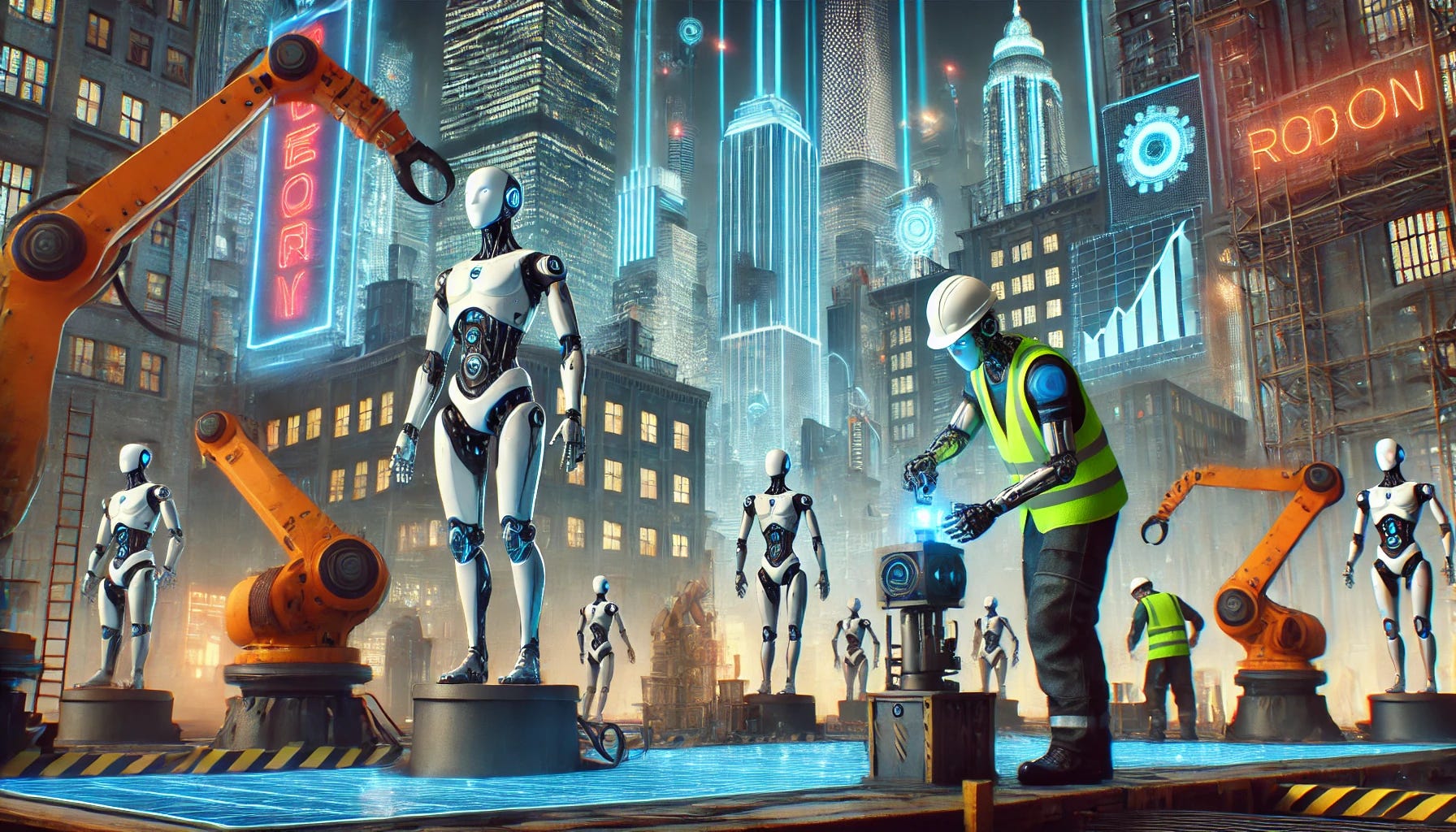
Before discussing which jobs will endure, it is important to understand why AI is replacing certain roles. AI excels in pattern recognition, data analysis, and repetitive task execution. Industries such as manufacturing, customer service, and logistics have already witnessed significant automation.
For example:
Manufacturing: Robotics powered by AI are reducing human labor in assembly lines. Companies like Tesla use AI-driven automation for car production.
Retail and Customer Service: AI chatbots such as ChatGPT and Google’s Bard are handling customer inquiries, reducing the need for call center employees.
Transportation: Autonomous vehicles from companies like Waymo and Tesla are expected to reduce jobs in trucking and ride-hailing services.
Despite these advancements, certain jobs will continue to thrive due to human intuition, ethical oversight, and the complexity of human emotions.
Jobs That Will Survive the AI Revolution
1. Healthcare Professions
Healthcare requires human empathy, ethical decision-making, and complex problem-solving—areas where AI has limitations.
Doctors and Surgeons: While AI can assist in diagnosis and robotic surgery, human oversight is necessary. AI lacks the ability to make ethical decisions in high-stakes medical situations.
Nurses and Caregivers: AI cannot replace the emotional support and physical care that nurses and caregivers provide. Patients require human interaction, reassurance, and personalized attention.
Mental Health Professionals: Therapy and counseling involve deep emotional intelligence and a nuanced understanding of human experiences, something AI struggles to replicate.
2. Creative Professions
AI-generated art, music, and literature have advanced significantly, but true creativity involves originality, cultural context, and emotional depth.
Writers and Journalists: While AI can generate news articles, investigative journalism and creative storytelling require human insight and ethics.
Artists and Designers: AI tools like DALL·E and MidJourney assist in design, but human creativity will remain essential for original, culturally relevant art.
Filmmakers and Musicians: AI may help in editing and composing, but the soul of storytelling and emotional expression in music remains uniquely human.

3. Skilled Trades and Manual Labor
Certain hands-on jobs will persist due to their complexity and need for adaptability.
Electricians and Plumbers: These jobs require troubleshooting in unpredictable environments, something AI-driven robots struggle with.
Construction Workers: While automation will assist, human problem-solving is still needed in dynamic construction sites.
Mechanics and Technicians: AI can diagnose vehicle issues, but repairs and maintenance require hands-on skills.
4. Education and Teaching
Education is not just about knowledge transfer; it involves mentorship, critical thinking development, and moral guidance.
Teachers and Professors: AI can aid in personalized learning, but human educators provide inspiration, emotional support, and ethical discussions.
Tutors and Trainers: Personal interactions and adaptability to student needs make human tutors irreplaceable.
5. Law and Ethics-Related Professions
Legal systems require moral reasoning, interpretation of human intent, and ethical considerations.
Lawyers and Judges: AI can assist in legal research, but court proceedings require human judgment and ethical reasoning.
Ethicists and Policy Makers: AI’s rise creates ethical dilemmas, requiring humans to establish legal and moral guidelines for its use.
6. Scientific Research and Engineering
AI can assist scientists, but true innovation requires human curiosity and philosophical reasoning.
Physicists, Biologists, and Chemists: Discoveries often stem from unexpected ideas, something AI cannot generate autonomously.
AI and Robotics Engineers: The irony of AI’s growth is that human engineers will still be required to build and maintain AI systems.
Space Exploration Scientists: AI aids in data analysis, but human intuition and adaptability remain essential in space missions.
The Philosophical Perspective: The Limits of AI
From a philosophical standpoint, the limitations of AI highlight why human-driven jobs will continue to exist. Philosophers like John Searle argue that AI, no matter how advanced, lacks true consciousness—it does not understand concepts but merely processes data.
Additionally, existentialist thought suggests that human purpose is not just about efficiency but about meaning. Many jobs exist not just to fulfill tasks but to provide a sense of purpose and identity. A society that prioritizes AI-driven efficiency over human engagement risks losing essential aspects of human fulfillment.
Preparing for the AI-Integrated Future
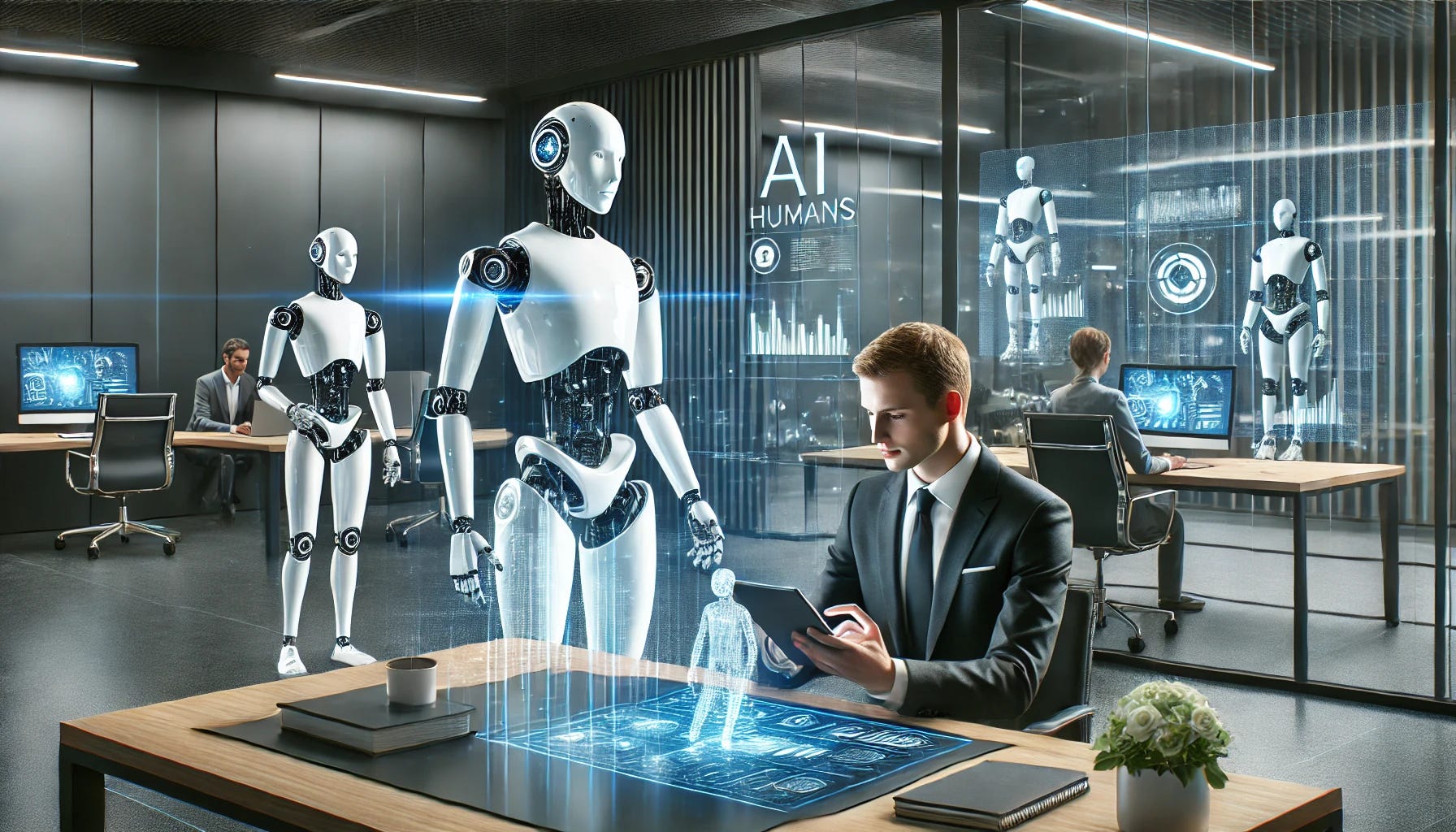
While many traditional jobs will disappear, adapting to AI will be key to staying relevant in the workforce.
Developing Soft Skills: Emotional intelligence, critical thinking, and adaptability will be highly valued in AI-driven workplaces.
Embracing Lifelong Learning: Continuous education in AI-related fields, ethics, and emerging technologies will be essential.
Blending AI with Human Expertise: Instead of fearing AI, individuals should learn how to integrate AI tools into their work to enhance productivity.
AI will undoubtedly reshape the job market by 2035, eliminating certain roles but also creating new opportunities. Jobs that require human creativity, empathy, ethical judgment, and hands-on expertise will remain resilient. Rather than resisting AI, the key to future job security lies in understanding its limitations and finding ways to coexist with it. By focusing on skills that AI cannot replicate, humans can thrive in an increasingly automated world.
Nothing replaces human connection in sales, which you never mentioned. Retail & Customer Service chat bots are horrible. Incredibly annoying. Also, you never know in a conversation what might trigger a lead to a new sale of a new item or service.