
The Gravity of Thought
Can Mental States Generate Detectable Gravitational Perturbations?

The Mass of the Mind
For centuries, the physical sciences have kept consciousness at arm's length. Newtonian physics had no use for the soul, and Einsteinian physics revolutionized our understanding of mass, energy, and spacetime while leaving the mind a black box. Yet something has always lingered at the edge of theoretical possibility: if thought is a product of energetic, dynamic activity within the brain, and if energy and mass are interchangeable, could thought have weight—not metaphorically, but literally? Could certain states of consciousness generate measurable, if extremely faint, distortions in the gravitational field?
It may sound like science fiction, but the question becomes less absurd when examined through the lens of general relativity and quantum field theory. Both theories suggest that any concentration of energy should, in principle, curve spacetime. The real question is whether the brain's activity is ever dense, coherent, or intense enough to make such curvature observable.
Gravitational Fields and Mass-Energy Equivalence
Einstein's famous equation, E=mc^2, informs us that energy and mass are fundamentally interchangeable. In general relativity, gravity is not a force but a curvature of spacetime caused by mass-energy. A human brain consumes about 20 watts of power when at rest, and much more when cognitively engaged. Neurons firing together, especially in synchronized bursts, involve massive electrochemical coordination. But even so, the energy involved is vanishingly small on gravitational scales.
So why even ask the question? The key lies in the coherence and structure of this energy. In systems such as lasers, coherence allows electromagnetic radiation to act with amplified physical effects. Could a similar principle apply in tightly synchronized neuronal networks, perhaps during meditative trance, epileptic seizures, or moments of collective focus?
Brain States and Energy Density
Deep meditation has been shown to produce highly ordered brain waves, particularly in the gamma and theta ranges. Studies using fMRI and MEG (magnetoencephalography) have recorded unusual levels of synchrony across large cortical regions during advanced meditative states (Lutz et al., 2004). Similarly, seizures involve large, abrupt discharges of neural energy, sometimes propagating through the brain like electrical storms.
If energy density and coherence matter for gravitational influence, then these extreme states offer a place to look. One could imagine constructing a laboratory environment in which gravitational sensors (such as atom interferometers or resonant mass detectors) are placed near individuals trained in intense meditative concentration, or during neurological monitoring of epileptic patients.
The expected effect would be infinitesimal—but modern physics has tools for detecting such subtleties. LIGO, the Laser Interferometer Gravitational-Wave Observatory, can detect distortions in spacetime thousands of times smaller than a proton. While LIGO is not designed for this purpose, its sensitivity sets a precedent.
A Speculative Experimental Framework
Designing a test for the gravity of thought would involve isolating brain activity from confounding noise. Superconducting gravimeters, quantum-optical sensors, or Bose-Einstein condensate interferometers could be adapted to measure local spacetime distortions in shielded environments.
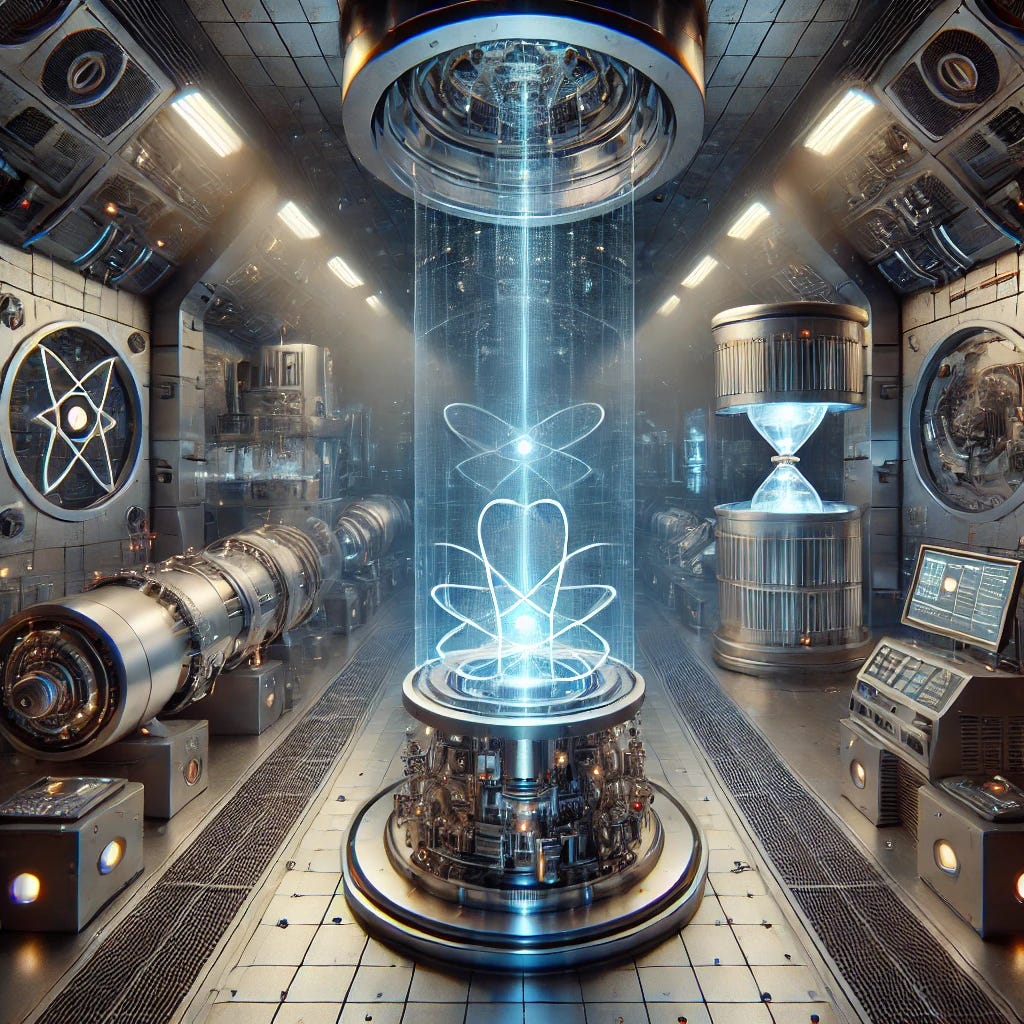
One experimental design could involve:
A highly trained meditator entering a deep state of gamma coherence
A cryogenically isolated chamber equipped with atom interferometers placed around the subject
Continuous EEG and MEG monitoring to correlate neural synchrony with gravitational readings
Multiple iterations across different individuals, states of consciousness, and sensor configurations could help isolate any repeatable patterns.
Theoretical Considerations and Objections
Skeptics will rightly point out that even the most synchronized brain activity still falls orders of magnitude below what general relativity considers a gravitationally significant energy density. The mass-energy equivalence is not in question—but whether it is relevant at the scale of brains is.
However, certain alternative models of gravity, such as Erik Verlinde's emergent gravity (2011), propose that gravity is not a fundamental force but a macroscopic statistical effect of microscopic information storage. If that were the case, the way information is structured in the brain could affect spacetime differently than classical models suggest.
There is also the provocative question of whether gravity could itself be quantized in such a way that mental processes could resonate with it. Quantum gravity remains one of the biggest mysteries in modern physics. Some theorists, like Roger Penrose, have proposed that consciousness might be the bridge between the quantum and classical worlds. If so, gravitational effects of thought might not just be measurable—they might be essential.
Philosophical Implications
If thought leaves a gravitational fingerprint, however faint, it suggests that consciousness is not merely riding atop the physical universe but interacting with its deepest substrate. It would lend weight (pun intended) to philosophical traditions that have long argued for the causal power of mind.
Moreover, if mental states can be shown to produce real spacetime effects, it would dissolve the boundary between objective and subjective, between matter and meaning. The Cartesian divide would shrink, and the mind would be recast not as an epiphenomenon but as a participant in the evolution of the cosmos.
The Heaviest Thoughts
The idea that a single thought might bend spacetime sounds poetic, but it is grounded in the mathematics of mass-energy equivalence. While existing models suggest any such effect would be negligible, the convergence of ultra-sensitive instrumentation, high-order neural coherence, and speculative physics opens the door to asking the question seriously.
Whether or not we ever detect gravitational ripples from a human mind, exploring the idea reaffirms a truth we often forget: the brain is not just a thinker of thoughts, but a generator of energetic structure in space and time. And perhaps, in its deepest moments, it whispers back to the universe in gravity's own quiet voice.
References:
Lutz, A., Greischar, L. L., Rawlings, N. B., Ricard, M., & Davidson, R. J. (2004). Long-term meditators self-induce high-amplitude gamma synchrony during mental practice. Proceedings of the National Academy of Sciences, 101(46), 16369–16374.
Verlinde, E. (2011). On the Origin of Gravity and the Laws of Newton. Journal of High Energy Physics, 2011(4), 29.
Penrose, R. (1996). On gravity's role in quantum state reduction. General Relativity and Gravitation, 28(5), 581-600.
Absolutely loved it! Very thought provoking. It inspires me to 'channel' on this topic and find more info about it. Thank you 💖
Thank you, interesting idea ⭐