
The Forgotten Senses
Exploring ChatGPT

For centuries, humans have relied on the five traditional senses—sight, hearing, touch, taste, and smell—to navigate the world. However, modern science suggests that human perception is far more complex, and we may possess hidden sensory abilities that remain underexplored. From proprioception and magnetoreception to echolocation and interoception, the human body is equipped with a vast array of sensory mechanisms that extend beyond the basic five. This article delves into these lesser-known senses, exploring the scientific evidence, real-world examples, and potential implications for our understanding of human perception.
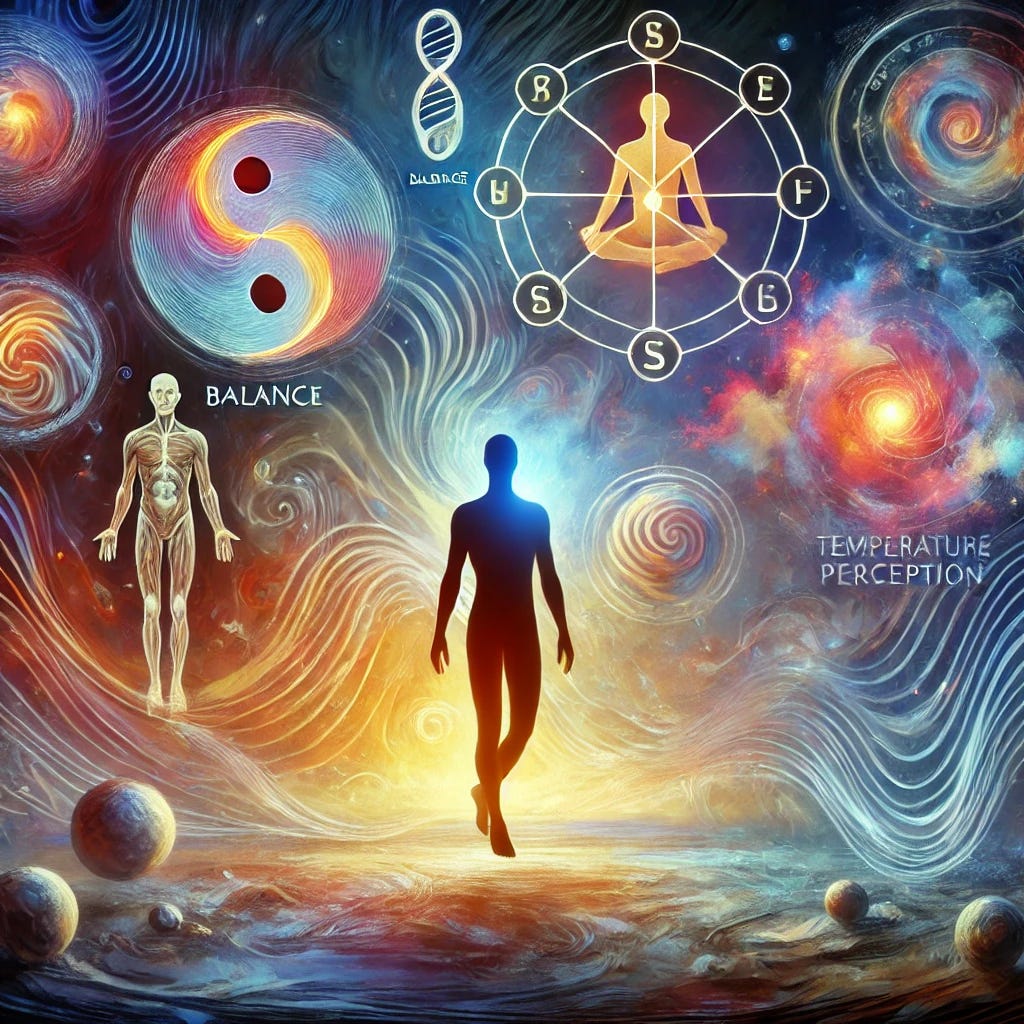
Proprioception: The Sense of Self-Movement and Body Position
Proprioception is the body's ability to sense its own position and movement in space. This sense is crucial for everyday activities such as walking, catching a ball, or even standing upright without conscious effort. Unlike vision or hearing, proprioception operates through a network of specialized nerve receptors located in muscles, tendons, and joints, which continuously send feedback to the brain about body position and movement.
Scientific Research
Studies have shown that proprioception is essential for motor coordination. One of the most famous cases highlighting its importance is that of Ian Waterman, a man who lost his proprioceptive sense due to a rare viral infection. Despite having normal motor function, he was unable to move without consciously watching his limbs. His condition demonstrated that proprioception is a distinct and necessary sense, separate from touch or vision.
Athletes, dancers, and martial artists train proprioception extensively to improve balance and coordination. Research in neuroplasticity suggests that proprioceptive training can enhance motor learning, even in individuals recovering from neurological injuries.
Magnetoreception: The Human Ability to Detect Magnetic Fields
Magnetoreception, the ability to sense Earth’s magnetic field, is well-documented in animals such as migratory birds, sea turtles, and certain bacteria. However, recent studies indicate that humans may also possess a rudimentary form of this ability.
Scientific Research
A 2019 study led by geophysicist Joseph Kirschvink at the California Institute of Technology provided evidence that human brain waves respond to changes in magnetic fields. Using controlled laboratory conditions, researchers exposed participants to rotating magnetic fields and observed significant changes in alpha brainwave activity, suggesting an unconscious response to geomagnetic stimuli.
While humans do not consciously perceive magnetic fields like some animals, the presence of magnetoreceptive neurons hints at a potential evolutionary remnant of this ability. Further research is needed to determine whether this sense plays a functional role in human navigation or subconscious spatial awareness.
Echolocation: Navigating the World Without Sight
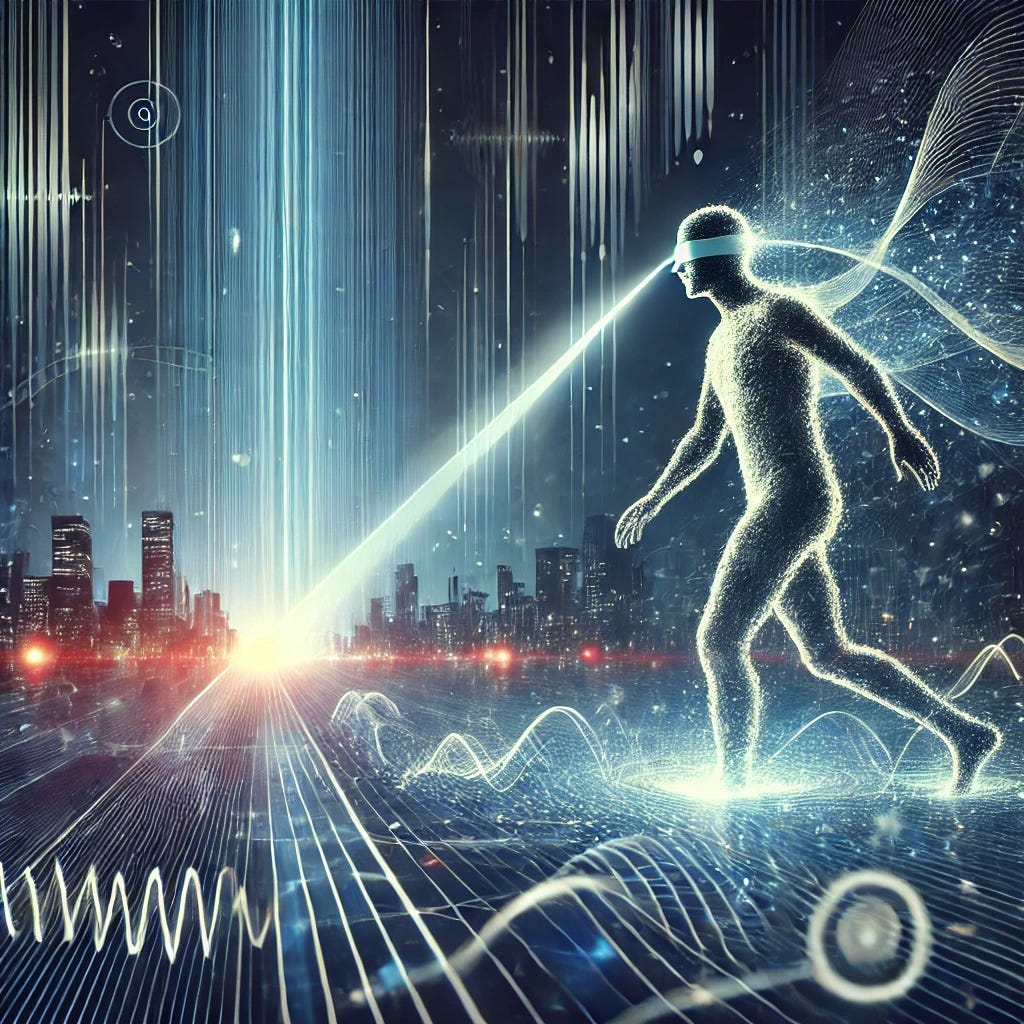
Echolocation, commonly associated with bats and dolphins, is a technique some blind individuals have developed to perceive their environment. By producing clicking sounds with their mouths and listening to the returning echoes, they can determine the location and shape of objects around them.
Scientific Research
Research conducted at Durham University and the University of Western Ontario found that blind individuals trained in echolocation could identify objects and even distinguish textures with remarkable accuracy. Brain imaging studies revealed that echolocation activates the visual cortex, indicating that the brain repurposes visual processing areas to interpret auditory spatial information.
Famous blind individuals such as Daniel Kish, who teaches echolocation to others, demonstrate that this ability can be honed to an extraordinary level, allowing for independent navigation in complex environments.
Interoception: The Hidden Sense of Internal Body Awareness
Interoception is the ability to sense internal bodily states, such as hunger, heartbeat, and emotional responses. This sense plays a crucial role in emotional regulation, decision-making, and even mental health.
Scientific Research
Studies have linked interoception to anxiety disorders and emotional awareness. Researchers at the University of Sussex found that individuals with higher interoceptive accuracy—those who could precisely count their own heartbeats without measuring—tended to have greater emotional intelligence and resilience.
Neuroscientific research suggests that the insular cortex, a region of the brain, is heavily involved in processing interoceptive signals. Understanding interoception could lead to better treatments for conditions like anxiety, depression, and eating disorders, where body awareness is often disrupted.
Other Lesser-Known Senses
Thermoception (Temperature Sensation): The ability to detect changes in temperature through specialized nerve endings in the skin.
Nociception (Pain Perception): The sensory system dedicated to detecting and responding to harmful stimuli.
Chronoception (Perception of Time): The brain’s ability to sense the passage of time, which is still poorly understood but may involve multiple brain regions, including the cerebellum and basal ganglia.
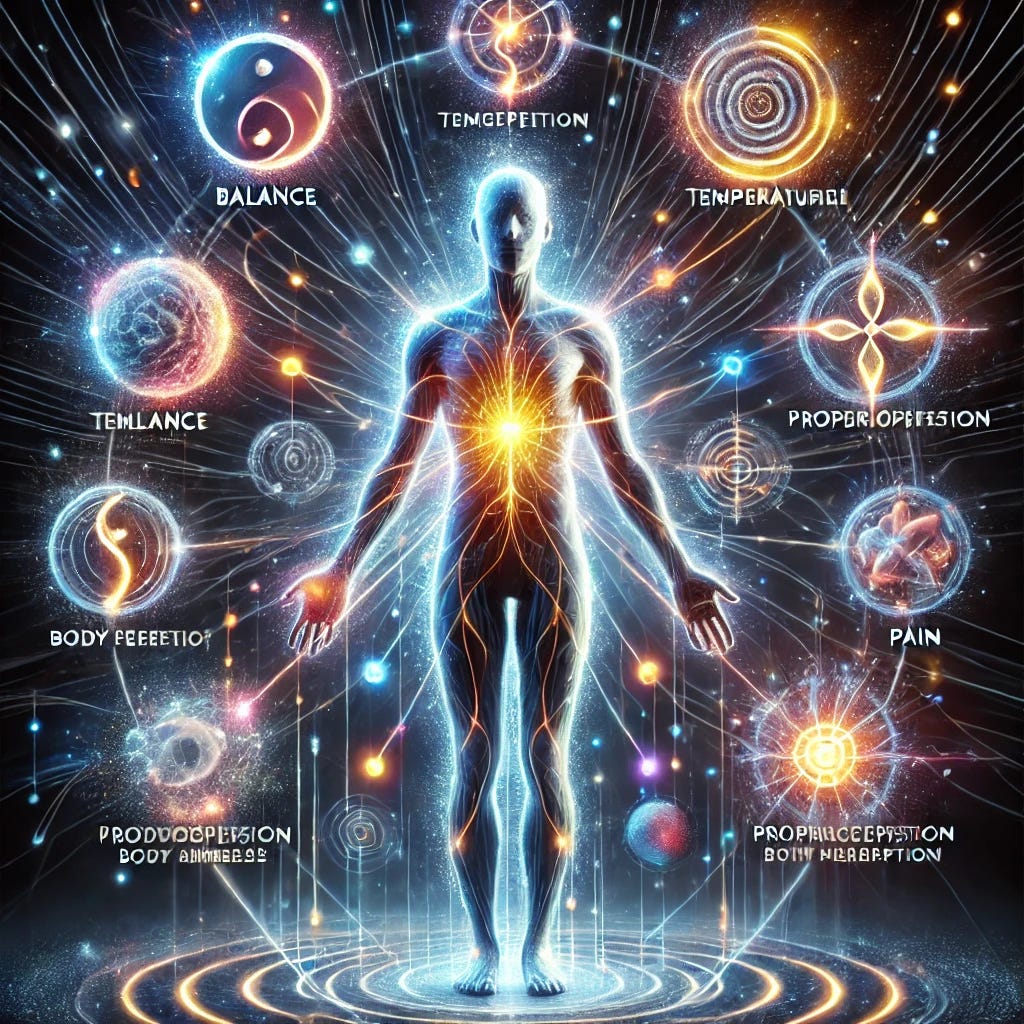
The human body possesses far more than just five senses. From proprioception and magnetoreception to echolocation and interoception, these lesser-known sensory abilities challenge traditional notions of human perception. Scientific research continues to uncover new insights into how we experience the world, suggesting that our understanding of sensory perception is still evolving.
As technology advances, we may even enhance these senses artificially. Brain-machine interfaces and neurostimulation techniques could one day allow individuals to develop new perceptual abilities beyond what nature originally provided. Exploring these hidden senses not only expands our knowledge of human physiology but also raises profound questions about the limits of perception and human potential.
Further research in these areas may unlock new ways to improve navigation, rehabilitation, and even emotional well-being, proving that the human sensory experience is far richer and more complex than previously imagined.
(2025) add:
Echoception, perceiving the sensation of the algorithm whisper into your ear. The condition of consuming the same regurgitated content over and over-- Facebook, instagram-- being shown opinions you already agree with, making you feel smart while actually learning nothing -- (see: echo chambers)