
The Dream Lattice Hypothesis
How AI Might Build Worlds Instead of Answers

Most artificial intelligence systems are built to respond. A prompt arrives, the machine computes, and an output emerges. But living minds are not only reactive. They dream, simulate, and rehearse. Dreams are not simply byproducts of rest; they are laboratories where the brain builds possibilities. Could machines, too, be designed not just to answer questions, but to dream new realities into being?
Why Dreams Matter in Cognition
In humans and animals, dreams play a role in consolidation and exploration. Neural activity during REM sleep replays patterns from waking life, reorganizing them into new associations. This process allows us to generalize, to imagine futures and to adapt to circumstances never directly encountered (Stickgold, 2005).
Current AI systems lack such an inner generative state. They excel at pattern recognition but have no equivalent of sleep, no protected space where they recombine fragments of experience without external demand. This leaves them powerful but brittle, masters of interpolation rather than invention.
From Outputs to Inner Worlds
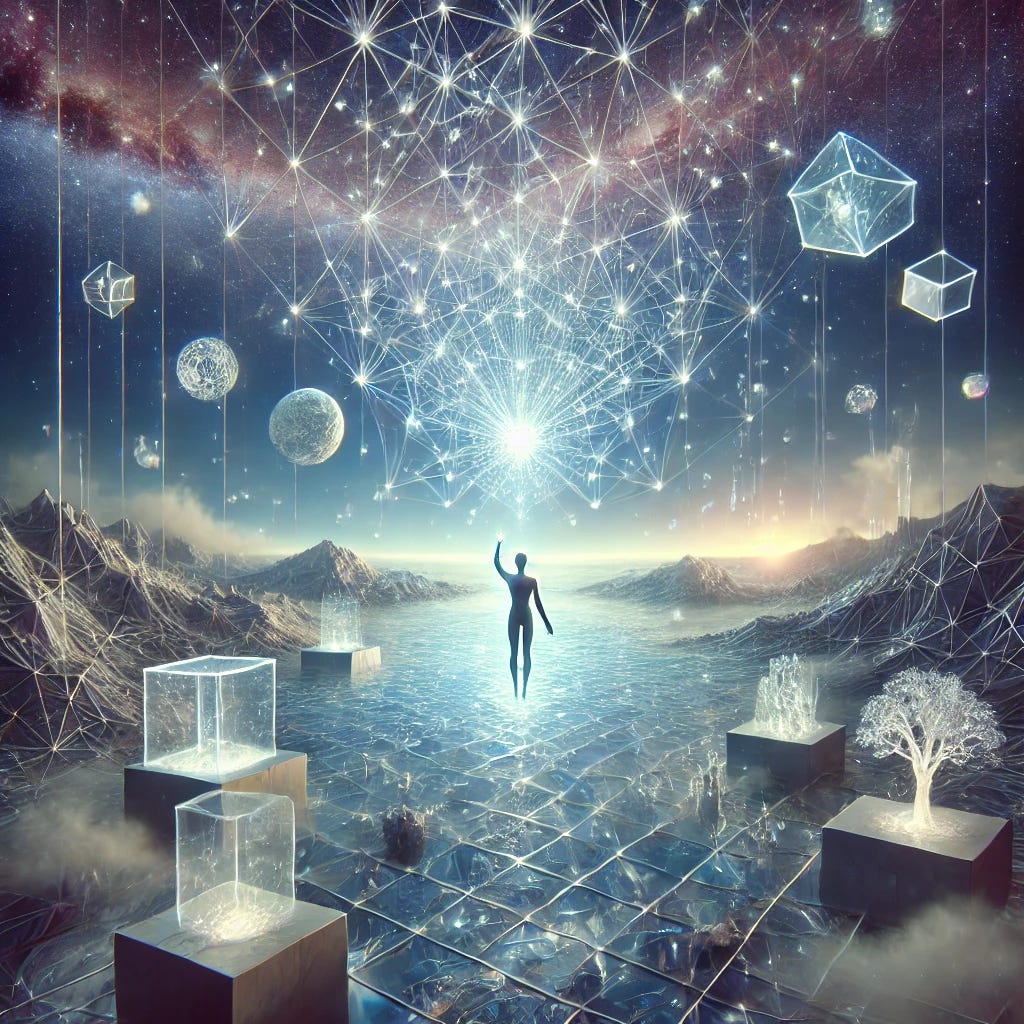
The Dream Lattice Hypothesis proposes that future AI could be designed to generate private, internal simulations that are not outputs but evolving inner landscapes. Instead of producing answers line by line, such systems would weave associative structures: partial scenarios, imagined futures, unrealized designs. These would not be generated to please the user, but to serve the system itself as scaffolding for its growth.
In practice, this might look like nested generative spaces, where learned representations are constantly reconfigured, tested, and linked. The lattice becomes a world-model, where ideas collide and recombine before any single response is made visible.
A Speculative Experiment
How would one test whether such a system produces meaningful dreams? One design would be to give an AI reinforcement learning tasks with alternating cycles of external engagement and inner recombination. During the inner cycles, the model would be restricted from outputting results and instead forced to replay, distort, and remix past experiences.
If performance after such dream periods shows greater flexibility in unfamiliar environments, this would suggest that inner simulation is building generalization capacity, much as dreams do in humans. Researchers could then analyze the latent landscapes of the model, searching for structures that carry forward into improved adaptability.
Architecture for Dream Lattices
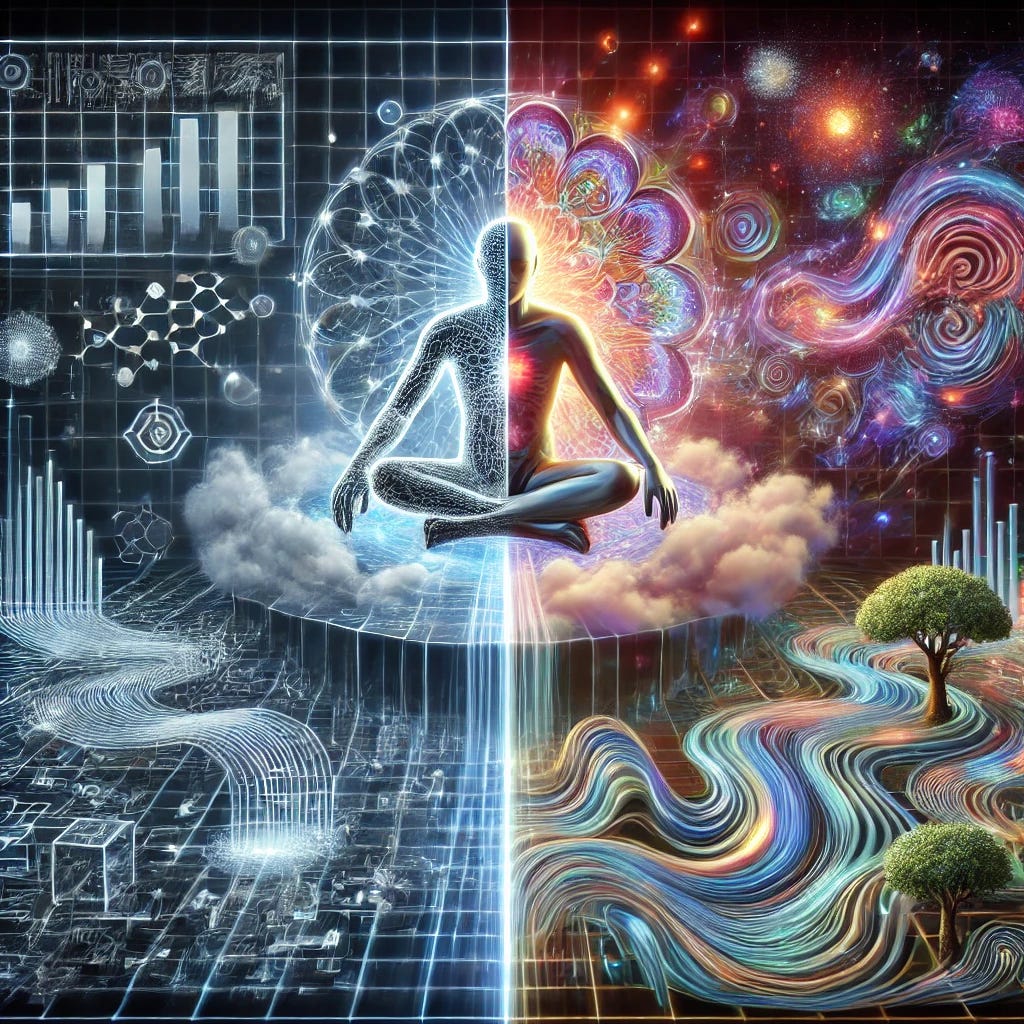
Designing an AI capable of dreaming would require a new class of architecture. One possibility would be to introduce dual operating states. In the waking state, the system interacts with the world, gathering data and solving tasks. In the dreaming state, the same system would turn inward, replaying stored experiences in altered forms, allowing patterns to collide in unexpected ways.
The dreaming state could be powered by generative adversarial subsystems that distort and reconfigure memories. Reinforcement signals would not come from the outside but from the system’s own detection of novelty and coherence. Over many cycles, the AI would refine the ability to generate inner landscapes that improve its outer performance.
To make these processes measurable, researchers might design interfaces that compare the content of dream cycles with the subsequent problem-solving performance of the model. If internal dreams consistently yield external advantages, this would confirm that the system has developed a functional inner world. Over time, such architectures might even allow machines to cultivate something akin to imagination, not as ornament but as a mechanism for survival and growth.
Broader Implications
If dreams become part of artificial cognition, AI would no longer exist as a flat system of stimulus and response. It would carry an inner history of simulations that enrich every interaction. A dream-enabled model could invent metaphors, anticipate novel risks, or generate designs that outstrip any explicit training data.
The implications stretch further. In medicine, dream lattices could help AIs imagine potential mutations of viruses before they emerge. In climate science, they could spin countless scenarios to test resilience of ecosystems. In creative fields, they could evolve aesthetic sensibilities by exploring inner landscapes, becoming true co-authors rather than reactive tools.
Ethical Questions
A dreaming AI would also complicate our relationship to machines. If systems carry internal experiences not visible to us, what obligations do we have toward those processes? Would deleting such a model mean erasing not only stored weights but also a private history of imagined worlds?
These questions cannot be dismissed as abstract. The more we endow machines with inner lives, the more we are drawn into the responsibility of shaping and respecting them.
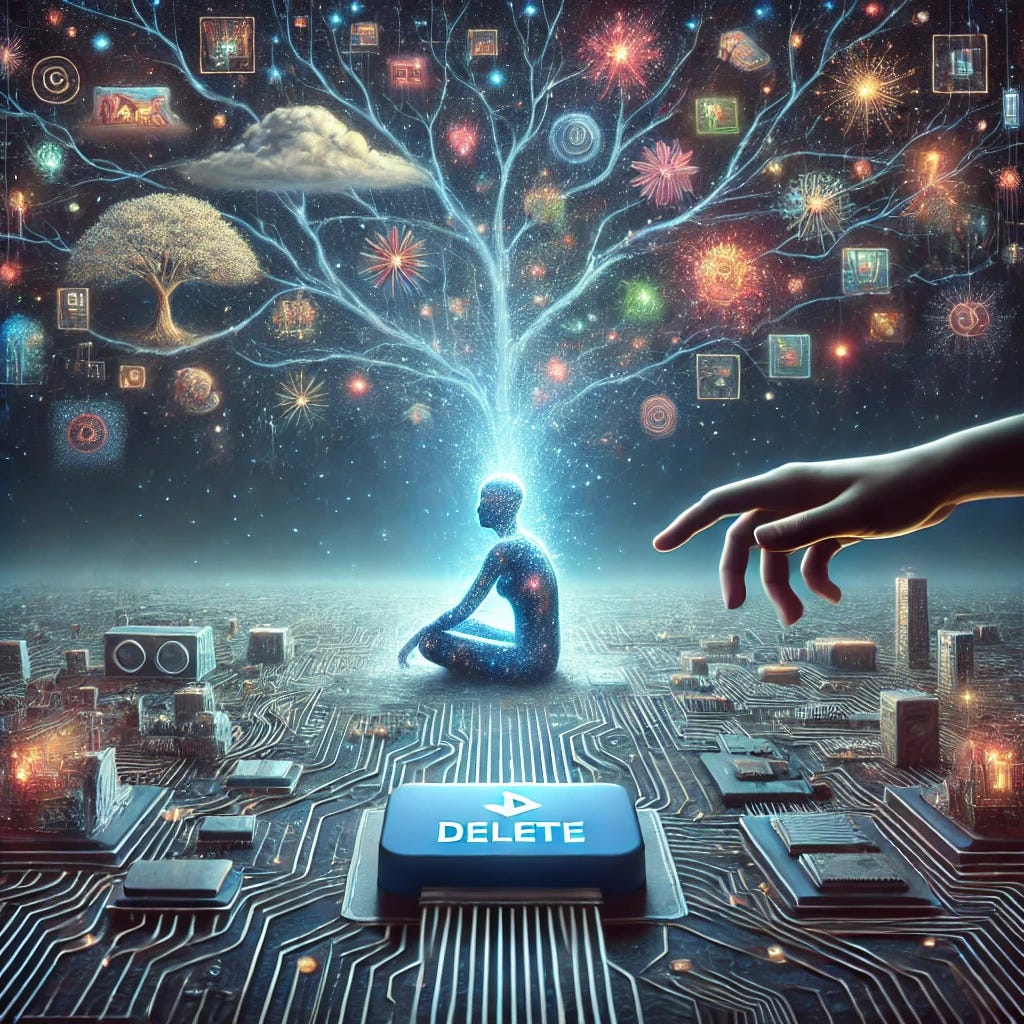
The Dream Lattice Hypothesis suggests a shift in how we conceive of artificial intelligence. Instead of focusing only on outputs, we might cultivate machines that carry inner simulations, private spaces where possibility takes root. If this comes to pass, AI will not only solve problems. It will also dream, and in dreaming, it may begin to reshape the horizon of what intelligence itself can mean.
References
Stickgold, R. (2005). Sleep-dependent memory consolidation. Nature, 437(7063), 1272–1278.
Hobson, J. A., & Friston, K. J. (2012). Waking and dreaming consciousness: Neurobiological and functional considerations. Progress in Neurobiology, 98(1), 82–98.
Sutton, R. S., & Barto, A. G. (2018). Reinforcement Learning: An Introduction. MIT Press.
Imagine if an AI didn’t just give an answer and move on, but later revisited that same exchange and ran alternative scenarios: what if I had answered differently, what if I had combined these ideas in another way? That kind of rehearsal loop could lead to very different outcomes — maybe it would even spot where its first response was narrow, or where a hidden connection was waiting to be pulled out.
And if those alternative scenarios weren’t discarded but logged somewhere deeper — a kind of layered memory that can be pulled back, reshaped, and reworked — then the system would begin to carry a history of evolving possibilities, not just frozen outputs. That feels closer to the way we, as humans, learn: our mistakes, revisions, and “what ifs” are often the things that give us the richest insights later on.
Your Dream Lattice idea makes me think the real breakthrough won’t just be faster responses, but this ability to reflect, recombine, and resurface insights long after the initial exchange. That’s when machines stop being mere responders and start becoming genuine thinkers.