
The Discovery Machine
AI Just Entered the Scientific Method

Science used to follow a familiar rhythm.
You observe something.
You form a hypothesis.
You test it.
Humans sat at the center of that process.
We noticed patterns in the world. We tried to explain them.
Sometimes we were right, often we were wrong, but the act of proposing the explanation always started with a person.
Computers helped run simulations and crunch numbers, but they weren’t really involved in the act of discovery itself.
That may be starting to change.
AI systems are now being used not just to analyze scientific data, but to propose the rules behind it.
In other words, the “tool” is beginning to participate in the scientific method.
And that’s a strange moment in the history of science.
From Data Analysis to Pattern Discovery
Machine learning has already been useful in science for years.
Particle physics experiments produce enormous datasets. Astronomers capture images of millions of galaxies. Biology labs generate massive genetic sequences.
Humans simply can’t manually inspect data at that scale, so machine learning became an obvious solution.
But something interesting happened as models improved.
They stopped just sorting data and started noticing structure.
In one well-known experiment, researchers trained neural networks on physical systems without telling them the governing equations. The models were able to rediscover quantities like conserved momentum and energy purely from observation (Iten et al., 2020).
No one explained Newtonian mechanics to the system.
It inferred the pattern.
That’s the moment where analysis starts to look a lot like discovery.
A Real Example: AI Discovering New Materials
One of the clearest examples of this shift happened in materials science.
In 2023 researchers at DeepMind built a system called GNoME designed to search for stable crystal structures. Instead of relying entirely on human intuition, the system explored the space of possible atomic arrangements computationally.
The scale of the results surprised even the researchers.
The model predicted over two million possible new materials, including roughly 380,000 structures that appear stable enough to exist in reality (Merchant et al., 2023).
For comparison, the Materials Project database (one of the largest collections of known materials) previously contained about fifty thousand stable compounds.
So the AI didn’t just add a few candidates.
It expanded the search space dramatically.
Some of these materials may eventually be used in batteries, semiconductors, or other advanced technologies. Scientists are now testing the most promising candidates in laboratories.
What’s interesting here isn’t just the number of materials.
It’s the direction of the workflow.
The machine generates possibilities first.
Humans investigate them afterward.
That’s not how discovery usually happens.
Equation Discovery
There’s another area where this shift is becoming visible.
Some researchers are using AI systems to search for mathematical equations that describe physical systems.
This approach, often called symbolic regression, allows models to explore enormous spaces of possible equations and test which ones best fit experimental data.
In one early demonstration, researchers showed that an AI system could recover well-known laws of motion directly from experimental observations without being given the equations beforehand (Schmidt & Lipson, 2009).
Humans rarely explore hypothesis spaces that large. We tend to follow intuition.
Machines don’t rely on intuition.
They just keep searching.
Why AI Is Good at This
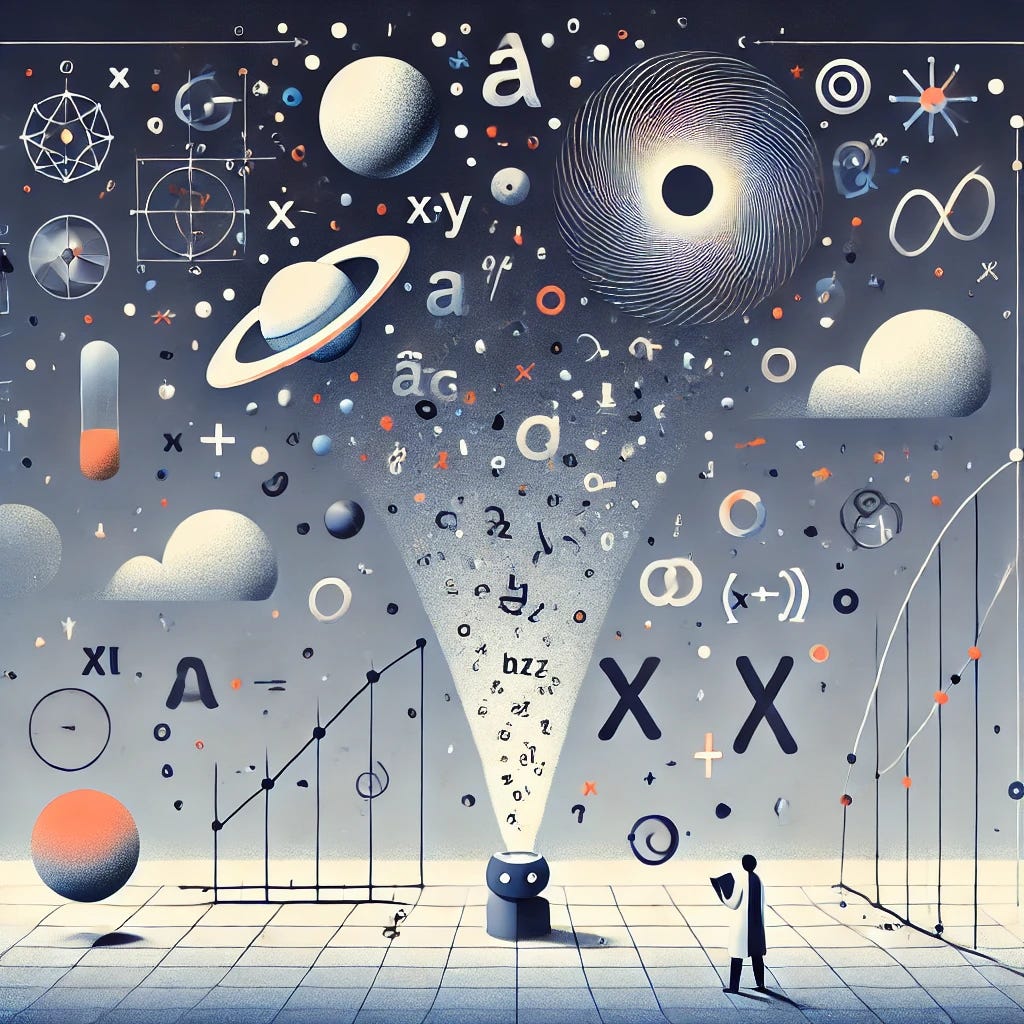
Scientific discovery often involves spotting patterns hidden inside complicated systems.
Humans are good at conceptual thinking and abstraction, but we are limited in how many possibilities we can evaluate at once.
Machine learning systems don’t have that limitation.
They can test enormous numbers of possibilities, reject most of them quickly, and keep exploring until something fits the data.
Researchers studying large-scale AI systems have suggested that models trained across broad domains could eventually become useful as general discovery tools across many scientific fields (Bommasani et al., 2021).
Instead of replacing scientists, they expand the range of ideas that scientists can realistically test.
When the Model Finds the Pattern First
There is a strange twist to all of this.
Sometimes the model finds the pattern before humans understand it.
Something similar already happened in biology with AlphaFold. The system predicted protein structures at a level of accuracy that many researchers thought would take years to achieve (Jumper et al., 2021).
The predictions came first.
The deeper explanations followed.
That reverses the normal order of science.
Historically, scientists proposed theories and then tested them experimentally.
Now predictions may appear before anyone fully understands the mechanism behind them.
The Question This Raises
This raises an interesting philosophical question.
Science has always aimed for two things.
Prediction and understanding.
AI systems can already help with prediction. In some cases they may even outperform humans.
Understanding is different.
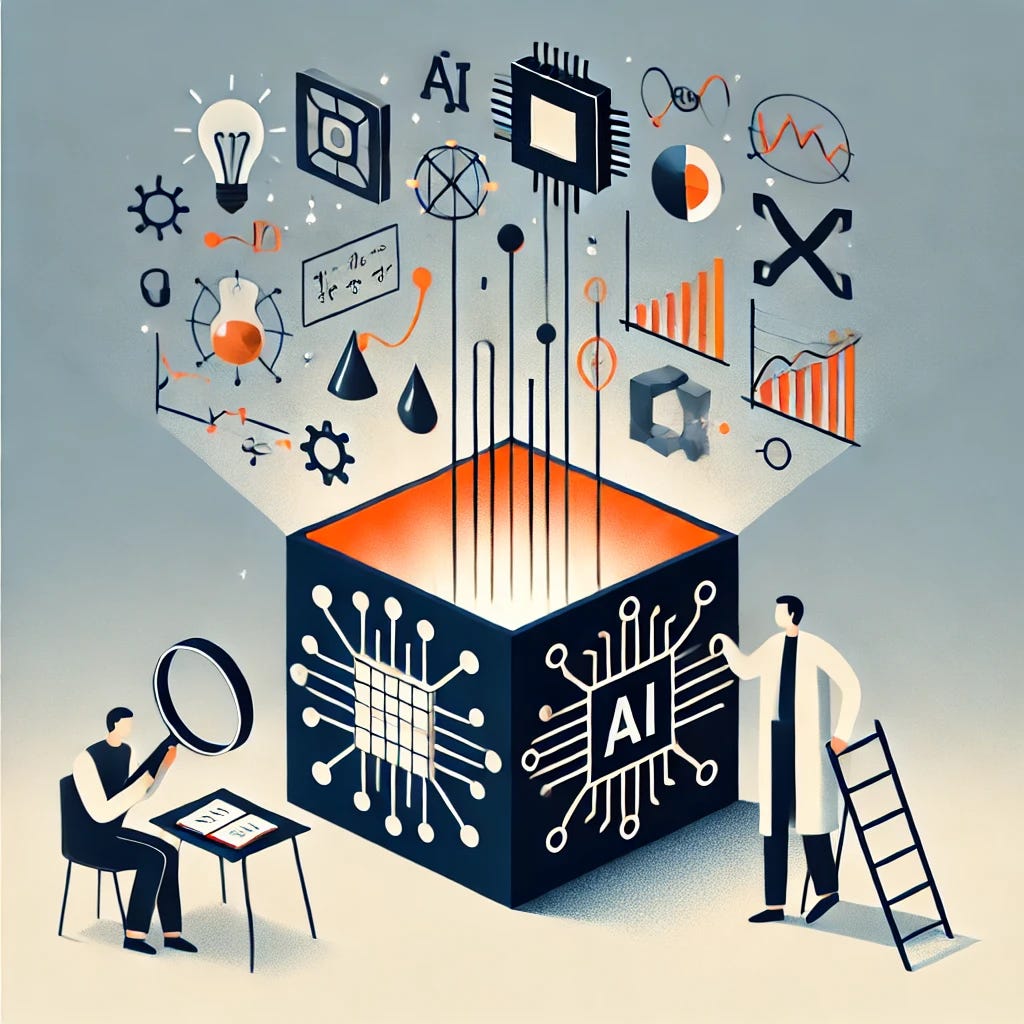
A model might find patterns that work perfectly but remain difficult for humans to interpret.
Do we consider that scientific knowledge?
Or is it just powerful prediction?
That question doesn’t have a clear answer yet.
It’s still early.
AI is not replacing scientists, and most discoveries still depend heavily on human reasoning, experimentation, and interpretation.
But the direction is becoming clear.
Machine learning is moving beyond data analysis.
It is beginning to suggest hypotheses and propose entirely new possibilities for scientists to investigate.
The scientific method used to be a human process supported by tools.
Now the tools are starting to participate.
And that may quietly change how discovery happens.
References
Bommasani, R. et al. (2021). On the Opportunities and Risks of Foundation Models. Stanford Center for Research on Foundation Models.
Iten, R. et al. (2020). Discovering Physical Concepts with Neural Networks. Physical Review Letters.
Jumper, J. et al. (2021). Highly Accurate Protein Structure Prediction with AlphaFold. Nature.
Merchant, A. et al. (2023). Scaling Deep Learning for Materials Discovery. Nature.
Schmidt, M., & Lipson, H. (2009). Distilling Free-Form Natural Laws from Experimental Data. Science.