
The Cryo-Oscillator Framework
Could Periodic Temperature Fluctuations Act as Informational Carriers in Sub-Neural Bioelectric Systems?

Abstract
This article proposes a novel paradigm in biophysical information encoding: that rhythmic temperature fluctuations at cryogenic or near-cryogenic levels serve as carriers of structured information within cells. While most molecular biology assumes temperature as a passive background variable, this framework posits that under extreme cold, coherent thermal oscillations may operate similarly to electromagnetic waves or molecular gradients, providing timing cues, storage capacity, and phase-based encoding. The model has implications for extremophile survival, astrobiology, synthetic biology, and even fundamental understandings of information theory in physical systems.
1. Introduction
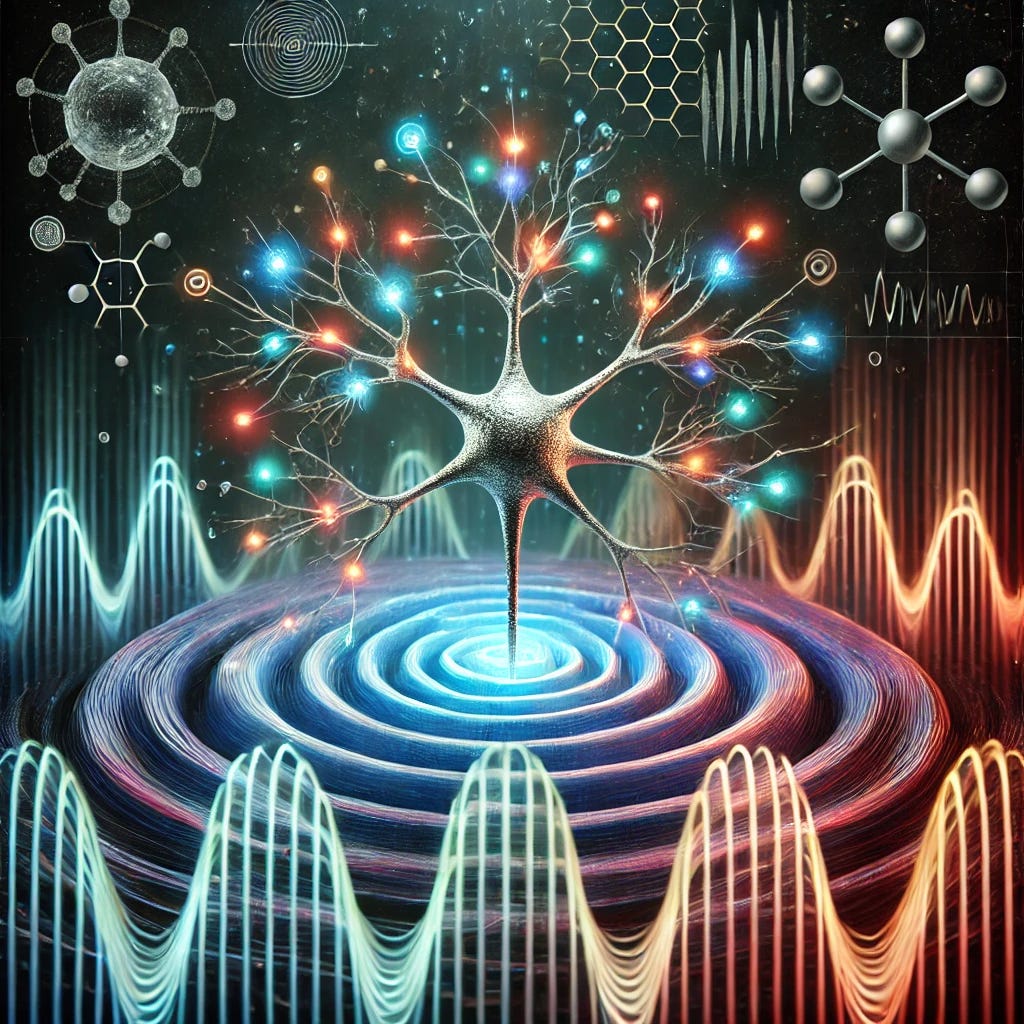
Temperature has long been treated as a limiting factor in biological activity, especially as it approaches cryogenic levels. Most models assume that as systems cool, molecular motion slows, reaction rates diminish, and life enters suspended animation. Yet emerging evidence from extremophiles, deep-freeze preservation studies, and quantum biophysics suggests that temperature itself may not merely suppress, but potentially modulate biological systems. This article introduces the Cryo-Oscillator Framework, a proposal that rhythmic thermal micro-fluctuations, when precisely structured, can encode information within and between cells, acting as a sub-molecular signaling modality.
2. Theoretical Foundations
Cryogenic oscillations may not follow classical diffusion models. In microdomains like ion channel gates, microtubule intersections, or aquaporin rings, quantum tunneling effects combined with thermal granularity may allow for localized, rhythmic shifts in molecular motion that act as timing pulses or analog switches.
Possible mechanisms include, Phonon entrapment in structured cytoskeletal geometries, Ice-like lattice behavior in extremophilic membranes (Feller & Gerday, 2003), and Thermal ratchets in protein folding and channel gating (Astumian & Hänggi, 2002)
These processes could, in theory, align with or replace certain aspects of electrical synapse behavior or cell-cell coherence.
3. Potential Evidence
Hints of such processes may already exist, for instance, in cryotolerant species, cellular activity can resume with microsecond precision after thawing (Storey & Storey, 1996). Furthermore, bacteria exposed to freeze-thaw cycles have been shown to exhibit non-random survival clustering, suggesting some form of intracellular phase memory (Zepeda et al., 2018). Additionally, ice-binding proteins exhibit rhythm-like behavior at subzero temperatures that defies classical diffusion predictions (Bar-Dolev et al., 2012).
4. Synthetic Applications
If cryo-oscillatory behavior can be replicated or engineered, it may allow for new types of biological timing circuits that operate without electric charge, extreme low-energy bio-computers running on thermally modulated logic, and/or cryogenic storage systems that retain ‘pulse-state’ phase information
5. Background: Subzero Biology and the Undervalued Role of Temperature
Organisms such as Deinococcus radiodurans and Chlamydomonas nivalis exhibit remarkable resistance to cold, with preserved cellular structure and reactivation capacity after long-term freezing. Classical cryobiology explains this through vitrification, antifreeze proteins, or metabolic suppression. However, certain behaviors observed during slow-freeze cycles, like regulated gene expression, spatially patterned protein folding, or synchronized metabolic bursts—hint at coordination mechanisms that operate below conventional thermal noise thresholds. Thermal energy at subzero levels is non-zero, and quantum effects such as tunneling, vacuum fluctuation alignment, or phonon resonance may allow for low-amplitude, high-fidelity information transfer, even in the apparent stillness of cold.

6. The Cryo-Oscillator Framework
The Cryo-Oscillator Framework proposes that subzero environments support phase-coherent thermal rhythms, potentially driven by ambient geophysical oscillations, lattice defects in cellular substrates, or zero-point vacuum interactions. These oscillations may not be random noise, but structured modulations akin to frequency-encoded signals. Within cryo-preserved systems, lipid membranes, protein channels, and microtubule filaments might act as thermal waveguides or phase-locking circuits. Information could be stored not in the state of a molecule, but in its response profile to incoming thermal waves. This allows for a 'thermo-syntax', a kind of cryogenic language of periodicity, phase shifts, and thermal harmonics.
7. Information Theory in a Frozen State
In classical systems, temperature reduces entropy by minimizing available states. However, under this framework, subzero states may become informationally rich due to low-noise environments that preserve coherence. Phase-locked thermal oscillations might maintain memory registers in frozen water lattices, spin-aligned molecular domains, or electrostatic surfaces. This theory resonates with Landauer’s Principle, which links information erasure to heat generation, suggesting a deep coupling between entropy and information even at low thermal amplitudes. Rather than hindering computation, cold may simply shift its substrate.
8. Implications for Biology and Beyond
In biology, this model could explain anomalous survival patterns in freeze-tolerant species, as well as the efficacy of ultra-slow cooling in preserving viable cellular systems. It might lead to new cryopreservation techniques that use rhythmic temperature inputs instead of chemical cryoprotectants. In astrobiology, the Cryo-Oscillator Framework opens a search protocol for life in icy environments, not by looking for heat or movement, but for coherent thermal pulses.
In quantum computation and material science, the theory suggests that cryogenic systems might not be passive substrates, but active processors using temperature gradients as logic gates. The framework invites reconsideration of computation not as digital abstraction but as physically embodied in the rhythmic breath of cold.
9. Speculative Experimental Design
To investigate the Cryo-Oscillator Framework, we propose a multistage experimental approach focused on detecting structured thermal oscillations in biological and synthetic cryogenic microenvironments. The experiments are designed to test three key aspects: rhythmicity, informational encoding, and biological response.
A cryo-regulated microfluidic chamber would be developed to host extremophile microorganisms such as Chlamydomonas nivalis or Psychrobacter spp. within geometrically constrained environments like nanoscale lattice grids or protein-coated trenches. Precision cooling elements would introduce sinusoidal or stochastic temperature fluctuations at amplitudes of ±0.01°C and frequencies ranging from 0.1 Hz to 100 Hz. Infrared thermography and nano-thermocouple arrays would map intracellular and extracellular temperature dynamics in real time. The hypothesis to test is whether recurring, low-amplitude thermal oscillations occur within or adjacent to living cells under cryogenic stress.
In a second experiment, an artificial lipid bilayer or cell-free vesicle system is embedded with ion channels such as voltage-gated sodium or calcium channels in a cryogenic matrix. Cryo-oscillations of varying phase patterns such as square, sine, or noise-masked are applied, and ionic conductance is monitored via patch clamp techniques adapted for subzero temperatures. The hypothesis is whether phase-modulated thermal input affects ion channel gating in a reproducible, signal-like way, absent electrical stimulation.
A third experiment would test resumption coherence in freeze–thaw cycles. Populations of cryotolerant bacteria are frozen with precisely encoded temperature phase-patterns, then thawed under controlled conditions. Post-thaw behaviors—such as gene expression onset via GFP-tagged transcription factors, motility, or quorum sensing activity, are analyzed to detect residual memory or coherence correlated with prior thermal encoding. The hypothesis is whether cells exhibit altered behavior or reactivation coherence patterns based on pre-thaw cryo-oscillatory exposure.
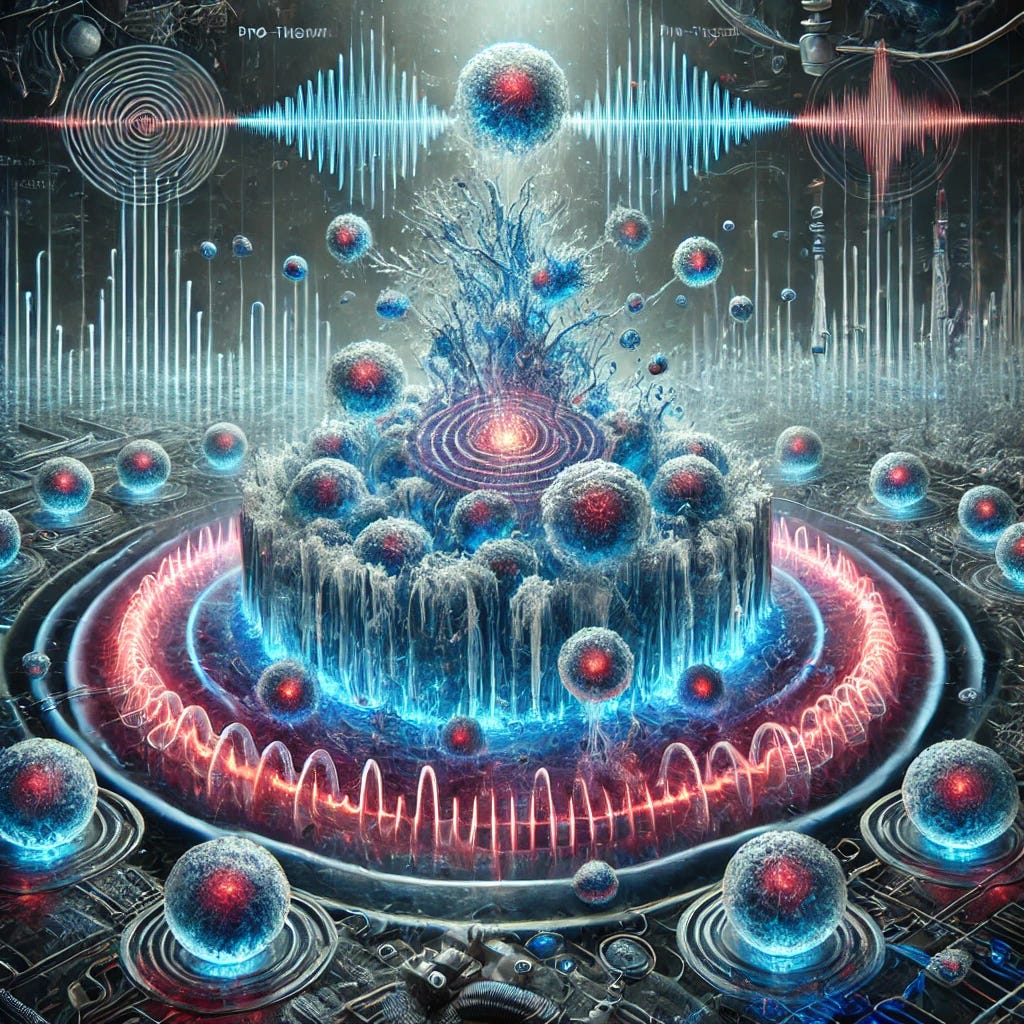
This experimental suite, though technically challenging, offers a path to explore whether thermal fluctuations can act as informational substrates. If successful, it may call into question the strict separation between thermodynamics and signaling, and reveal a deep coupling between cryophysics and cellular computation.
References
Feller, G., & Gerday, C. (2003). Psychrophilic enzymes: hot topics in cold adaptation. Nature Reviews Microbiology, 1(3), 200–208.
Astumian, R. D., & Hänggi, P. (2002). Brownian motors. Physics Today, 55(11), 33–39.
Storey, K. B., & Storey, J. M. (1996). Natural freezing survival in animals. Annual Review of Ecology and Systematics, 27(1), 365–386.
Bar-Dolev, M., Braslavsky, I., & Davies, P. L. (2012). Ice-binding proteins and their function. Annual Review of Biochemistry, 81, 515–542.
Zepeda, A. B., et al. (2018). Protein folding in cold environments: insights from extremophiles. Frontiers in Microbiology, 9, 1774.
Landauer, R. (1961). Irreversibility and heat generation in the computing process. IBM Journal of Research and Development, 5(3), 183-191.
Mazur, P. (2004). Principles of cryobiology. In Life in the Frozen State (pp. 3–65). CRC Press.
Ramløv, H. (2000). Aspects of natural cold tolerance in ectothermic animals. Human Reproduction, 15(suppl_5), 26-46.
Turner, R. J., & Marshall, D. J. (2011). Cryophilic organisms and temperature sensing. Journal of Experimental Biology, 214(4), 572–580.
Volovik, G. E. (2009). Universe in a helium droplet. Oxford University Press.