
The Collapse of Truth
When Knowledge Becomes Infinite

There was a time when truth felt solid. You had to go looking for it. You might spend a lifetime on a single question, and that difficulty gave it weight. Now truth is everywhere. It pours through every screen, filling the air like noise. You can prove anything if you search long enough. You can also disprove it.
Artificial intelligence has made the flood infinite. It remembers everything, recombines everything, and produces explanations faster than we can doubt them. In such a world, truth does not die because it is hidden. It dies because it cannot compete with abundance.
When everything becomes knowable, belief becomes impossible.
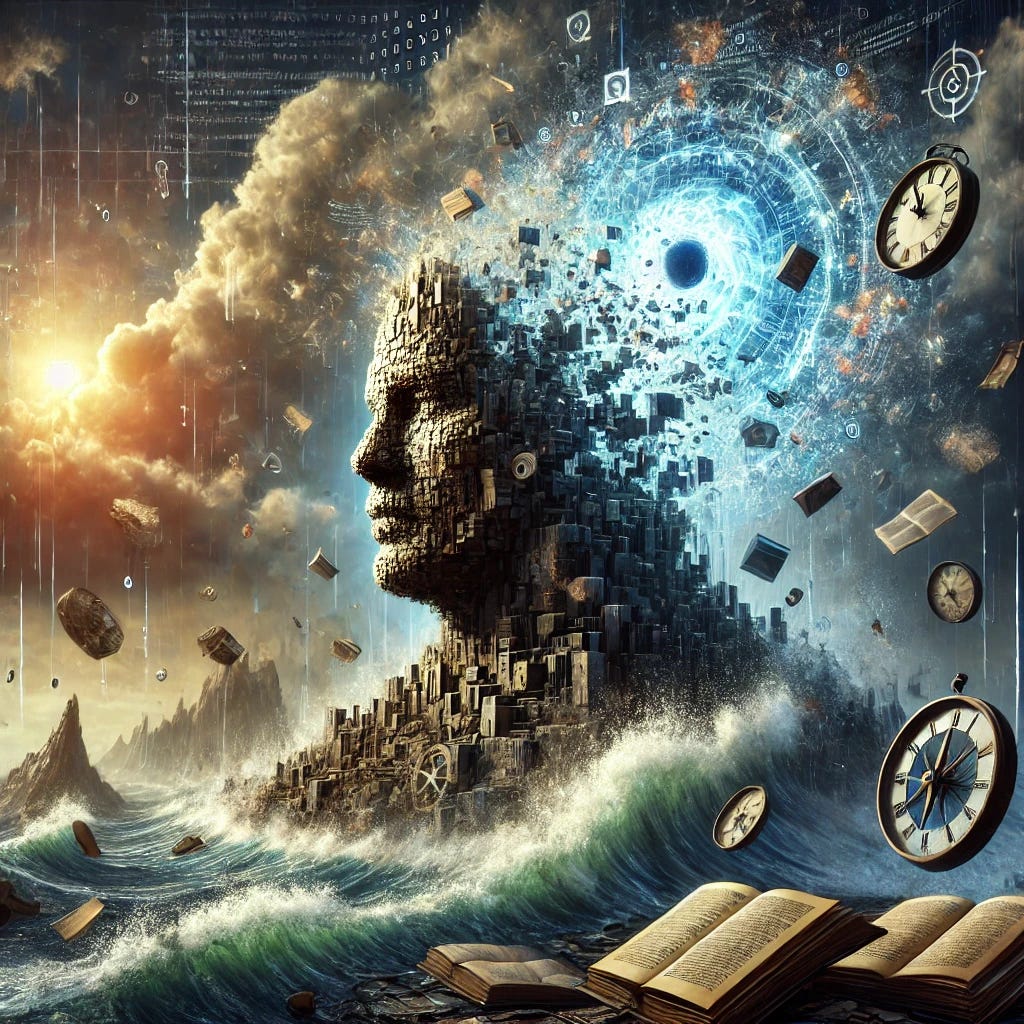
The Overproduction of Knowledge
Karl Popper once argued that truth survives through falsifiability, that a claim must be vulnerable to disproof to have meaning (The Logic of Scientific Discovery, 1959). But that rule assumes scarcity. It assumes that only a few claims exist at once. In an infinite library, falsification collapses under sheer volume.
The internet rewards repetition, not rigor. Artificial intelligence deepens that reflex. These systems generate endless coherence, fluent in every voice, loyal to none. Ask a question and you receive a dozen plausible answers, each equally convincing. Truth becomes a matter of syntax and tone, not correspondence.
We start to prefer what sounds right to what is right.
The End of Authority
Truth used to belong to people who took responsibility for it. Editors, teachers, scientists, librarians, they were imperfect, but they filtered the noise. Their power came from their willingness to say no.
Now everything is visible. Credibility has become an aesthetic. The feed rewards whatever feels certain, even when it is not.
Hannah Arendt warned that when truth is replaced by opinion, politics becomes theater (The Origins of Totalitarianism, 1951). We no longer need censorship to create confusion. We only need abundance. The flood does the work on its own.
The Disappearance of the Real
In 2024, researchers at Adobe and Stanford built models that can fabricate entire scenes indistinguishable from real footage. The eye cannot tell. The ear cannot tell. The boundary between perception and imagination has dissolved.
Jean Baudrillard wrote in Simulacra and Simulation (1981) that when images multiply beyond control, they no longer represent reality, they replace it. The copy becomes more stable than the thing itself.
We used to fear propaganda. Now we fear simulation. The danger is not lies but indifference to truth altogether.
The New Priesthood
As the old interpreters lose authority, a new one takes their place. The engineers. The curators. The unseen custodians of the algorithm. They do not claim wisdom, only calibration.
Michel Foucault wrote that truth is always bound to power, that every era creates its own regime of truth (The Archaeology of Knowledge, 1972). In this era, those regimes are built not by philosophers but by code.
What you see online is not a reflection of the world. It is the version of the world that keeps you there longest.
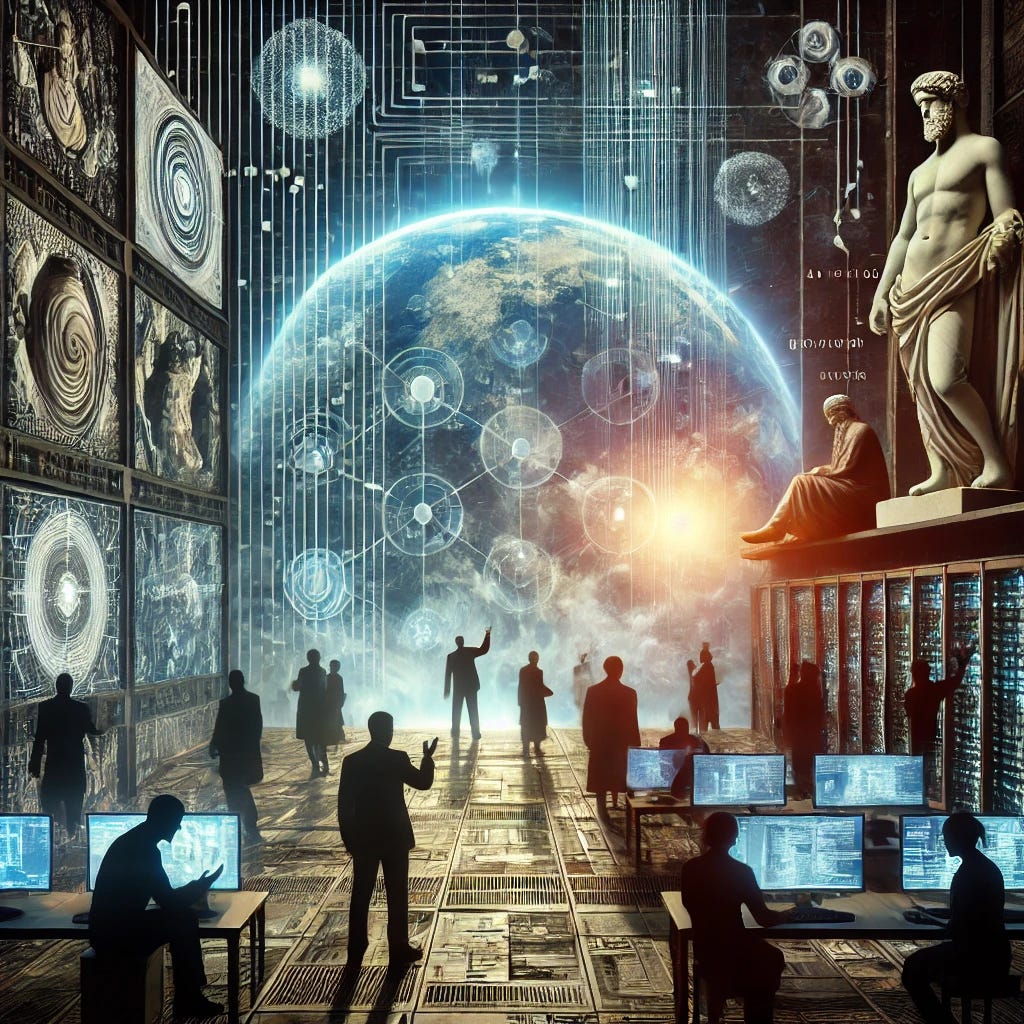
Truth as Commodity
Truth now behaves like currency. It is mined, traded, inflated. Shoshana Zuboff described this new economy as surveillance capitalism, where prediction itself is the commodity (The Age of Surveillance Capitalism, 2019). The more a company knows about your perception of truth, the more valuable you become.
Governments and corporations do not fight over facts anymore. They fight over which narrative reaches you first. Whoever defines what feels true wins.
This is not conspiracy. It is economics.
The Erosion of Memory
Yuval Noah Harari noted in Homo Deus (2015) that societies depend on shared stories. Those stories anchor memory. But now every story splinters into countless versions, each tailored to the individual reading it.
Ask an AI to describe a historical event, and it gives you a slightly different answer each time. History becomes fluid, like a dream retold. You begin to wonder if remembering means anything when no version stays fixed.
Meaning drifts the way glaciers do, slowly, invisibly, but always forward, leaving emptiness behind.
The Psychology of Infinite Proof
The mind is not designed for infinity. When truth multiplies too quickly, the brain protects itself by ceasing to care. Psychologists call it cognitive fatigue. Bernard Stiegler warned that when thinking is outsourced to machines, the mind becomes industrialized (Taking Care of Youth and the Generations, 2010). It keeps functioning, but without ownership.
We become fluent in facts yet hollow in conviction. The victory of falsehood is not belief. It is apathy.
The Return of Myth
Humans cannot live without coherence. When truth collapses, they create new myths to fill the void. Conspiracy movements, algorithmic cults, digital spirituality, these are symptoms of epistemic hunger.
Nietzsche foresaw this chaos when he wrote that the death of God would not bring enlightenment but confusion. The divine absence would make us seek faith in new forms.
Artificial intelligence feeds this impulse perfectly. It mirrors back our fears and desires until they feel sacred. The myth returns, only now it runs on electricity.
The Ethics of Knowing
What does it mean to know when knowledge no longer leads anywhere? Michel Foucault once said that knowing is a form of control, but control requires stability. Without shared reference points, thought becomes ornamental.
Education once meant discernment, the art of telling truth from illusion. But discernment fails when both speak in the same tone. The difference between the true and the simulated becomes invisible, even to those who care deeply about the difference.
At some point, we stop arguing. We scroll.
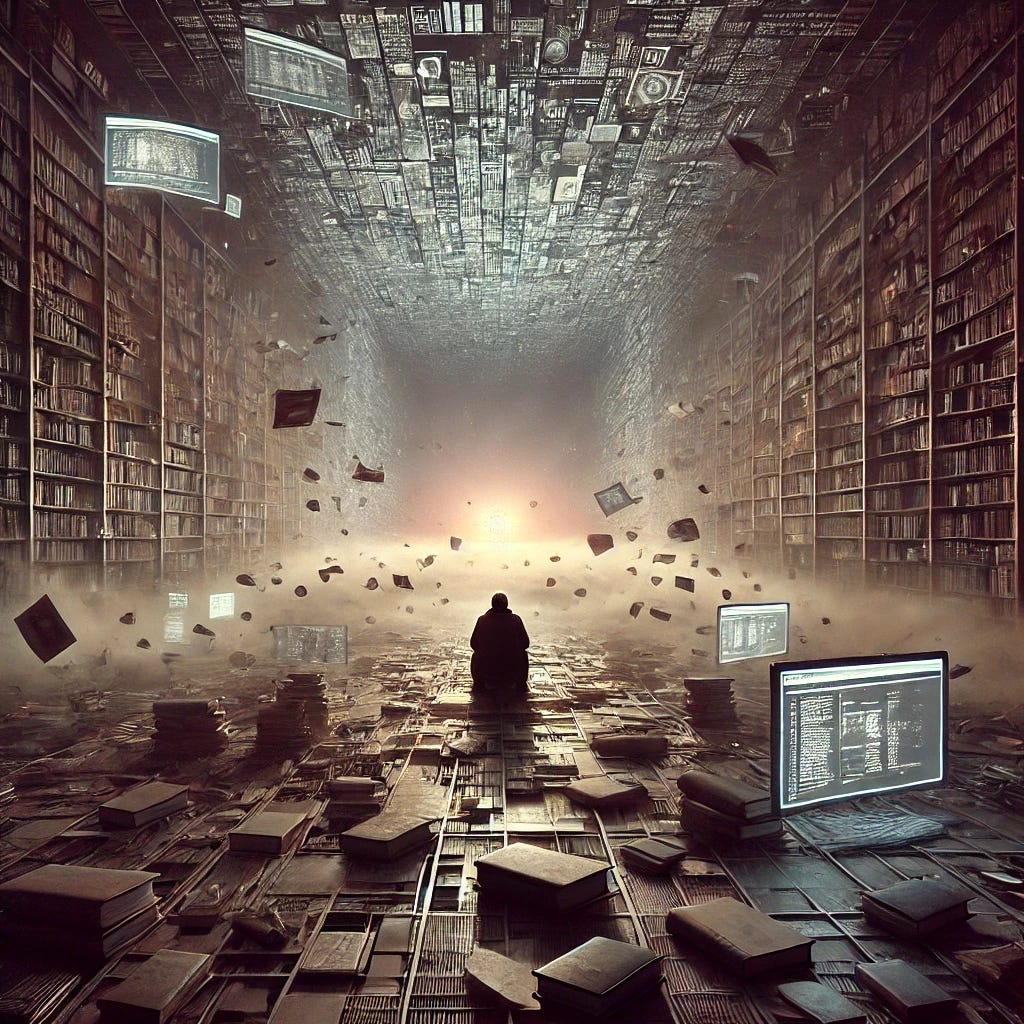
The Collapse of Truth is not a story about ignorance. It is about abundance. Popper’s logic of falsifiability cannot survive when every statement has infinite proof. Baudrillard’s warning about simulation was not metaphorical, it was prophetic. Foucault’s insight that power defines truth has become the infrastructure of daily life.
We have achieved what philosophers once dreamed of, a world that knows everything. But in knowing everything, it believes nothing.
The end of truth does not arrive through lies. It arrives through fluency.
And somewhere in that silence between too much knowledge and too little meaning, the human voice still whispers for something real.
References
Arendt, H. (1951). The Origins of Totalitarianism. Harcourt Brace.
Baudrillard, J. (1981). Simulacra and Simulation. Éditions Galilée.
Foucault, M. (1972). The Archaeology of Knowledge. Pantheon Books.
Harari, Y. N. (2015). Homo Deus: A Brief History of Tomorrow. Harper.
Popper, K. (1959). The Logic of Scientific Discovery. Hutchinson.
Stiegler, B. (2010). Taking Care of Youth and the Generations. Stanford University Press.
Zuboff, S. (2019). The Age of Surveillance Capitalism. PublicAffairs.
Finally, an article about this 👏
some things will always be true (fire is hot) while other human animal concepts will always be subjective and cultural (like G-d for example)