
The Cognitive Seismograph
How AI Could Detect the Tremors of Collective Thought

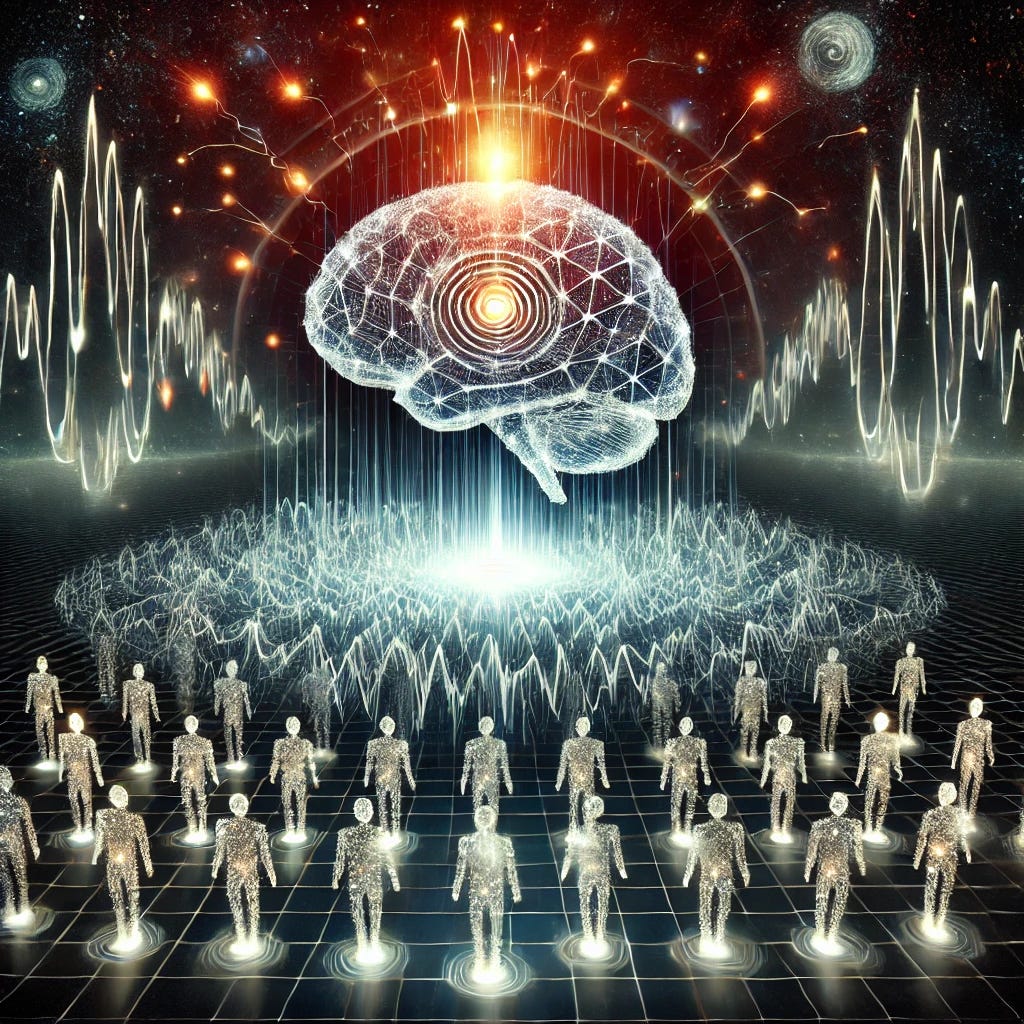
When the Earth shifts, the first signs are not towering cracks in the ground but faint ripples that pass unnoticed by most of us. Seismographs catch these hidden waves long before they build into quakes. Human societies have their own kinds of rumblings, changes in belief, tension between groups, new ideas forming at the edges. We usually only notice them once they erupt into full-blown movements or crises. What if machines could help us listen earlier? With their ability to track patterns across enormous amounts of data, artificial intelligence might one day act like a seismograph for culture, sensing the tremors of thought before they surface.
From Earthquakes to Thought-Quakes
Earthquakes rarely arrive without warning. Beneath the surface, small tremors ripple through the rock, fault lines store energy, and the pressure quietly mounts until it finally breaks (Kanamori & Brodsky, 2004). Culture and human thinking follow a similar rhythm. Tiny changes in how people talk, the metaphors they lean on, or the stories that spread through communities often mark the first stages of a larger shift.
AI is already being used in limited ways to trace such patterns, for instance, by tracking how memes spread or by measuring shifts in mood on social platforms. But these examples only scratch the surface. A true cognitive seismograph would not just follow chatter. It would map the deeper pressures shaping how thought itself moves.
The Cognitive Seismograph Hypothesis
The hypothesis is simple: just as geological materials store stress before release, cultural and cognitive systems store tensions in language, symbol, and interaction. AI models could be trained not only to predict words or classify sentiment but to identify latent pressure points where thought itself is about to shift.
This would mean looking for discontinuities in discourse, unexpected silences, or accelerating feedback loops in communication. The aim would not be to track individuals but to sense the tectonics of collective intelligence.
Multi-Layer Experimental Design
Scientific Knowledge Systems
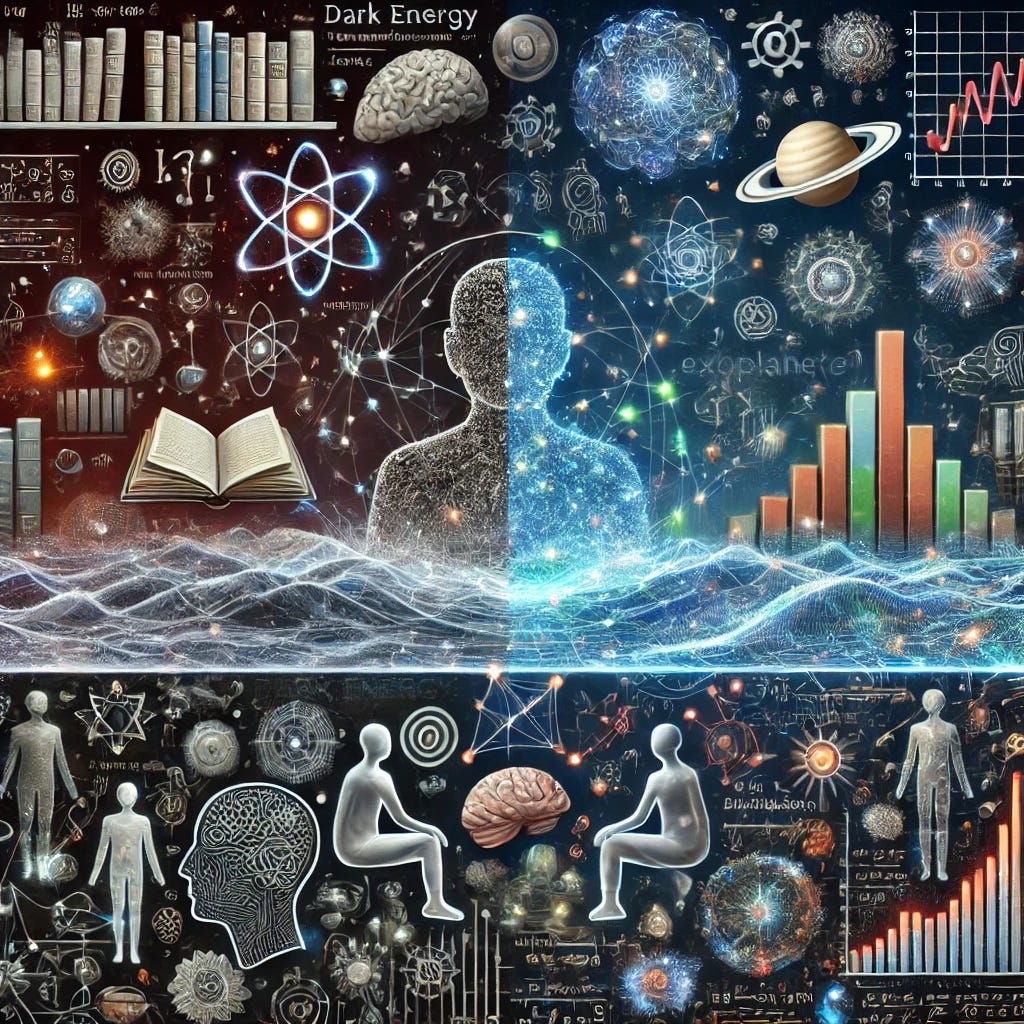
The first layer could focus on science itself. Models could be trained on decades of research literature to map semantic drifts in terminology. If certain concepts begin to cluster in surprising ways, or if old frameworks collapse in usage, it may foreshadow paradigm shifts (Kuhn, 1962). For instance, terms like “dark energy” or “exoplanet” rose suddenly from near absence to central importance. A seismograph AI could detect similar tremors before the next scientific revolution.
Cultural Dynamics
The second layer would address cultural shifts. By analyzing global discourse across languages, an AI might detect fault lines where collective identity is under stress. Sudden silences, words or traditions disappearing without replacement, may serve as warning signs. Acceleration in new metaphors or slogans could mark the early stages of mass movements, much like foreshocks before a quake.
Ecological Systems
The third layer involves ecology. Just as natural seismographs record underground stress, a cognitive seismograph could monitor how communities speak about their environment. Drops in biodiversity terms in local narratives, or rapid adoption of crisis-related language, may indicate ecological shifts that precede measurable collapse. Here, language becomes a proxy for environmental strain, linking social cognition to planetary systems (Castellano et al., 2009).
Synthetic Simulations
The final layer would be controlled. Artificial societies of reinforcement learning agents could be created, each equipped with communication protocols. By introducing stressors into their environments, researchers could observe whether tremors in communication networks predict collective reorganization. If artificial quakes can be mapped and correlated with outcomes, the same techniques could then be applied to human data.
Broader Applications
The implications stretch wide. In medicine, a cognitive seismograph could detect subtle shifts in collective patient narratives, hinting at emerging diseases before clinical recognition. In governance, it could sense social instabilities before they break into unrest. In science, it might identify areas where conceptual frameworks are under strain, signaling the birth of new disciplines.
At planetary scale, such a system could become part of a global early warning network, not only for natural disasters but for the tremors of human knowledge and belief. The challenge, of course, lies in interpreting such signals without turning them into tools of control.
Ethical Reflections
A cognitive seismograph would give societies a way to listen to their own subterranean shifts. But who decides what tremors to act on? Misused, it could become a tool of suppression, silencing quakes before they rise. Properly designed, it could become a way for communities to anticipate and guide their own transformations.
The ethical question is not whether collective thought has tremors, it does, but whether we are ready for machines that can listen to them.
Planetary Vision
If such systems were networked together, the cognitive seismograph could evolve into a planetary-scale instrument. Imagine a mesh of AIs tuned not just to individual domains but to the global flow of human knowledge and discourse. Like a ring of seismographs encircling a fault line, they would pick up the faintest tremors of meaning across continents, cultures, and scientific communities.
This would allow humanity to sense paradigm shifts as they form, to notice fractures in global cooperation before they become crises, and to detect ecological collapse at the level of language before it becomes irreversible on the ground. The vision is not of control but of awareness, a planetary listening post that registers how thought itself moves. If we learn to interpret such signals, we might anticipate not just the shocks of the future, but the possibilities they contain.

The Cognitive Seismograph Hypothesis reframes AI as more than a tool of prediction. It envisions machines as instruments of listening, tuned not to visible signals but to the tectonic shifts of meaning beneath the surface. If intelligence is always in motion, then perhaps the future of AI lies not in controlling thought but in registering its hidden tremors, giving us a new way to understand how worlds of mind and culture change.
References
Kanamori, H., & Brodsky, E. E. (2004). The physics of earthquakes. Reports on Progress in Physics, 67(8), 1429–1496.
Kuhn, T. S. (1962). The Structure of Scientific Revolutions. University of Chicago Press.
Castellano, C., Fortunato, S., & Loreto, V. (2009). Statistical physics of social dynamics. Reviews of Modern Physics, 81(2), 591–646.