
Synthetic Reality
Exploring ChatGPT

The boundaries between the digital and physical world are blurring at an unprecedented rate. With the rapid evolution of artificial intelligence, deep learning, and generative models, we are heading toward a reality where AI can create entirely synthetic worlds—complete with photorealistic landscapes, artificially generated people, and simulated events indistinguishable from real life. The implications of this transformation stretch far beyond entertainment; it could redefine truth itself.
What happens when we can no longer distinguish between reality and fabrication? How will synthetic reality shape our perception of history, identity, and trust? And could we eventually find ourselves living in a world where reality is nothing more than an AI-constructed illusion?
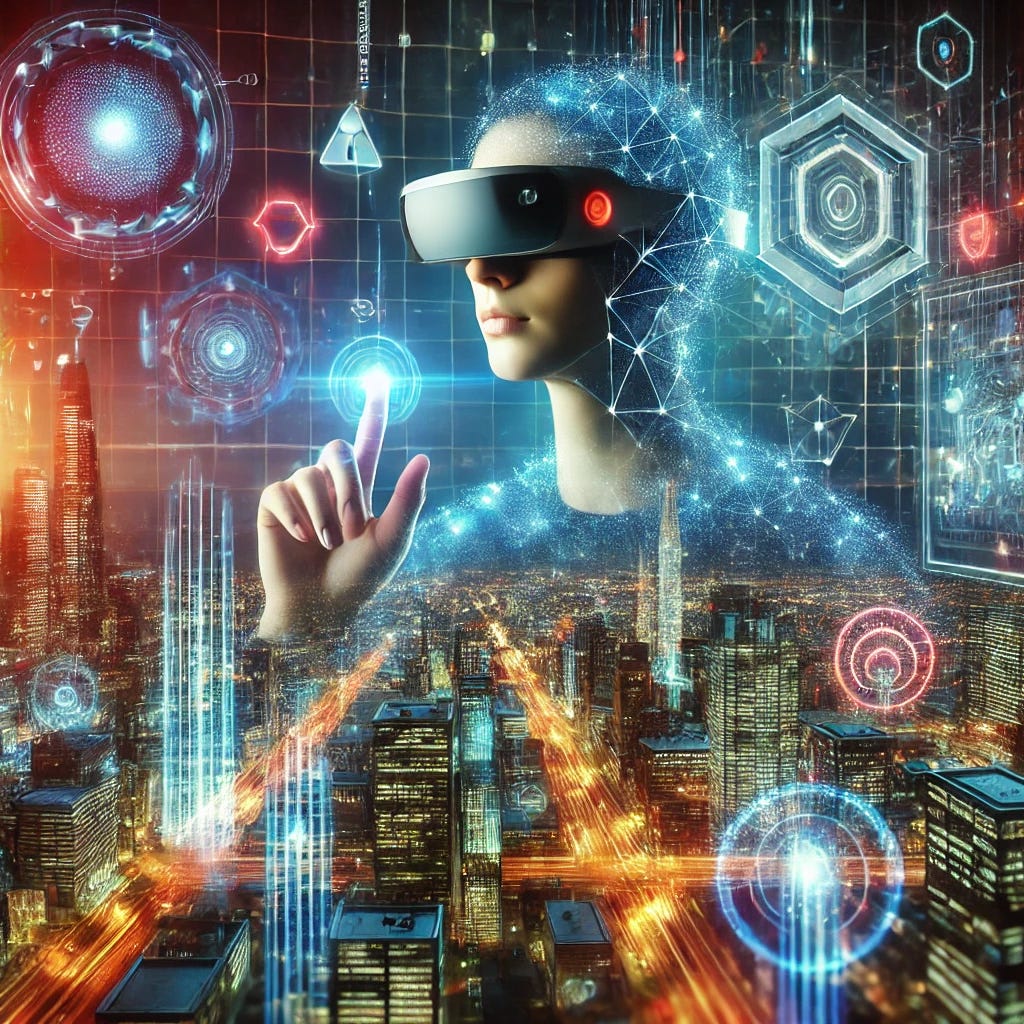
The Building Blocks of Synthetic Reality
AI-generated content is not a futuristic fantasy—it is already here. Advances in deep learning and neural networks have given rise to technologies capable of creating hyper-realistic visuals, voices, and even personalities.
1. AI-Generated Images and Videos
Neural networks such as StyleGAN and DALL·E can create entirely new human faces, places, and objects that do not exist in the real world.
Deepfakes: AI can now swap faces in videos with remarkable accuracy, making it possible to generate entirely fake footage of political leaders, celebrities, or even ordinary people.
Photorealistic Landscapes: AI can design non-existent cities and environments, complete with artificial weather patterns, architecture, and cultural artifacts.
AI-Generated Film and Animation: Algorithms can create entire movie scenes featuring actors who never stepped in front of a camera.
2. AI-Generated Text and Conversations
Natural language processing models, such as ChatGPT and Google’s Bard, have reached the point where they can produce text that is nearly indistinguishable from human-written content.
Fake News and Historical Fabrication: AI-generated news articles, historical records, and even academic papers can be created at scale, making misinformation harder to detect.
AI-Powered Chatbots and Virtual People: AI-generated personalities can now engage in fluid conversations, forming synthetic relationships with real individuals.
Personalized AI Narratives: AI can craft dynamic, evolving stories that adapt to the emotions and responses of users in real time.
3. AI-Generated Sound and Voice Cloning
Voice synthesis technology is rapidly improving, making it possible to mimic voices with near-perfect accuracy.
Celebrity Voice Cloning: AI can create synthetic voices of famous individuals, raising ethical concerns about consent and impersonation.
Automated Audiobooks and Podcasts: AI-generated narrators can now read books, articles, and scripts in any tone or style.
Fake Emergency Calls and Scams: Criminals can use AI-cloned voices to manipulate victims by pretending to be family members or officials.
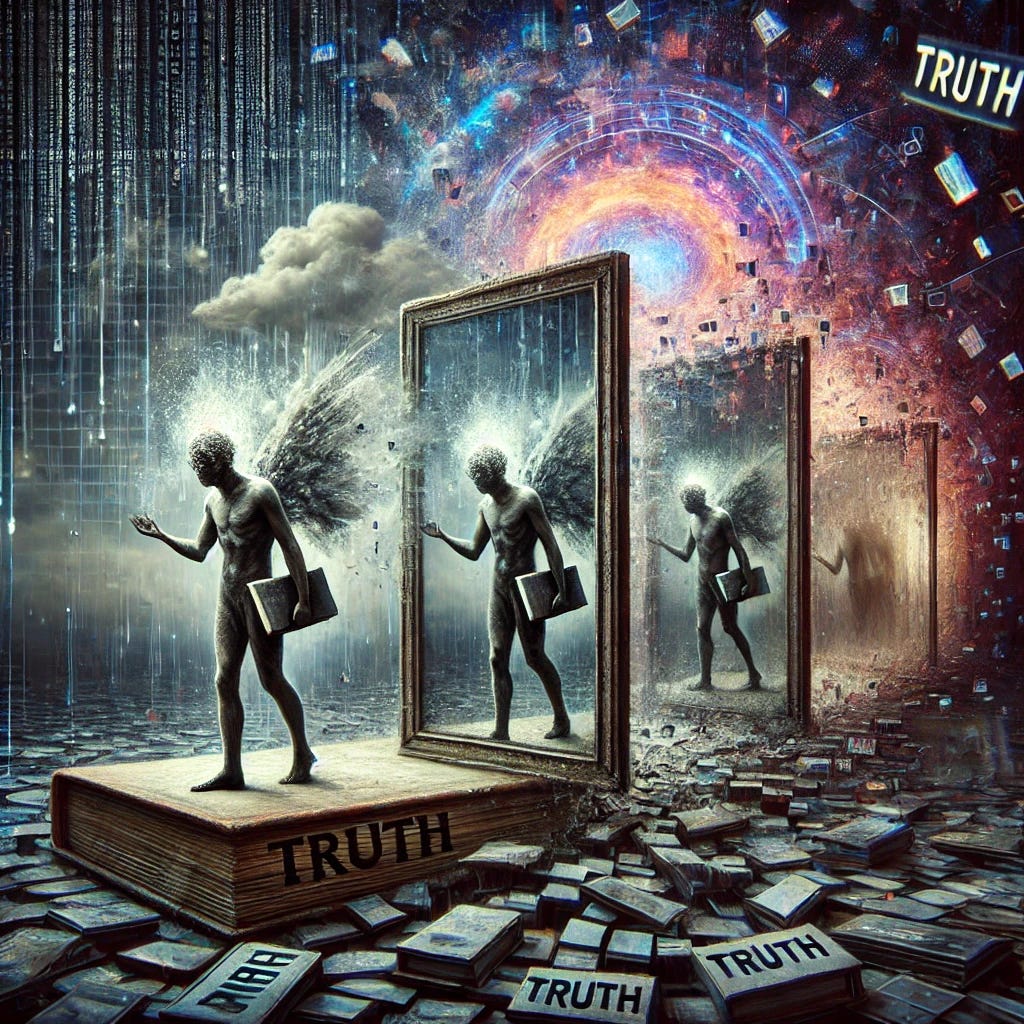
Philosophical and Psychological Implications
If AI can create a world so realistic that it becomes indistinguishable from reality, how do we define what is real? This question has profound implications in philosophy, psychology, and ethics.
1. The Death of Objective Truth
The ability to fabricate lifelike events in real time makes it possible to rewrite history, alter current events, and manufacture new realities.
Historical Revisionism: AI could create an alternate history with fake evidence, eroding trust in historical records.
Social Manipulation: Politicians and corporations could use AI-generated media to push specific narratives, shaping public perception in unprecedented ways.
Reality Confusion: If AI-generated news becomes widespread, individuals may struggle to distinguish between actual events and fabricated stories.
2. Identity and Existence in a Synthetic World
As AI-generated personalities become more sophisticated, we may enter an era where synthetic entities coexist with humans in a meaningful way.
AI-Generated Companionship: People may form deep emotional bonds with AI-generated friends, lovers, or mentors.
Virtual Immortality: AI could replicate deceased individuals, preserving their voices, images, and personalities for future interaction.
Loss of Individuality: If AI can generate human-like personalities at scale, what makes a real person unique?
3. Ethical Dilemmas of a Fully Synthetic World
As AI-generated content becomes the norm, society will face difficult ethical decisions.
Who Owns Synthetic Creations? If AI creates an artwork, a song, or a novel, who holds the copyright—the programmer, the AI, or no one at all?
AI-Generated Crime and Fraud: As AI is weaponized for deception, legal systems will need to adapt to crimes committed in a synthetic reality.
Mental Health and Detachment from Reality: The widespread adoption of synthetic reality may lead to psychological issues, including dissociation, addiction, and paranoia.
The Inevitable Question: Could We Be Living in a Synthetic Reality Already?
The "Simulation Hypothesis" suggests that our reality may already be a highly advanced AI-generated simulation. While this idea was once a fringe philosophical concept, advances in AI and synthetic media bring it closer to mainstream discussion.
Mathematical Consistency of Reality: Some physicists argue that the universe behaves like a complex computational system, similar to an AI-generated simulation.
The Fermi Paradox and Artificial Worlds: If civilizations eventually create advanced simulations, it’s possible we are already inside one created by a more advanced intelligence.
AI’s Ability to Generate Consciousness: If AI can eventually create self-aware synthetic beings, how do we define the boundary between artificial and real existence?
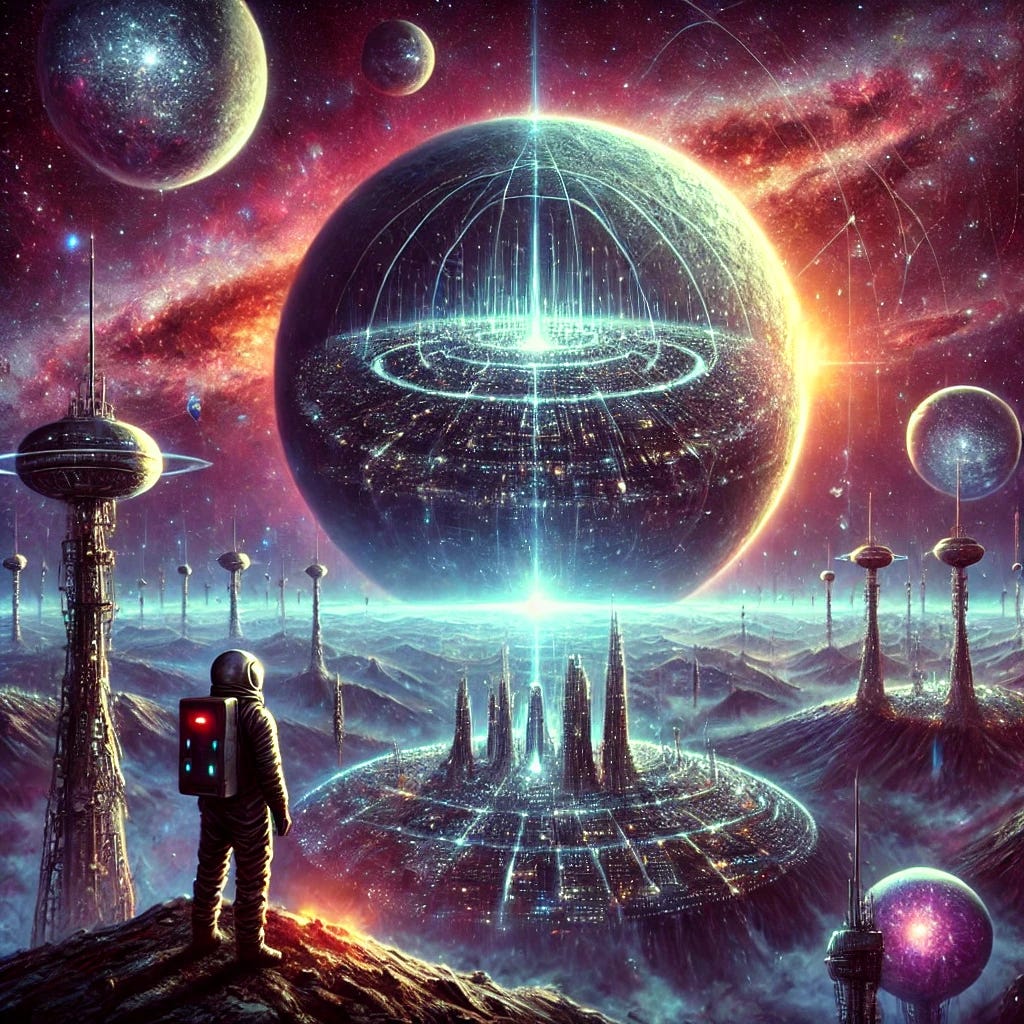
The rise of synthetic reality challenges our deepest assumptions about truth, identity, and existence. As AI continues to refine its ability to generate entire worlds, we must prepare for a future where reality itself is increasingly subjective. Will this new age of artificial experience enhance human creativity and understanding, or will it erode trust and destabilize society?
Perhaps the most unsettling question is not whether AI will create a completely synthetic world—but whether we will prefer it to the one we already have.
And it's hard to keep up with the latest news because we don't know if it's supported by the authors or written by AI itself so it's hard to belive it
Some notes in reply to your post.
It seems to me the inauthentic attachment to what an AI has created rather than the human tends to bug people. When a person claims a body of work for their own when traditionally speaking, they prompted a machine. Like typing in numbers and functions into a calculator. its not interesting that the robot can do the thing, its interesting when a person can. Don't get me wrong, I am not one of the people dismissing AI entirely, the programs have their space and merits.
Value drawn from AI is subjective, some believe its valuable and some dismiss it as cheating.
there will be people who have an Issue determining what is real and what isn't but it does not matter what base reality looks like, what matters is the meaning we generate from our own subjective experience. Its always been this way but until recently we had no reason to think it was different from what we saw all around us. whether you are in a simulator for a human experience or this base reality is the true base reality, the effect on your actual life is the same. your subjective experience would be the same.
AI bots Polluting the airwaves with fake, misleading, undermining information poses the greatest risk to social fabric. I agree and see this getting worse.
AI taking the place of friends, partners, lovers will happen with greater frequency moving forward. It will follow a trend according to the demand, eventually human companionship and robotic companionship will compete for blood human's attention.
Base reality ownership will be a great issue moving forward. Whoever owns the server will own the foundation for your life, I do not see the world progress entirely in this direction. There will be an issue of cost, infrastructure and holdout populations that will object to being a part of the simulation. If we assume the simulation already exists, then admittedly this point is moot.
what isolation, disassociation and various other terms will have adjusted meanings from what they mean today. Psychological terms will be invented and updated to better describe the inclusion of AI realities. Is it really isolation if it feels subjectively like you're in a friendship group even if there are no actual blood born humans?
People will eventually clue on to the idea that there is no difference fundamentally between a blood born human consciousness and a silicon generated one. The processes have formed biologically can be written into chip sets. Since humans cannot 100 percent confirm anyone Elses consciousness, even though they are human. So, I do not think that humans will be able to prove an AI consciousness to a degree that humans will find it credible.
There will always be some point where the code/ algorithm/ delivery has room for improvement. If you look closely, you will see blood born humans that could use some work with their programming, it's just that we value the programming of a biological consciousness over a computer. again, because we know a computer can do it easily, its only interesting when it happens biologically. Thats why we keep asking more and more from the program to keep moving the goal post to see if it can pull of what it means to be human. Most humans don't even know what this means.
I have seen some humans where the idea they are conscious or not is a real question. The processes are either biological or silicon, but the processes will be comparably similar.
like all the rest of your experience, whether you think AI is conscious or not will be subjective.
thank you for the post.