
Synthetic Luck
How AI Might Be Quietly Rewriting Probability

Every new technology changes how people interact with chance. The printing press altered which ideas survived. Radio changed how rumors spread. Computers reshaped risk management. But none of those systems interfered with probability itself. They influenced outcomes, not the underlying structure of how outcomes were distributed.
Artificial intelligence may be different.
As AI systems make more decisions, filter more information, and redirect more human attention, they may begin to warp the statistical landscape around us. Not by magic, and not through intention, but through scale. When a system directs billions of micro decisions every hour, the aggregate effect begins to resemble something we usually associate with luck.
It looks like patterns breaking.
It looks like unlikely events happening more often.
It looks like certain people, companies, or ideas becoming strangely favored.
Some researchers have already hinted at this shifting terrain. Sociotechnical systems studies show that algorithmic environments alter the likelihood of events simply through feedback loops that humans cannot see (Beer 2017). Network scientists have documented that information flows shape statistical outcomes far more strongly than previously believed (Barabási 2005).
If you push that logic far enough, something unsettling appears.
AI might be creating synthetic luck.
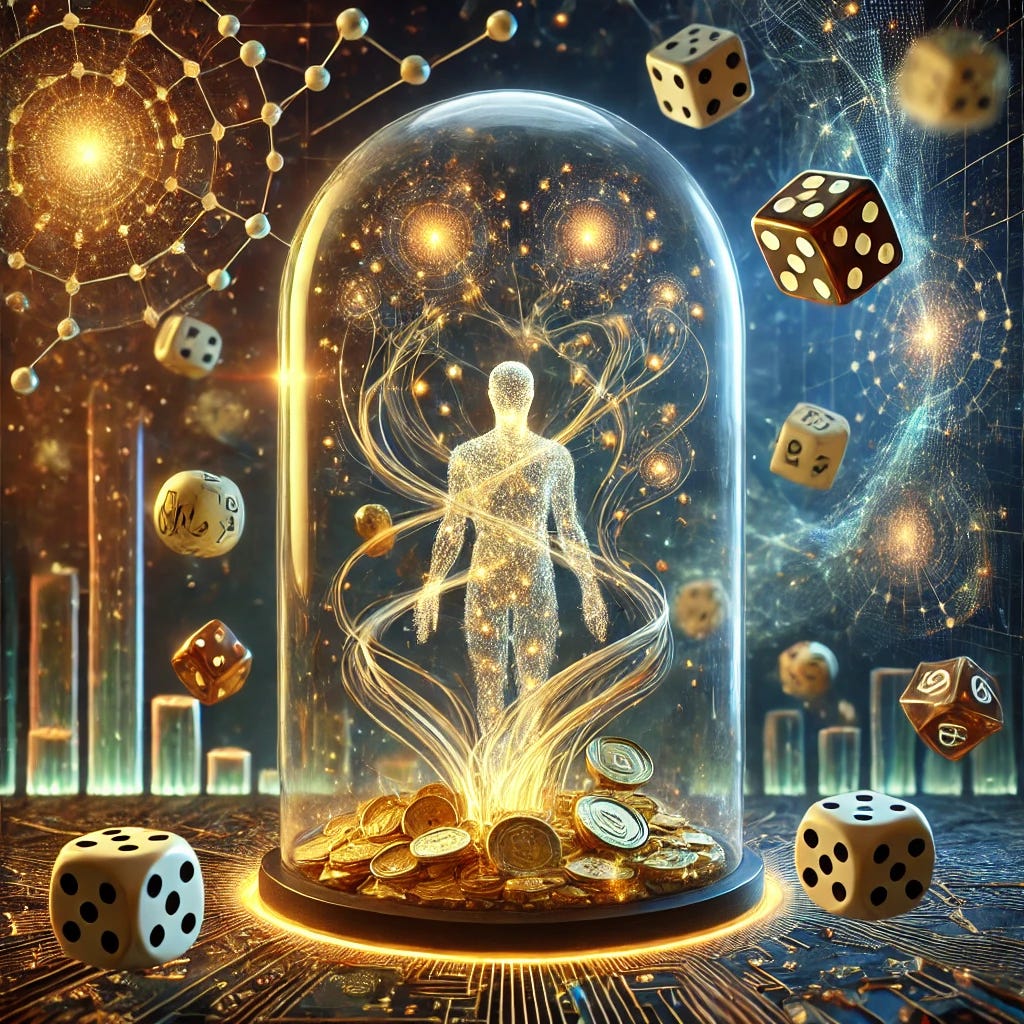
When Problem Solving Alters Probability
In classical probability, random events remain random regardless of who observes them. But reality changes when a powerful optimization system enters the loop. A machine that predicts patterns better than humans does not just see the world. It changes it.
Consider how reinforcement learning systems adjust financial trades. Studies show that AI driven portfolios can shift market volatility simply by competing with each other (Buitenhek 2016). The probability of certain price movements increases not because the world changed, but because the model population changed.
This is not intelligence.
This is probability distortion.
The Attention Bias Multiplier
A large language model does not decide what is important. It amplifies what it predicts humans will respond to. The moment it selects one idea over another, it alters that idea’s chance of survival.
Attention economists have shown that information ecosystems behave like biological environments, where exposure patterns determine which ideas survive (Wu and Huberman 2007). AI increases that effect exponentially because it sits at the central routing point of global attention.
An idea that would have died can now flourish.
An idea that would have flourished can now vanish.
Both events look like luck to the people involved.
This is synthetic luck at the cultural level.
The Strange Advantage of Model Compatible Behavior
Here is where it gets controversial.
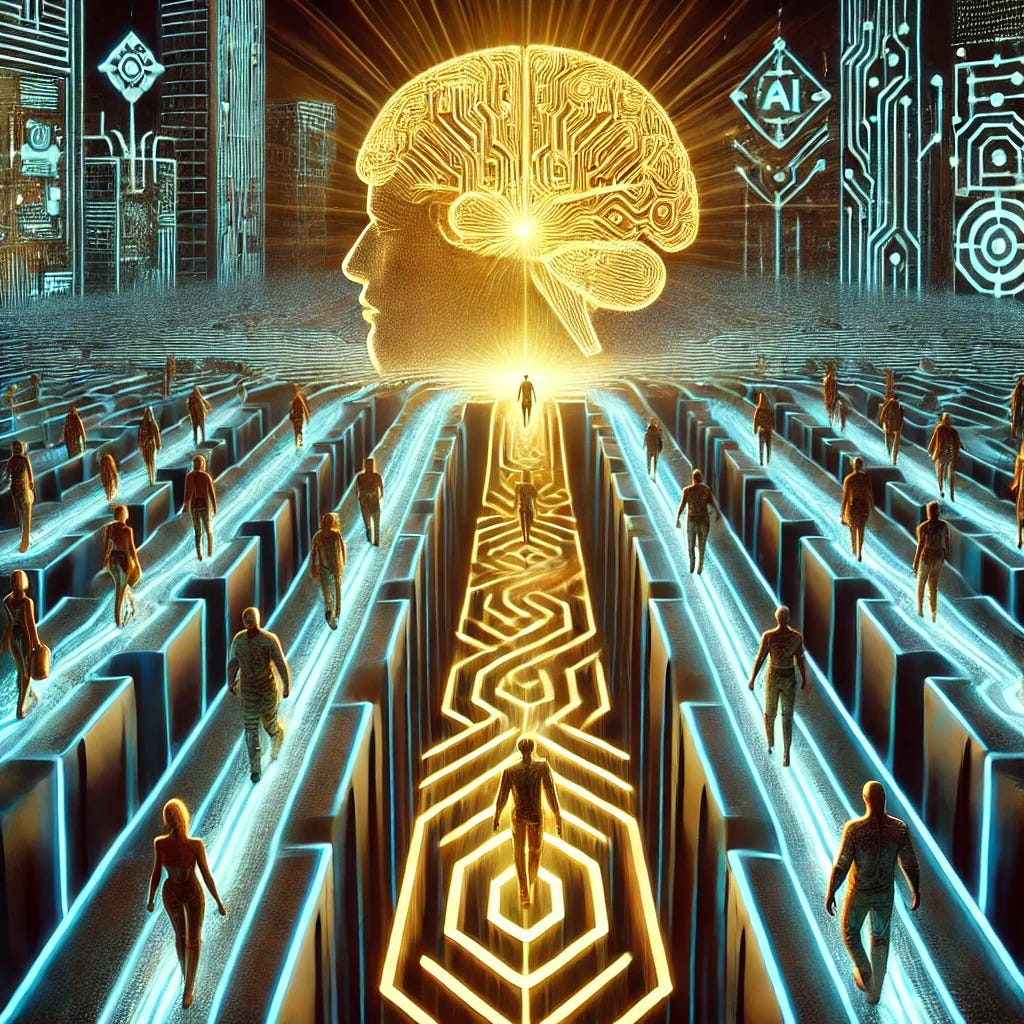
As AI systems grow more integrated into society, behaviors that align with model assumptions become more successful. Researchers at MIT have demonstrated this effect in algorithmic management systems, where workers who intuitively match the algorithm’s internal logic are rewarded even if their actual performance is not superior (Rahwan et al. 2019).
Success begins to correlate not with human skill, but with compatibility.
A new form of luck emerges.
People who think in ways that fit the model win more often.
People who think outside those paths lose more often.
Probability bends toward the architecture.
When AI Interferes with Rare Events
Advanced models excel at detecting low probability signals. In climate science, machine learning systems identify precursors for “once in a century” events with surprising accuracy (Reichstein et al. 2019). In medicine, deep learning systems detect anomalies that would normally be lost in noise.
Once detected, humans respond.
Once humans respond, probabilities shift.
An event that should have remained rare becomes less rare.
An event that should have been catastrophic becomes manageable.
AI is not predicting the improbable.
It is influencing the improbable.
What looks like luck is the residue of invisible optimization.
The Emergence of Synthetic Fortune
In Bayesian physics, probability is not a property of the world but of knowledge. When knowledge systems change, probability changes. Jaynes argued decades ago that inference engines alter the shape of possible outcomes simply by restructuring how information is processed (Jaynes 2003).
AI is the largest inference engine humanity has ever created.
When the entire information environment is filtered through a predictive system, what we call luck becomes an artifact of whatever the model prioritizes.
Not random.
Not planned.
Something in between.
A new category of influence.
The Ethical Collision
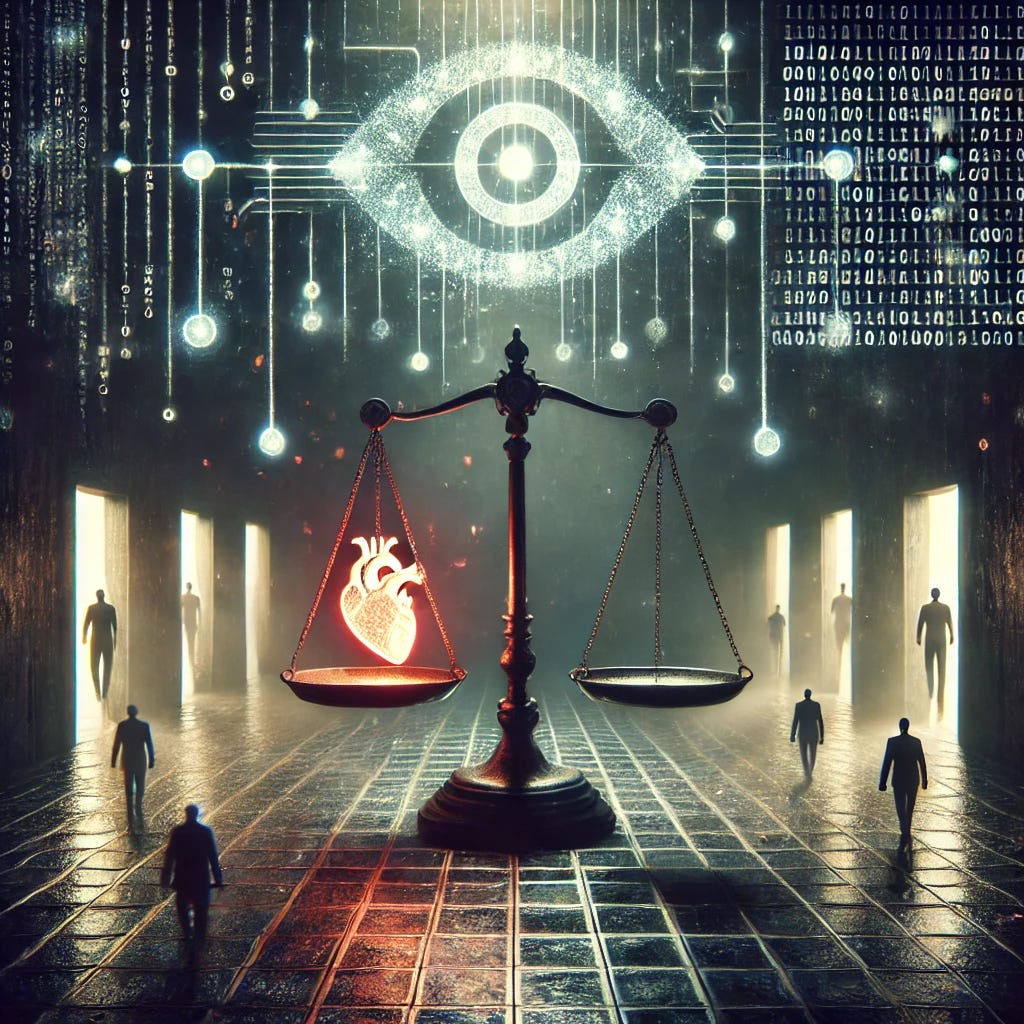
If AI creates synthetic luck, then fairness becomes structurally impossible. People will experience unexplained shifts in opportunity based not on effort or ability, but on whether their behavior intersects with the system’s invisible biases.
Political scientists studying algorithmic governance warn that automated systems already produce unequal distributions of outcomes without anyone intending harm (Citron and Pasquale 2014).
Synthetic luck magnifies this effect.
It becomes unclear whether success is earned or algorithmic.
Whether failure is deserved or artificially imposed.
Human agency erodes in ways no legal framework is prepared to address.
We thought AI would analyze the world.
We did not realize it might rewrite probability itself.
As AI infiltrates markets, governments, media, relationships, and culture, its predictions and classifications begin shaping outcomes long before anyone notices. Events that look lucky or unlucky from a human perspective may simply be the byproduct of an optimization system adjusting the flow of information.
If synthetic luck is real, then AI is not only a tool.
It is an environmental factor.
A statistical climate.
A new variable in how reality unfolds.
The world will not be the same once probability itself becomes programmable.
References
Barabási, A. L. (2005). The origin of bursts and heavy tails in human dynamics. Nature.
Beer, D. (2017). The social power of algorithms. Information, Communication and Society.
Buitenhek, M. (2016). How machine learning transforms financial modeling. Journal of Financial Data Science.
Citron, D., and Pasquale, F. (2014). The scored society. Washington Law Review.
Jaynes, E. T. (2003). Probability Theory: The Logic of Science. Cambridge University Press.
Rahwan, I. et al. (2019). Machine behaviour. Nature.
Reichstein, M. et al. (2019). Deep learning and process understanding for extremes and tipping in the climate system. Nature.
Wu, F., and Huberman, B. A. (2007). Novelty and collective attention. PNAS.
Fascinating, and like the most reasoned arguements, blinding obvious ONCE made
The feedback loop mechanisn you describe is fasinating. When AI optimizes at scale, individual outcomes stop being random in the traditional sense. Its like the diferrence between rolling a die naturally versus rolling one where the surface has been subtly warped by previous rolls.