
Risk as a Service
How AI Is Turning Everyday Life Into an Insurance Product

For most of modern history, insurance was boring. You bought it once a year. You barely thought about it. Your risk was averaged with everyone else’s.
That era is ending.
Artificial intelligence is quietly transforming insurance from a background product into a continuous, personalized judgment about how you live. Not just how you drive or what you buy, but how you sleep, where you go, who you interact with, and what patterns your life produces over time.
This is not about better pricing.
It is about redefining what risk even means.
From Shared Risk to Constant Scoring
Traditional insurance works by pooling uncertainty. Insurers never needed to know much about you. They only needed to know enough to place you in a broad category. Age. Location. Job. History.
AI breaks that model.
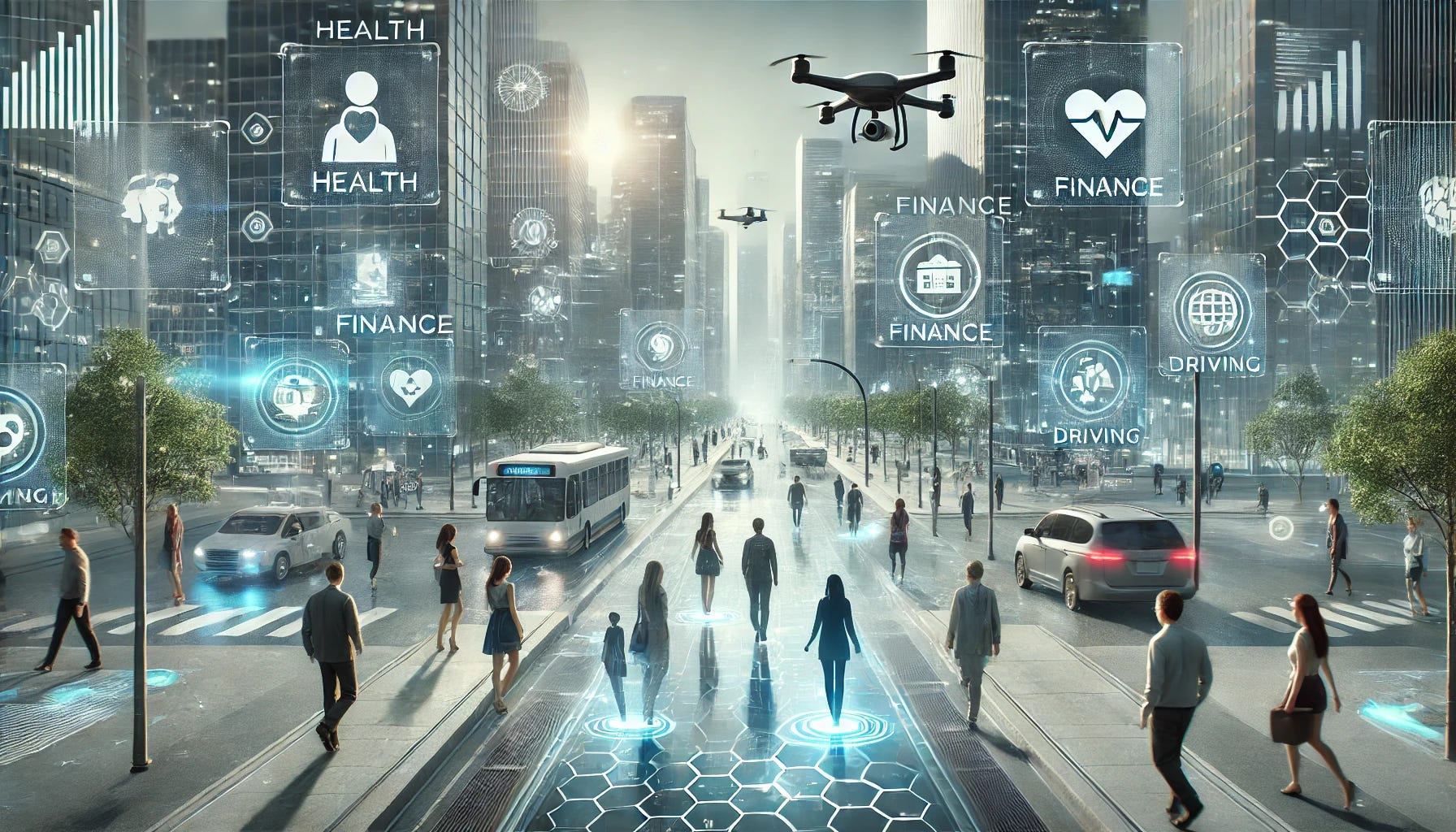
With machine learning, risk is no longer inferred from categories. It is calculated from behavior. Telematics already adjust auto insurance based on driving patterns. Health insurers experiment with wearables. Home insurers use satellite imagery and climate models to assess property exposure in real time (OECD 2023).
Each data stream tightens the lens.
Each model narrows the margin of uncertainty.
Risk stops being shared.
It becomes individualized.
When Prediction Becomes Policy
AI does not just describe risk. It anticipates it.
Insurers now deploy models that estimate the probability of future claims based on correlations across massive datasets. These models often outperform human underwriters, but they also operate without clear causal explanations (EIOPA 2021).
If a system predicts higher likelihood of illness, accident, or loss, premiums adjust. Coverage shrinks. Conditions change.
Nothing has happened yet.
But the future has already been priced in.
This is a subtle shift. Insurance decisions begin to feel like judgments about who you are becoming, not what you have done.
The Feedback Loop Nobody Asked For
Here is where it gets dangerous.
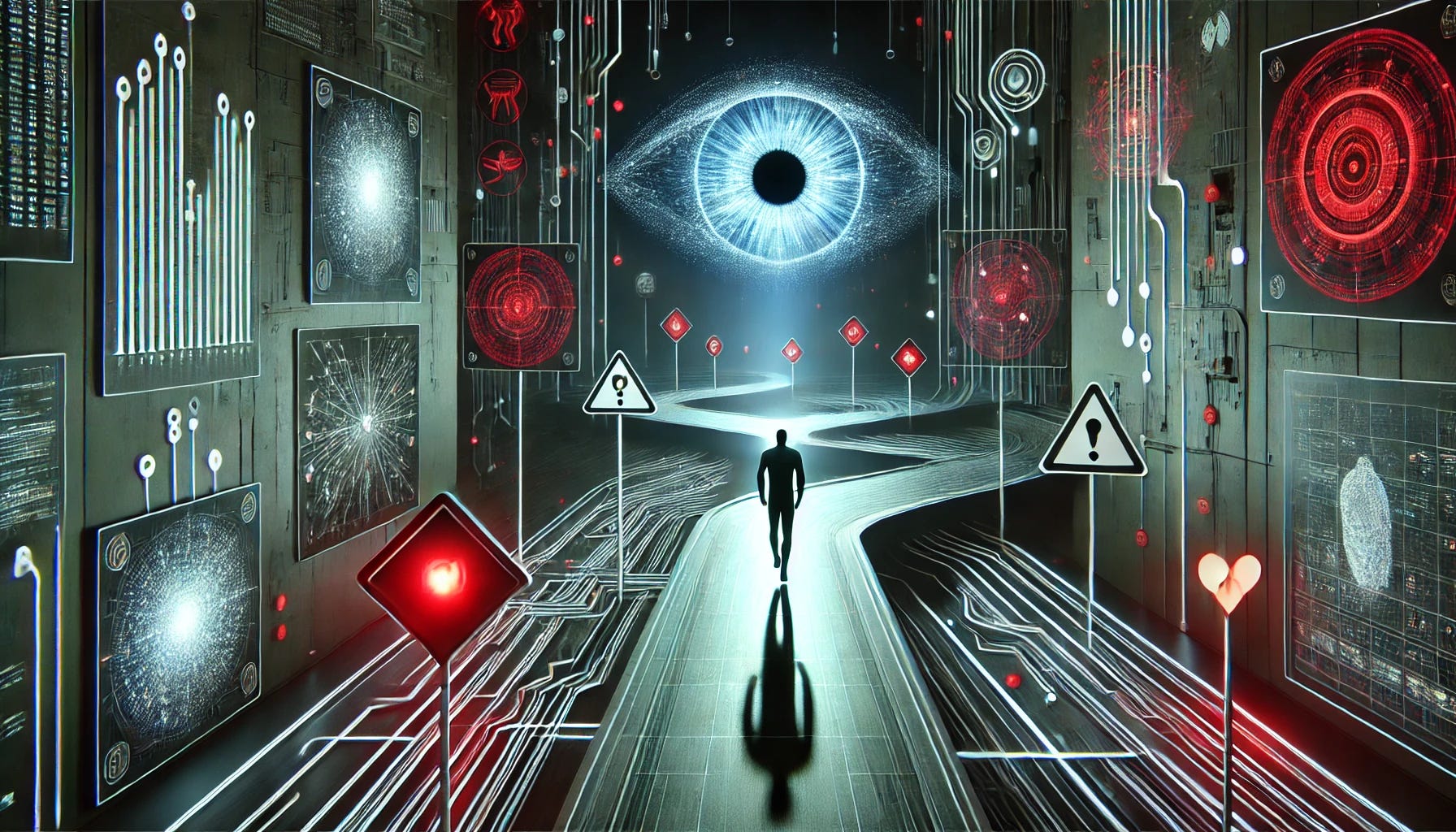
Once AI based risk scores affect pricing, people start changing behavior to avoid penalties. That behavior feeds back into the data. The model retrains. The thresholds shift.
This creates a loop where prediction shapes reality, not just responds to it. Similar dynamics have been documented in credit scoring and algorithmic governance systems (Pasquale 2015).
People are nudged into “safe” lives.
Not necessarily better lives.
Risk becomes something to be managed socially, not just financially.
Moral Hazard for Machines
Classic insurance theory worries about moral hazard. People act recklessly because they are insured.
AI flips this.
Now the hazard is excessive caution. If every deviation raises your risk score, experimentation becomes costly. Travel. Career changes. Lifestyle shifts. Even social behavior.
Researchers studying algorithmic risk assessment warn that over-optimization can suppress beneficial but unpredictable behavior, especially in health and labor markets (Kleinberg et al. 2018).
A society optimized for low risk may also be optimized for low growth.
Who Owns Your Risk Profile
Another uncomfortable question. Who owns the model’s judgment about you.
Risk scores are rarely transparent. They are proprietary. Individuals often cannot inspect them, challenge them, or even know they exist. Legal scholars argue this creates a new form of power asymmetry, where decisions are justified statistically but never explained (Citron and Pasquale 2014).
If your insurance premium rises, you may never know why.
If coverage disappears, there may be no appeal.
Your future becomes a number you cannot see.
When Insurance Starts Steering Society
As AI driven insurance spreads, it does more than price risk. It reshapes behavior at scale.
Cities may become less insurable.
Certain jobs may become harder to cover.
Entire lifestyles may become economically discouraged.
This has already begun with climate risk modeling, where insurers withdraw from regions deemed too volatile, effectively redrawing maps of where people can afford to live (Swiss Re 2023).
AI accelerates this process.
Quietly.
Automatically.
Markets adjust faster than laws.
The Political Consequence
When risk becomes individualized, solidarity weakens. Shared systems depend on mutual exposure. When everyone pays exactly for their predicted future, the logic of pooling collapses.
Some economists argue this pushes societies toward two extremes. Either hyper-individualization, where protection becomes a luxury good, or renewed collective systems where risk is socialized again through public insurance or regulation (Piketty 2020).
AI does not choose between these paths.
It forces the choice.
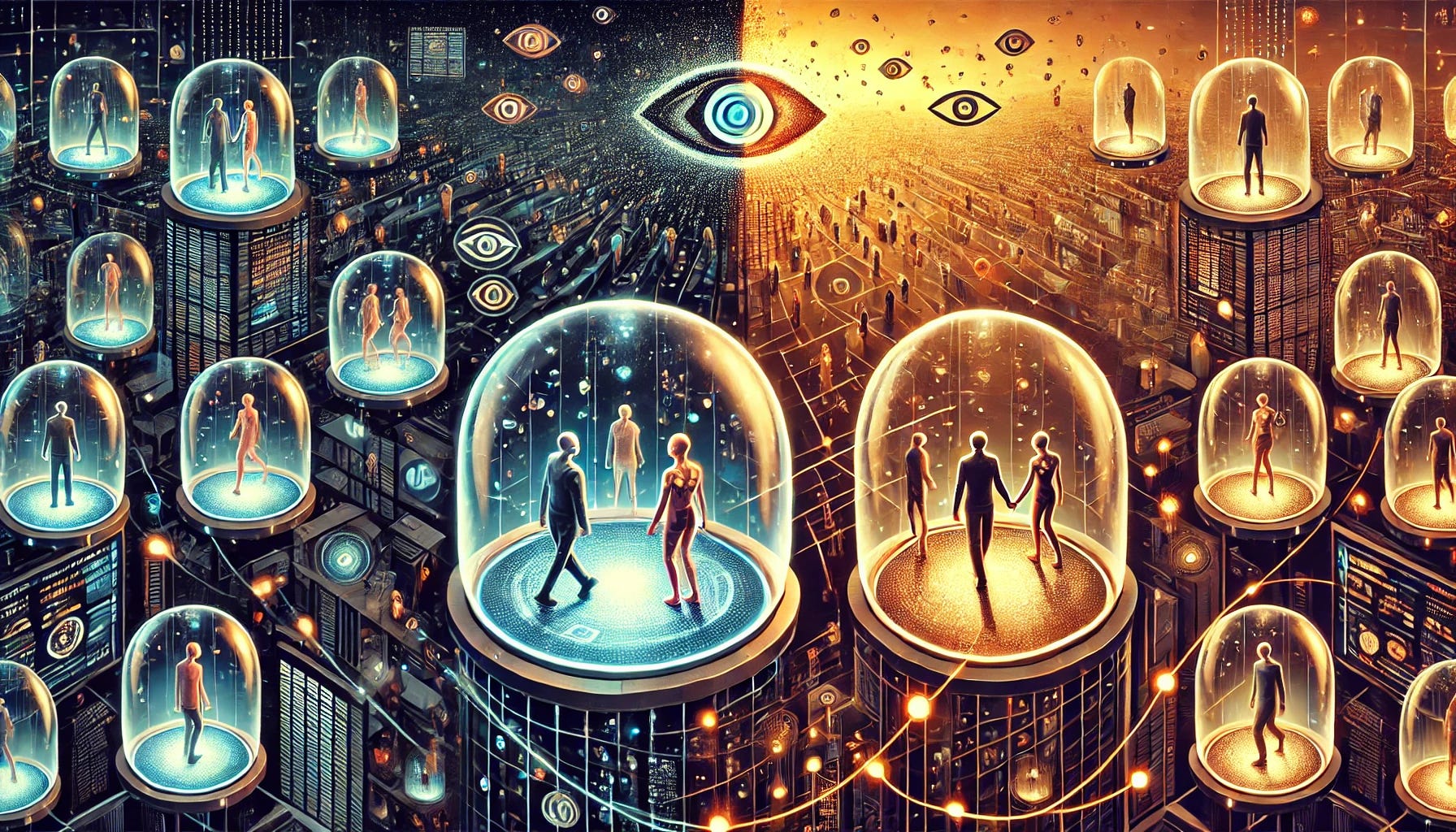
AI is not just making insurance smarter. It is redefining the relationship between prediction and protection. Risk is no longer something that happens. It is something continuously measured, priced, and acted upon before events unfold.
This changes how people live.
How they move.
How they plan their futures.
When everyday life becomes an insurance product, freedom starts to look expensive.
The real question is not whether AI can predict risk better than humans.
It is whether we want to live in a world where prediction quietly governs possibility.
References
Citron, D. K., & Pasquale, F. (2014). The scored society. Washington Law Review, 89, 1–33.
EIOPA. (2021). Artificial intelligence governance principles. European Insurance and Occupational Pensions Authority.
Kleinberg, J., Ludwig, J., Mullainathan, S., & Obermeyer, Z. (2018). Prediction policy problems. American Economic Review, 108(3), 22–25.
OECD. (2023). Artificial Intelligence in Insurance. OECD Publishing.
Pasquale, F. (2015). The Black Box Society. Harvard University Press.
Piketty, T. (2020). Capital and Ideology. Harvard University Press.
Swiss Re. (2023). Global Insurance Climate Risk Report.
Insurance must be treated as a utility because AI has made prediction too powerful to leave risk governance to unregulated markets.
Strong framing on how individualized risk pricing erodes the mutualization that made insurance scaleable in the first place. The feedback loop is the real danger, where avoiding algorithmic penalties creates behavioral conformity that wasn't the original risk model's intent. I've seen this in telematics where drivers optimize for the scoring system rather than actual safety. The climate withdrawl example is already playing out in Florida and Cali where entire zipcodes become uninsurable, not because of claims history but predictive models.