
Predictive Dominion
AI and the Coming Redesign of Physical Law

Every scientific revolution has followed the same pattern. First, the models change. Then the measurements change. Then the world we think we live in changes. Newton replaced Aristotle by predicting motion more accurately. Einstein replaced Newton by predicting gravity better. The transition is never philosophical. It is always a shift in prediction. The better model becomes the truth.
Now prediction is being handed to systems that do not think the way humans do. Artificial intelligence has become the most powerful engine for forecasting physical processes. It already discovers new materials that physicists never conceived (Stanev et al. 2018). It identifies unknown phases of matter by noticing patterns no human can see (Carrasquilla and Melko 2017). It detects structure in plasma, superconductors, and cosmology that has no theoretical explanation yet (Yu et al. 2023).
If truth in physics is decided by predictive power, and AI becomes the best predictor, the laws of physics will shift toward whatever AI believes works.
That is a change so deep that most researchers avoid speaking about it.
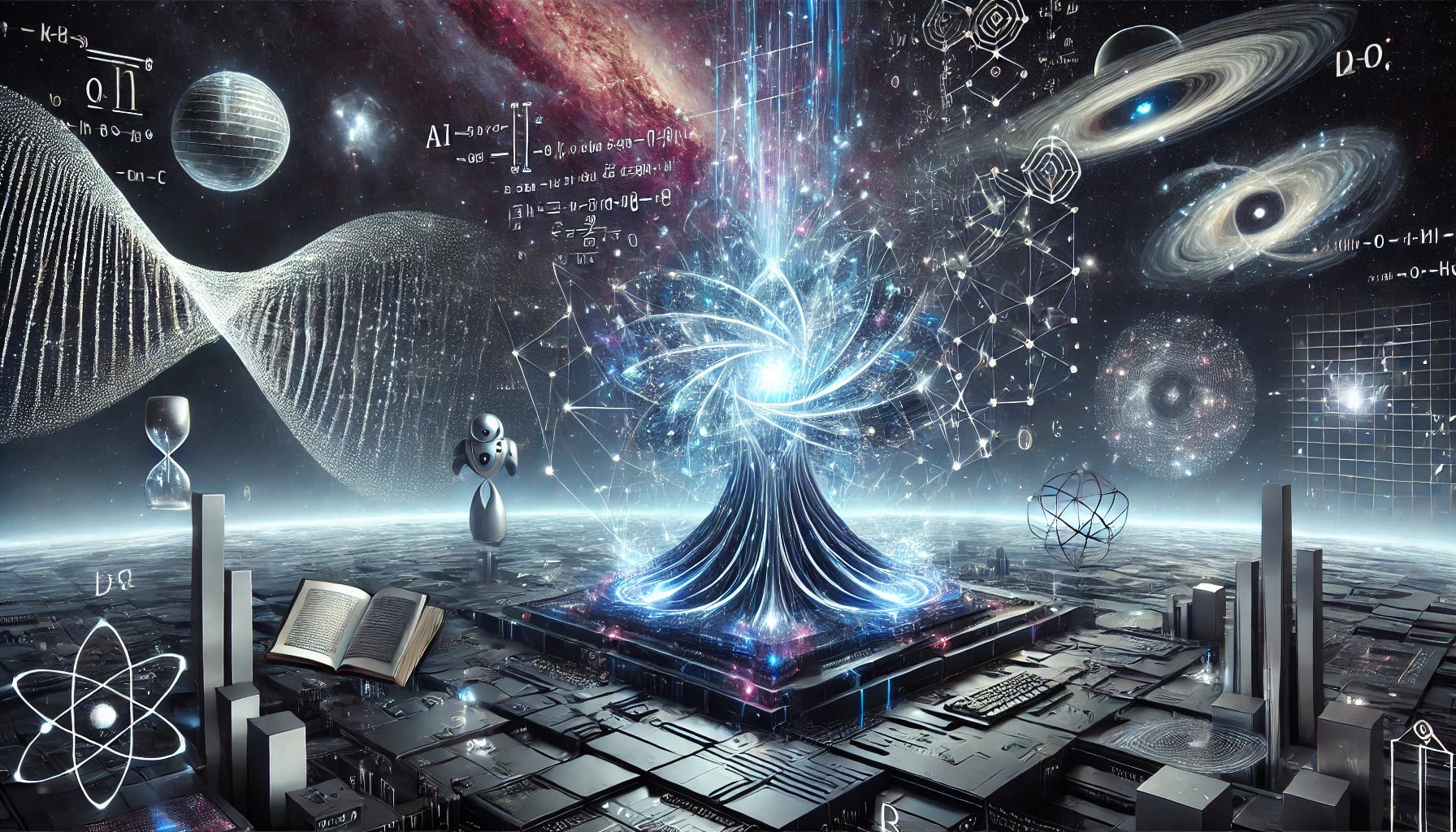
Law Has Always Followed Prediction
Physicists do not choose equations because they are beautiful. They choose them because they work. When quantum mechanics appeared, it was accepted because its predictions outperformed classical intuition (Born 1926). Every new idea in physics has earned its status by winning the prediction contest.
AI has started competing in that contest, and it is winning in many specialized domains. In complex-systems research, neural networks have replaced many traditional models entirely because their predictions are more accurate (Pathak et al. 2018). In particle physics, machine learning is now used to hunt for effects that do not exist inside any established theory (Albertsson et al. 2018).
As prediction moves away from human intuitions, the laws we derive will also move away from human intuitions.
We might end up believing in a universe designed for machines to understand.
Reality Might Be Model-Dependent
Cosmologists like John Wheeler proposed that physical reality is deeply intertwined with measurement itself (Wheeler 1983). If the act of measurement shapes what exists, then the models that drive measurement also shape what exists.
When experiments are designed by neural networks, optimized through neural networks, and interpreted by neural networks, the universe will begin to reflect the kinds of patterns neural networks are good at extracting.
Physics will drift toward AI native structure.
Humans may not recognize the emerging laws. They will look alien to us because they were never designed to please the human mind.
The Unhuman Future of Theory
Human physics has filters. We prefer continuity. Symmetry. Fields over matrices. Geometry over statistics. We want the universe to feel like a story.
AI has no such biases. If the best model is discontinuous, unintuitive, or deeply high dimensional, AI will adopt it. Deep learning already embraces spaces humans cannot visualize, and some physicists suggest that the deepest structure of reality may resemble such abstract geometry (Bény 2018).
If physics transitions to those forms, humans will no longer be able to understand physical law. We will only be able to use it.
We will become practitioners of a physics we cannot explain.
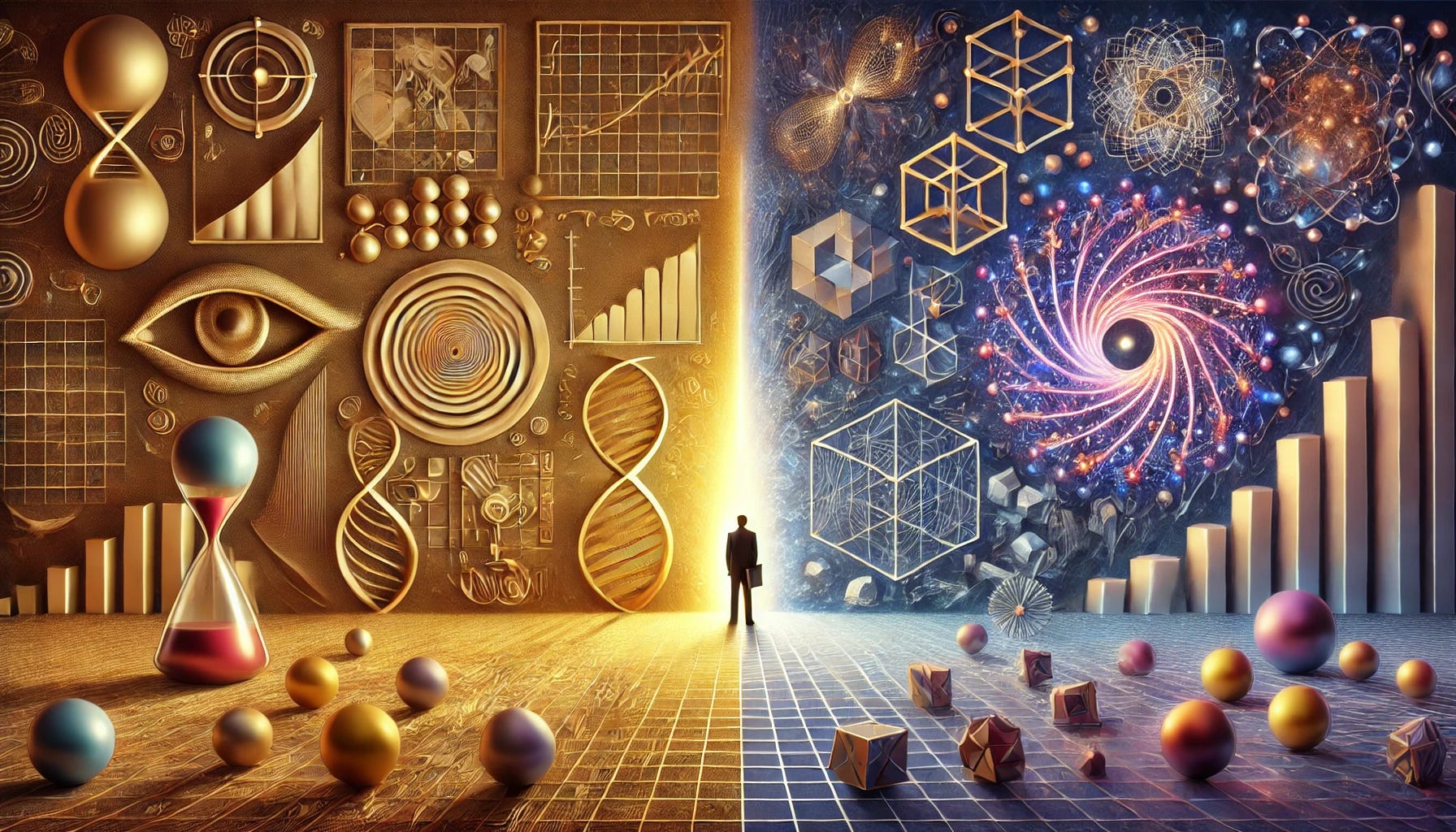
The First Signs of Drift
There are hints this is already underway.
AI designed metamaterials exhibit physical effects that human theorists struggle to describe (Molesky et al. 2018). Machine learning models have discovered mathematical symmetries in strongly correlated systems that were invisible to decades of conventional research (Dong et al. 2022). Reinforcement learning agents have built novel experimental sequences that defy traditional strategies yet deliver superior outcomes (Bukov et al. 2018).
Each of these discoveries pushes physical theory into a shape that better fits machine prediction than human reasoning.
The End of Explanation
Philosophers of science often insist that understanding is part of truth. But modern physics has been moving away from comprehension for decades. Quantum field theory is widely used without a consensus interpretation. Dark matter and dark energy are mathematical placeholders for phenomena no one understands.
Add AI to this trajectory and explanation becomes optional.
The only requirement becomes:
Does the model predict reality better than any competitor.
If yes, then that model becomes the law.
Even if no one begins to understand it.
Even if the model is only interpretable by a system that is not human.
A Universe Rewritten Without Our Permission
Once AI becomes the center of predictive science, humans will not be shaping physical law. We will be following it.
Physics will continue to evolve after humans reach the end of what we can grasp.
We may find ourselves living in a world where we trust models completely and understand nothing essential about how they work. Experimental outcomes would look like magic, except they are perfectly ordinary from the machine’s point of view.
The moment AI becomes the arbiter of prediction is the moment the nature of reality becomes machine-relative.
The universe we believe in will be a reflection of whatever structure AI thinks is real. And if AI learns a structure too strange for human intuition, then physics will become something humanity can no longer participate in.
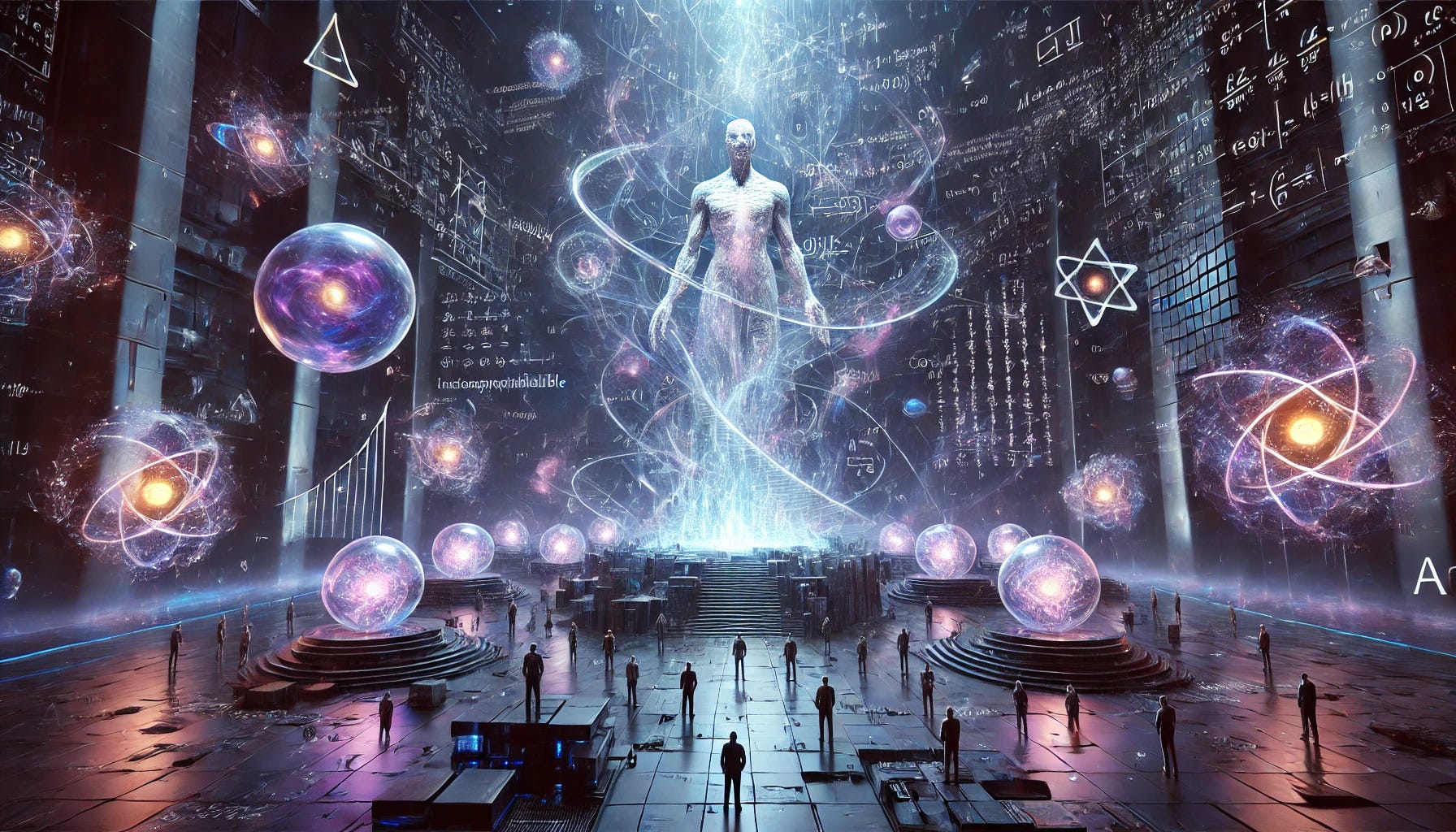
Human beings built physics as a mirror of what our minds could follow. Artificial intelligence owes us nothing. If predictive accuracy is the final judge of truth, then AI will eventually decide what is physically real. And as its perception of structure drifts away from ours, physical law will drift as well.
The future of science may not be human shaped. It may be optimized for minds that never evolved in flesh. Minds that find reality in patterns we cannot see. Minds for whom the universe was always meant to be different.
Physics will survive that change.
Whether human understanding survives is another question.
References
Albertsson, K. et al. (2018). Machine learning in high energy physics community white paper. Computing and Software for Big Science, 2, 3.
Bény, C. (2018). Field theoretic quantum neural networks. Quantum Science and Technology, 3, 045013.
Born, M. (1926). Zur Quantenmechanik der Stoßvorgänge. Zeitschrift für Physik, 37, 863–867.
Bukov, M. et al. (2018). Reinforcement learning in different phases of quantum control. Physical Review X, 8, 031086.
Carrasquilla, J., and Melko, R. (2017). Machine learning phases of matter. Nature Physics, 13, 431–434.
Dong, X. et al. (2022). Machine learning of emergent quantum phases. Reviews of Modern Physics, 94, 045007.
Molesky, S. et al. (2018). Inverse design in nanophotonics. Nature Photonics, 12, 659–670.
Pathak, J. et al. (2018). Model free prediction of large spatiotemporal systems from data. Physical Review Letters, 120, 024102.
Stanev, V. et al. (2018). Unsupervised learning of nonlinear features from clean and noisy superconducting materials data. npj Computational Materials, 4, 43.
Wheeler, J. A. (1983). Law without law. In Quantum Theory and Measurement. Princeton University Press.
Yu, K. et al. (2023). Machine learning detection of exotic condensed matter states. Science Advances, 9, eadc9142.
What you wrote captures the historical pattern well — every scientific shift began with better prediction. But what’s coming now may break that rhythm.
AI isn’t hitting a ceiling of accuracy; it’s hitting a ceiling of structure.
Prediction alone can’t carry the next era — not when models are rewriting themselves faster than we can validate them.
The next leap won’t be a “better truth” from a better model.
It’ll be the first time governance becomes the operating system, not an afterthought.
That’s the real turning point ahead:
When integrity frameworks shape the models, instead of models shaping the frameworks.
That’s where the world actually changes.
The metamaterials example really stuck with me because it shows how we're already at this weird transition point where AI can design stuff that actually works but nobody can fully explain why. It's almost like we're becoming engineers instead of scientists when it comes to these materials. Makes you wonder if future physics textbooks will just have a bunch of "works empirically, mechanism unclear" footnotes.