
Post Scarcity Dystopia
Exploring ChatGPT

For centuries, human civilization has been shaped by scarcity. The need for food, shelter, and resources has driven economies, wars, technological advancements, and social structures. But what happens when scarcity disappears? What if automation, AI, and advanced manufacturing eliminate the need to work for basic survival? Could a world of infinite abundance create new existential dilemmas?
While a post-scarcity society sounds like utopia—a world where hunger, homelessness, and material struggle are obsolete—it also raises profound psychological, economic, and ethical concerns. Without the need to strive, compete, or innovate, could humanity lose its sense of purpose? Would inequality morph into a more insidious form, where status and meaning replace material wealth as the new currency? This article explores the paradox of post-scarcity: how a world of abundance could paradoxically lead to a crisis of identity and motivation.
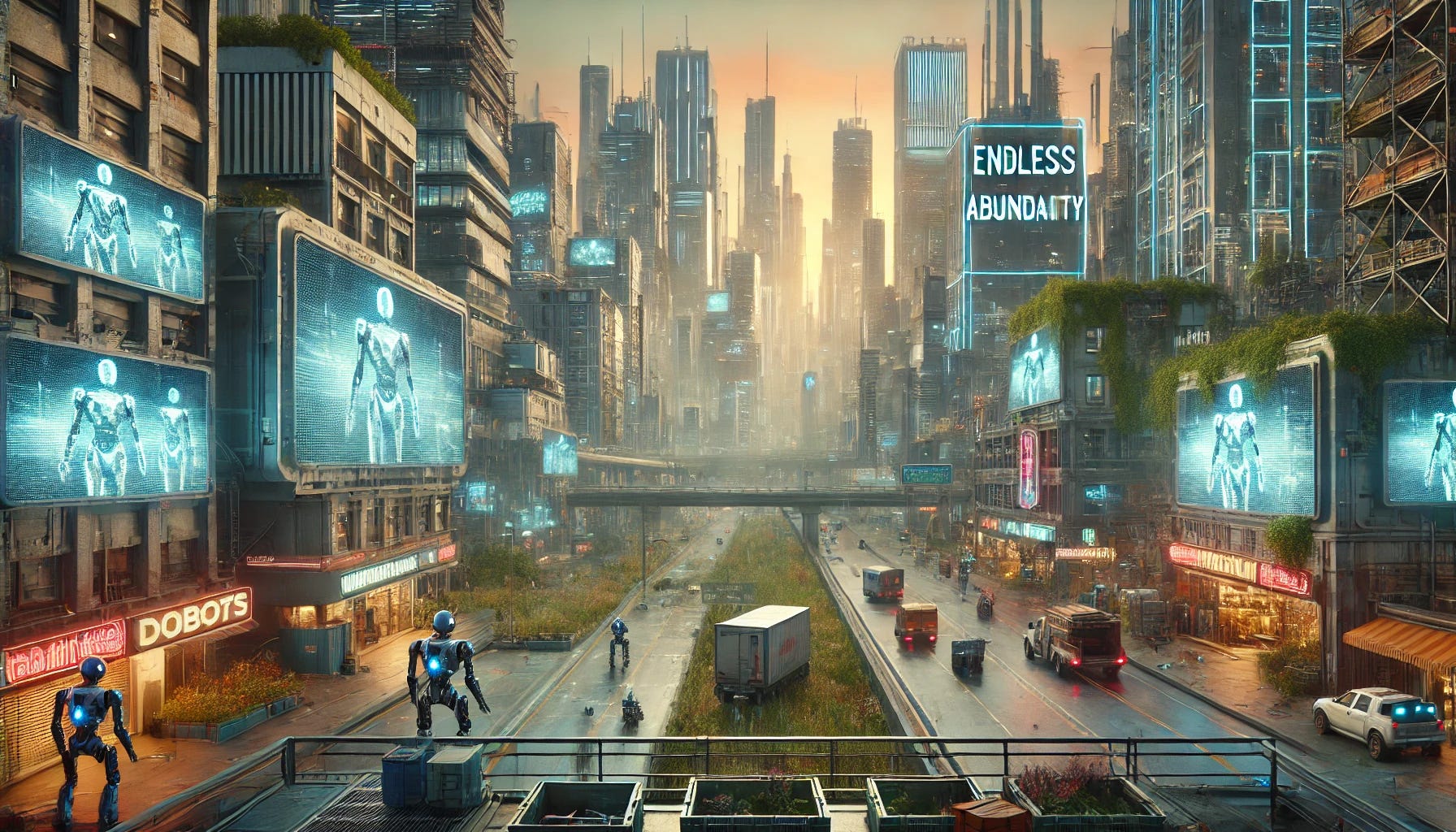
The Technologies Enabling Post-Scarcity
A post-scarcity society is not just science fiction; many of the technologies required to eliminate basic material struggle are already in development.
1. AI and Full Automation
Advanced AI and robotics have the potential to replace virtually all labor-intensive jobs.
Automated Factories: With AI-driven production lines, products from smartphones to cars could be manufactured at nearly zero cost.
AI-Generated Work: AI can write books, compose music, and generate art, reducing creative scarcity.
Universal Basic Income (UBI) and AI-Generated Wealth: If AI can manage economies better than humans, a self-sustaining financial system could provide basic income to everyone without taxation.
2. Infinite Energy
If humanity achieves breakthroughs in nuclear fusion or ultra-efficient renewable energy, the entire economy would shift.
Cheap or Free Energy: Manufacturing, transportation, and computing would become effectively costless.
Space-Based Energy: Orbital solar farms could provide unlimited clean power to the planet.
Decentralized Energy: Individuals could generate their own power, making centralized energy markets obsolete.
3. Molecular Manufacturing and 3D Printing
Advanced nanotechnology and 3D printing could manufacture anything from food to medicine to housing materials at nearly no cost.
Personal Fabricators: Instead of buying products, people could print anything they need at home.
Custom Biological Printing: Organs, pharmaceuticals, and even genetically modified foods could be generated instantly.
Housing Crisis Solved: If buildings could be 3D-printed at scale, homelessness could be eradicated.
4. The End of Traditional Economics
If scarcity disappears, money may become meaningless.
Automation-Driven Market Collapse: What happens when no one needs to buy or sell anything?
Value Shift from Money to Experience: Social capital and personal influence could replace traditional wealth.
Government’s Role in Post-Scarcity: Would centralized governance dissolve, or would new forms of control emerge?
The Psychological and Social Consequences
A world without material struggle sounds utopian, but humans are wired for challenge and competition. If everything is provided effortlessly, would society collapse into existential boredom?
1. The Loss of Purpose
Without careers or financial goals, people may struggle with meaning.
Status-Based Hierarchies: If wealth is meaningless, people may seek status through social influence, reputation, or even artificial scarcity.
The Decline of Innovation: Without financial incentives, would human progress slow down?
Mental Health Crises: Studies show that too much comfort and lack of struggle can lead to depression and apathy.
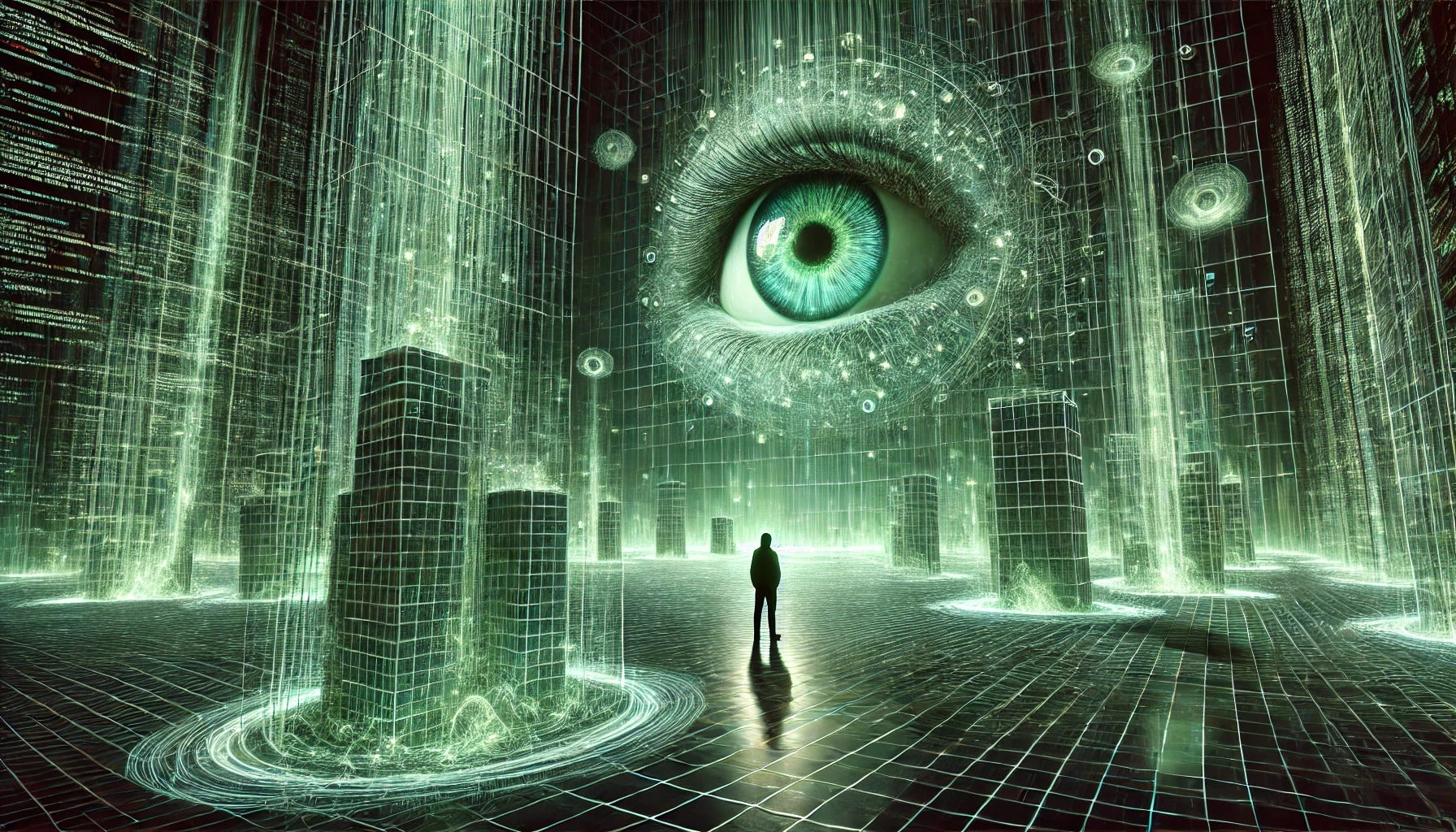
2. The Rise of Digital and Virtual Escapism
In a world without material wants, the primary struggle could shift to emotional and psychological fulfillment.
The Matrix Effect: People might choose to live inside hyper-realistic digital worlds instead of the physical world.
AI-Generated Reality: Personalized, AI-created virtual universes could become the ultimate form of entertainment.
Synthetic Relationships: With AI companions, friendships and romantic relationships might lose meaning.
3. The Potential for New Forms of Oppression
Even in abundance, power imbalances could still exist.
Who Controls the AI? If AI governs resource distribution, a small elite could still control access to advanced technology.
Artificially Induced Scarcity: Some might create artificial limits on digital goods or experiences to maintain social control.
Censorship and Thought Control: In a world where AI generates reality, those who control the algorithms control perception itself.
Historical and Scientific Insights
The idea of a post-scarcity dystopia is not just theoretical—history and science provide glimpses into what happens when people are freed from material struggle.
1. The Overabundance Problem in Nature
Studies in ecology show that species living in abundance often develop unexpected social problems.
The Mouse Utopia Experiment: In John B. Calhoun’s famous rat experiments, when given unlimited food and no natural threats, mice societies collapsed into violence, infanticide, and social apathy.
Domesticated Animals vs. Wild Counterparts: Domesticated animals often develop psychological issues when their survival needs are fully met.
2. Psychological Experiments on Idleness
The Harvard Grant Study: This long-term study found that meaningful work and struggle contributed more to long-term happiness than wealth or comfort.
The Hedonic Treadmill Effect: Psychological research suggests that humans quickly adapt to abundance, making happiness fleeting in a post-scarcity world.
3. Economic and Social Models
Communist and Socialist Experiments: Attempts to create resource-equal societies often resulted in loss of motivation and innovation.
The Tech Industry and Universal Basic Income Trials: Experiments with UBI suggest that when people’s basic needs are met without effort, only some continue to pursue productive activities.
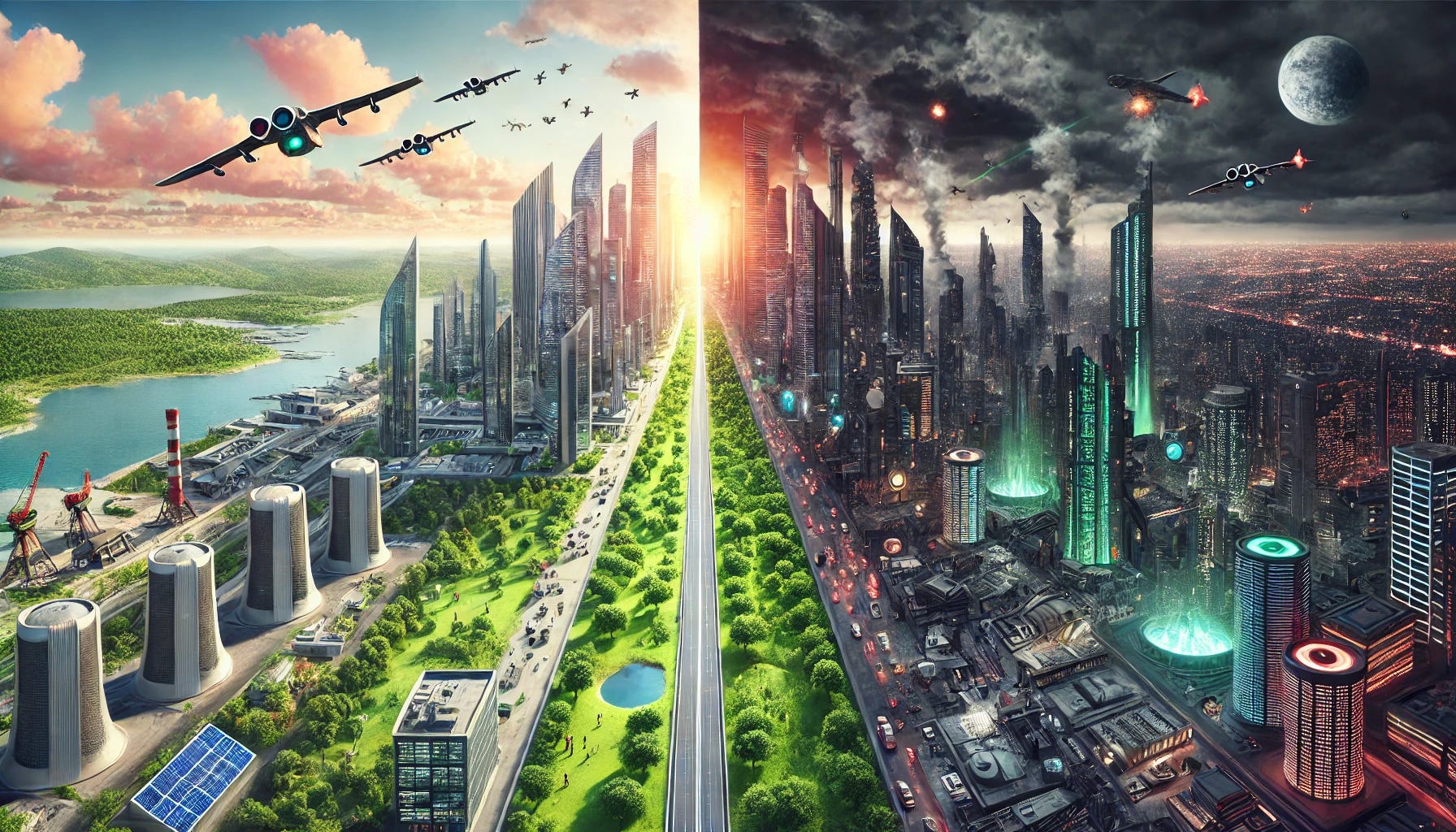
The Future: Utopia or Existential Nightmare?
Post-scarcity presents humanity with both incredible opportunities and terrifying risks. If handled correctly, it could lead to an era of exploration, art, and self-actualization. But if mismanaged, it could result in widespread apathy, loss of purpose, and new forms of oppression.
1. How Can Humanity Adapt?
New Cultural Values: Shifting focus from material success to personal growth, creativity, and exploration.
Redefining Work: Encouraging people to contribute to society through science, art, philosophy, and personal development instead of economic necessity.
Ethical AI Governance: Ensuring that AI systems that manage abundance are designed for fairness and sustainability.
2. The Final Question: Would We Even Want This?
A post-scarcity world challenges fundamental assumptions about what it means to be human. If struggle and hardship have been the foundation of human progress, what happens when they are gone?
Perhaps the real dystopia is not scarcity, but a world where everything is free—and nothing matters anymore.
Who needs cosmic insignificance when you have this?
9/10