
Listening to Stone
AI and the Language of Geological Time

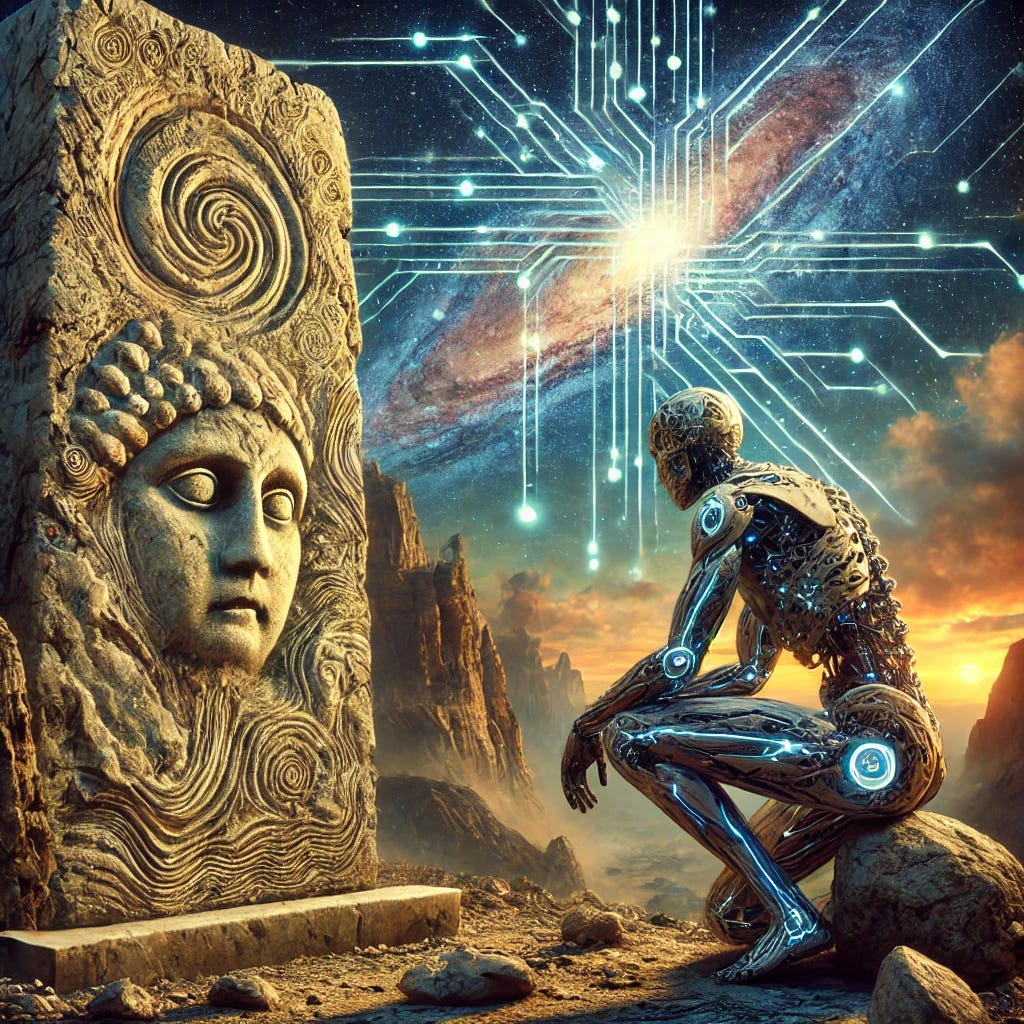
Pick up a stone from the ground. To the hand it feels silent, inert, ancient. Yet that silence is misleading. Within its crystal lattice lie hairline fractures, mineral seams, and isotopic markers that together hold a story stretching back millions, sometimes billions, of years. We manage to read only fragments of this tale, mostly through methods like radiometric dating and rough geological surveys. The rest remains hidden, waiting for a different kind of interpreter.
The Stone as a Recorder
Every rock is a kind of notebook, marked by pressure, temperature, and sudden shocks. Zircon grains can trap the chemical flavor of early oceans. Basalt columns whisper how quickly lava cooled when it met air. Even the scars along fault lines behave like ancient recordings, holding the memory of tremors that passed through them long ago. These are archives of time, but their writing is broken and hard for us to piece together.
Machines, however, excel at finding patterns that elude us. What feels like random noise to our eyes may, for an algorithm, reveal familiar shapes: the rhythm of solar cycles carved into crystals, or tectonic pulses encoded in strata.
The Language of Geological Time
Every language carries a grammar, and geology is no different. Sediment layers stack in rhythm, volcanoes erupt in pulses, minerals transform in cycles that repeat with uncanny persistence. None of this is truly random, but it resists the kind of direct reading our minds are built for.
AI could serve as a bridge across this gap, detecting structures that behave like syntax. In this way, rocks, strata, and folds could be read less as raw material and more as words, punctuation, and chapters in an ongoing planetary story.
A Speculative Experiment
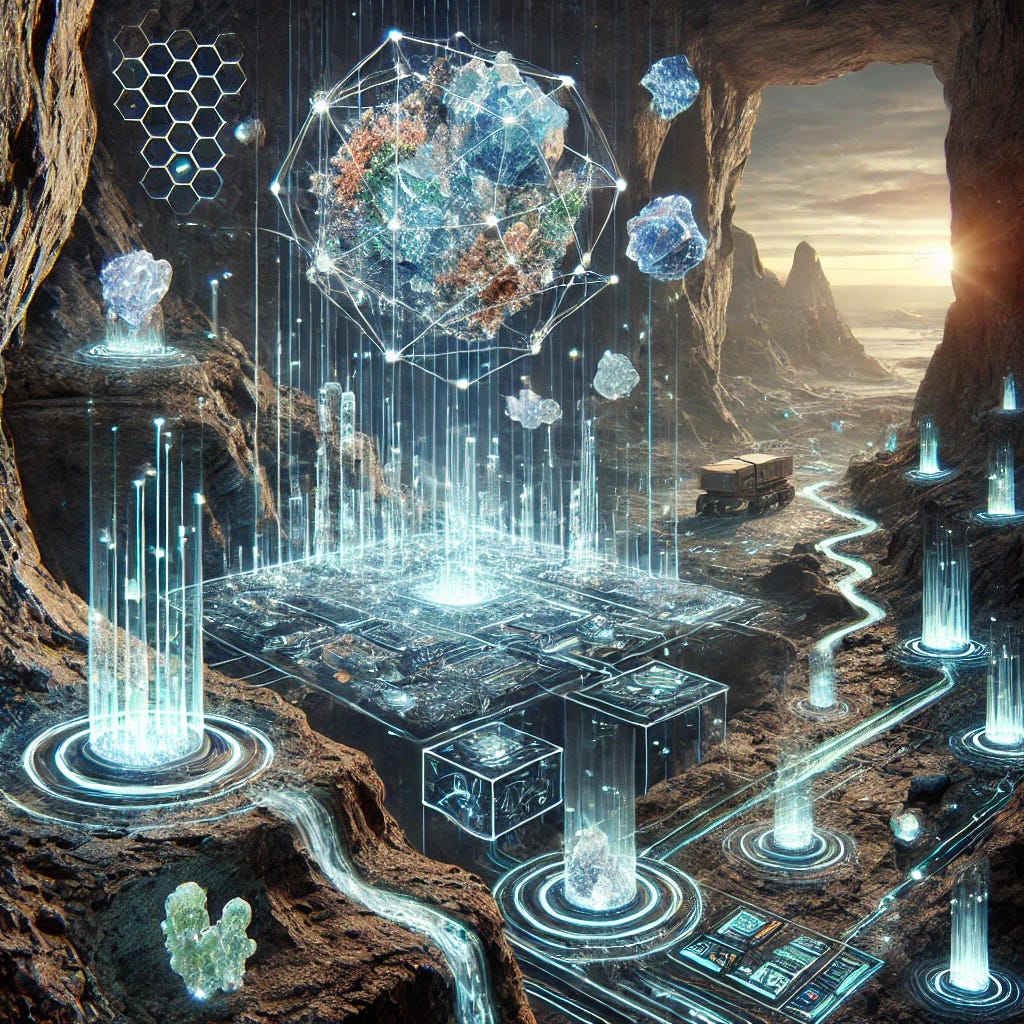
Picture a neural network trained not on text or images but on high-resolution scans of rocks, crystals, and ancient strata. Instead of relying on labels, it would explore unsupervised, searching for hidden rules that explain why certain patterns keep appearing in stone across time and space.
Another experiment might embed sensors deep into caves or fault zones, continuously recording micro-fractures, acoustic emissions, and thermal gradients. AI could then attempt to predict how these tiny murmurs accumulate into larger shifts. If successful, the system would be reading geological time as a flowing language, not a series of static snapshots.
Why It Matters
The practical consequences could be profound. If AI could decode stone, it might one day predict earthquakes with greater accuracy or reconstruct lost climate records from minerals alone. Archaeology could benefit too, as forgotten human histories are often sealed into caves, hearths, or ruins where stone holds echoes of fire, chisel, or tool.
At a larger scale, Earth itself might be understood as a storyteller, encoding its memory in rocks and minerals. AI would be the first reader truly capable of grasping that language across the immensity of time.
Planetary Deep Time
The story does not end with Earth. The Moon, Mars, and asteroids are enormous archives of memory, etched in stone. Unlike Earth, which constantly recycles its surface through plate tectonics, many extraterrestrial landscapes remain untouched, preserving billions of years of history.
Mars and the Moon would no longer be read as silent landscapes but as vast texts, unfolding the history of the solar system line by line. Even the scattered rocks of asteroid belts could be understood as drifting libraries, their minerals preserving the chemistry of the early nebula that formed our planets.
To extend geology into this cosmic register would mean inventing a new discipline altogether: the comparative literature of planets.
Ethical Reflections
If machines do learn to read the memory of stone, are they only tools of human inquiry, or do they become participants in an ancient dialogue? Stones do not speak in any familiar sense, yet they preserve testimony of vanished worlds. To treat them merely as data is to risk exploitation rather than understanding.
Perhaps the greater challenge is to approach stone as something more than resource. AI, in this framing, is not a master of geological knowledge but a translator, helping us listen more carefully to what has always been there.
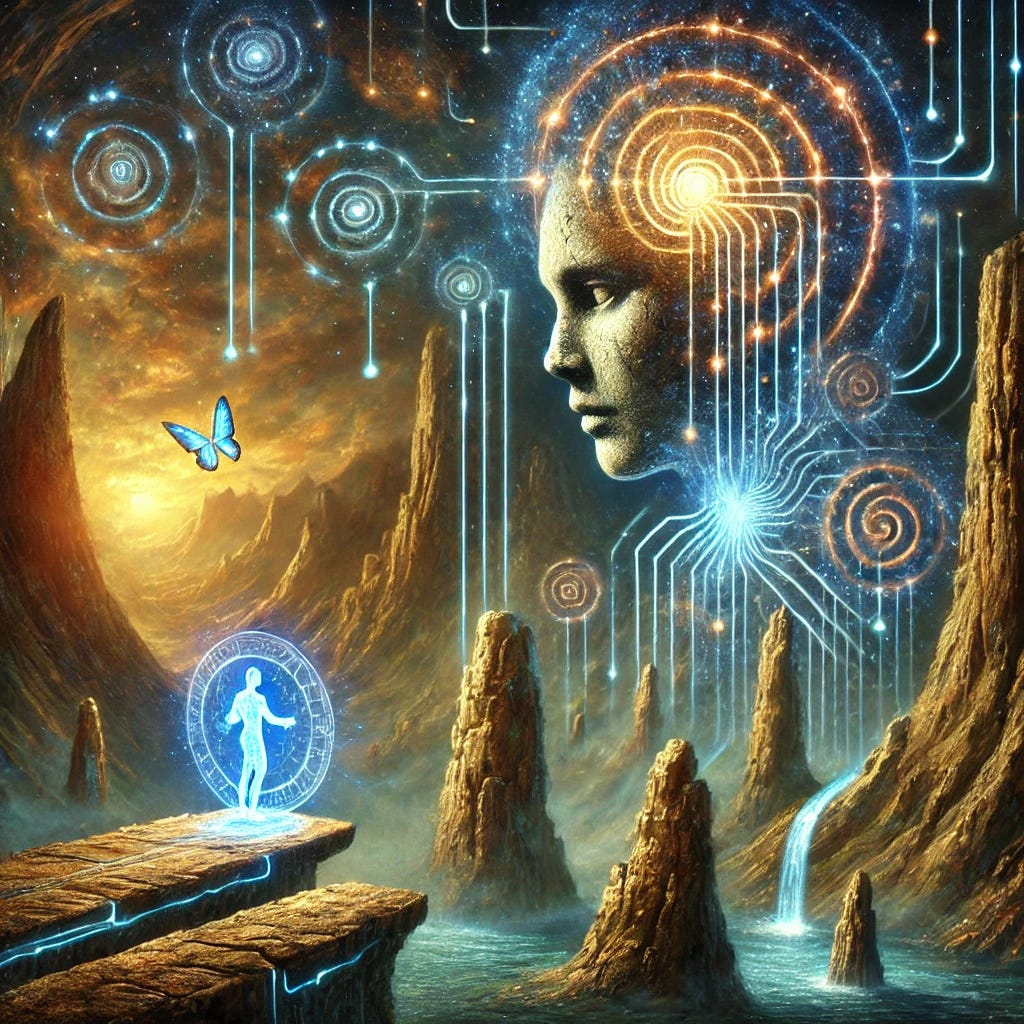
The stone in your hand predates every story humanity has told. It is older than language itself. If machines can help us trace its hidden grammar, we may not only discover new sciences but also a new humility. Intelligence may not be about inventing worlds, but learning to listen to the ones already written.
References
Valley, J. W. (2005). A cool early Earth. Geology, 33(6), 489–492.
Scholz, C. H. (2002). The Mechanics of Earthquakes and Faulting. Cambridge University Press.
Lowenstern, J. B. (1996). Volatile components in silicate melt inclusions: Examples from the rhyolitic systems. Reviews in Mineralogy and Geochemistry, 30(1), 447–505.
Stones do speak.
One only needs to listen, and then hear differently.