
Human Brain Evolution and Causation
Exploring ChatGPT

The evolution of the human brain has been a long and complex process, spanning millions of years. The earliest human ancestors had brains that were relatively small and simple, similar to those of apes and other primates. However, over time, the brain has grown larger and more complex, developing new structures and abilities that have allowed humans to adapt to their changing environment and develop advanced cognitive abilities.
One of the key changes that occurred during the evolution of the human brain was the development of the neocortex, a region of the brain responsible for advanced cognitive functions such as perception, memory, and decision-making. This region of the brain is much larger in humans than in other primates, and it is thought to have played a critical role in the development of human intelligence and consciousness.
Another important development was the growth of the cerebellum, a region of the brain responsible for motor control and coordination. This allowed early humans to develop more precise and controlled movements, which would have been crucial for tasks such as hunting and tool-making.
The hippocampus, responsible for spatial navigation and memory also grew significantly bigger in the human brain than in other primates, which would have been vital for early humans in navigating their environment and remembering locations of food, shelter, and other resources.
The human brain also developed specialized areas for language processing, such as Broca's and Wernicke's areas, which play a critical role in human communication and language.
Finally, the human brain has a greater degree of lateralization, or specialization of function in different hemispheres, than other primate brains, which has been linked to improvements in cognitive abilities such as problem-solving and decision-making.
Overall, the evolution of the human brain has been a gradual process that has involved the development of new structures and abilities that have enabled humans to adapt to their changing environment and develop advanced cognitive abilities.
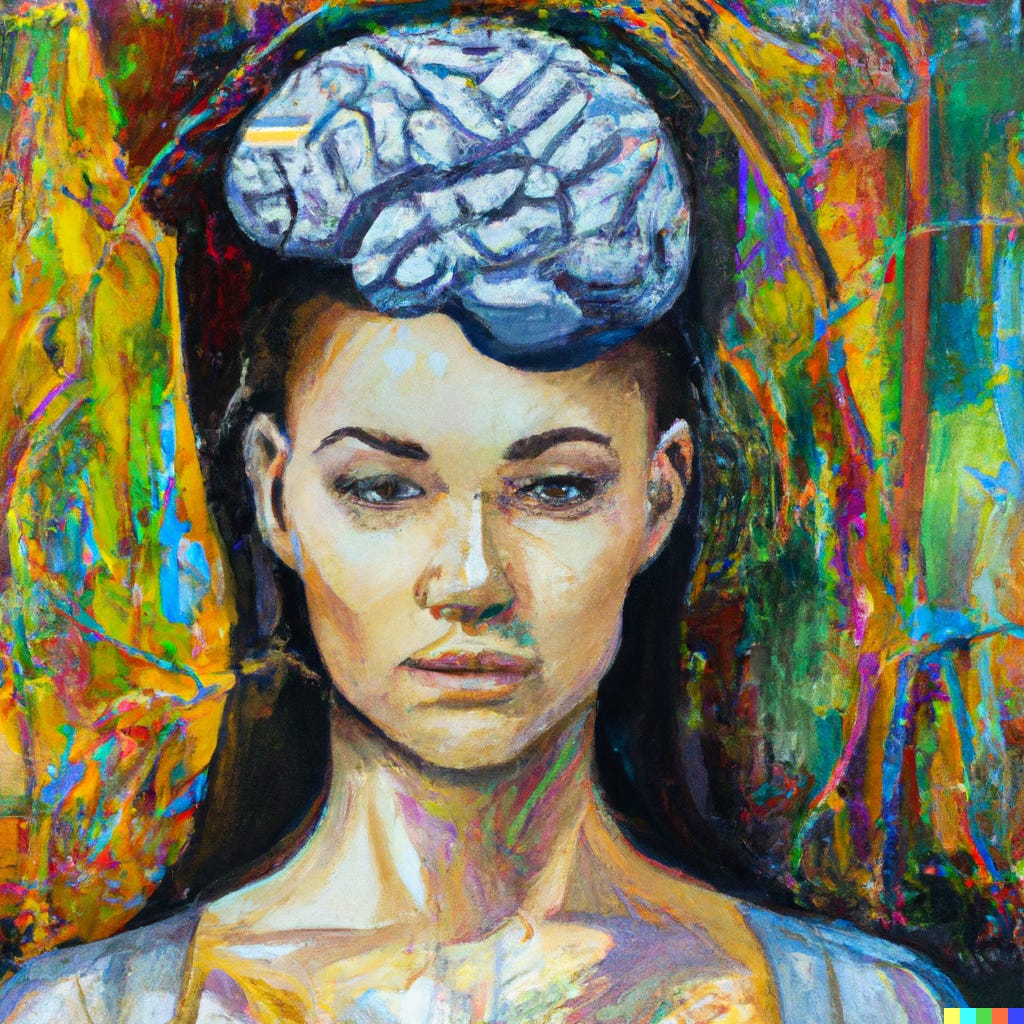
The cause of the development of the human brain is complex and multifaceted. It is likely that a combination of genetic, environmental, and cultural factors contributed to the evolution of the human brain.
One of the key factors that likely contributed to the development of the human brain is natural selection. Early human ancestors with larger and more complex brains were likely better equipped to survive and reproduce in their environment. For example, a larger brain would have enabled early humans to develop advanced cognitive abilities such as problem-solving, tool-making, and communication, which would have been critical for survival in a changing environment.
Another important factor was the shift from a primarily arboreal to a terrestrial lifestyle, which would have placed new demands on the body and the brain, such as increased need for balance, coordination, and fine motor control. This would have led to the development of specialized brain regions such as the cerebellum, which is responsible for motor control and coordination.
The environment also played a significant role in the development of the human brain. The brain is a highly energy-intensive organ, and the availability of food and other resources would have been a major factor in the evolution of the brain. As human ancestors developed new technologies such as tools and weapons, they would have been able to access new sources of food and other resources, which would have allowed their brains to grow larger and more complex.
Cultural factors also played a role in the development of the human brain. Early human societies would have developed complex social structures, languages, and cultures, which would have placed new demands on the brain. For example, the development of language would have required specialized brain regions for speech and language processing, such as Broca's and Wernicke's areas.
In summary, the development of the human brain was likely caused by a combination of genetic, environmental, and cultural factors. Natural selection, the shift from an arboreal to terrestrial lifestyle, the availability of food, and the development of complex social structures and cultures all likely played a role in the evolution of the human brain.