
Forgetting Is Ending
How AI May Be Making the Past Permanent

For most of human history, forgetting was built in.
Memories faded. Records decayed. Mistakes softened with time.
That is no longer true.
AI systems are quietly turning the past into something durable, searchable, and actionable forever. Not just what you said publicly, but what you clicked, where you went, who you resembled statistically, and what patterns your life produced.
This is not about surveillance.
It is about permanence.
When nothing fades, forgiveness stops working the way it used to.

Forgetting Was a Feature
Societies did not rely on perfect memory. They relied on decay.
Old records were lost. Context disappeared. Reputations reset. People changed, and the past loosened its grip. Philosophers and legal scholars have long argued that forgetting is essential for moral growth and social repair (Nietzsche 1887; Ricoeur 2004).
Forgetting was not weakness.
It was a stabilizer.
AI Turns Memory Into Infrastructure
AI systems thrive on retention. The more data they hold, the better they predict. That creates pressure to store everything. Indefinitely.
Search engines archive. Platforms log. Models train on historical behavior. Risk systems incorporate past signals long after they lose relevance.
Researchers studying algorithmic decision making note that past data increasingly determines future access, even when circumstances change (Citron 2007).
The past stops being background.
It becomes input.
When History Becomes a Score
In many systems, memory is no longer passive. It is operational.
Credit decisions. Hiring filters. Content visibility. Trust and safety flags. These systems do not ask whether you have changed. They ask whether your data says you resemble someone who once did something undesirable.
This creates what sociologists call reputational lock in. Once flagged, always shadowed (Pasquale 2015).
You are not punished again.
You are never fully released.
Forgiveness Requires Forgetting
Forgiveness depends on time. On context loss. On the ability to say, that was then. This is now.
When AI systems continuously surface past behavior, forgiveness becomes irrational. Why forgive if the system will not forget. Why move on if history keeps resurfacing automatically.
Moral philosophers warn that permanent memory undermines the conditions required for responsibility and redemption (Arendt 1958).
Without forgetting, accountability turns into life sentence.
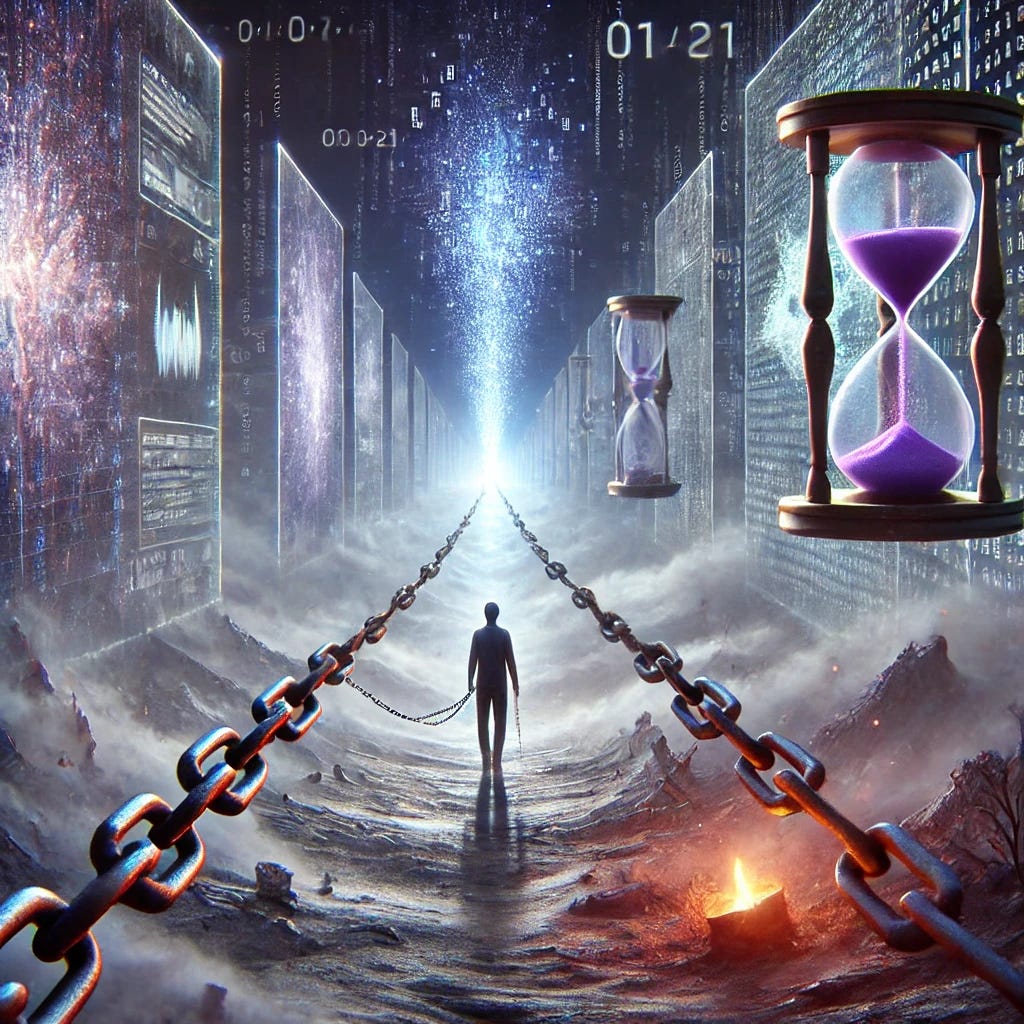
Institutions Are Not Ready for This
Law still assumes decay. Statutes of limitations. Juvenile records. Expungement. These mechanisms exist because societies recognize that permanent judgment is destabilizing.
AI bypasses this logic. Even when records are legally erased, statistical traces remain. Models retain patterns even after formal deletion. Scholars studying machine learning note that trained systems can continue to encode information long after source data is removed (Carlini et al. 2021).
The law forgets.
The model remembers.
The Psychological Cost
Living in a world that never forgets changes behavior.
People self censor. They avoid experimentation. They smooth themselves into safe versions. Psychologists link persistent record keeping to increased anxiety and reduced risk taking, especially among young people (Bauman and Lyon 2013).
The future narrows when the past never loosens.
Why This Feels Invisible
There is no single moment where permanence is announced. No switch flips. No warning appears.
It happens quietly.
Through better recommendations.
More accurate predictions.
Cleaner risk models.
By the time people feel constrained, the system is already normalized.
What Comes Next
Some propose technical fixes. Data expiration. Model retraining. Right to be forgotten laws. These help, but they fight incentives.
Prediction improves with memory.
Control improves with history.
As long as AI systems are rewarded for accuracy, forgetting will look like inefficiency.
And inefficiency rarely survives optimization.
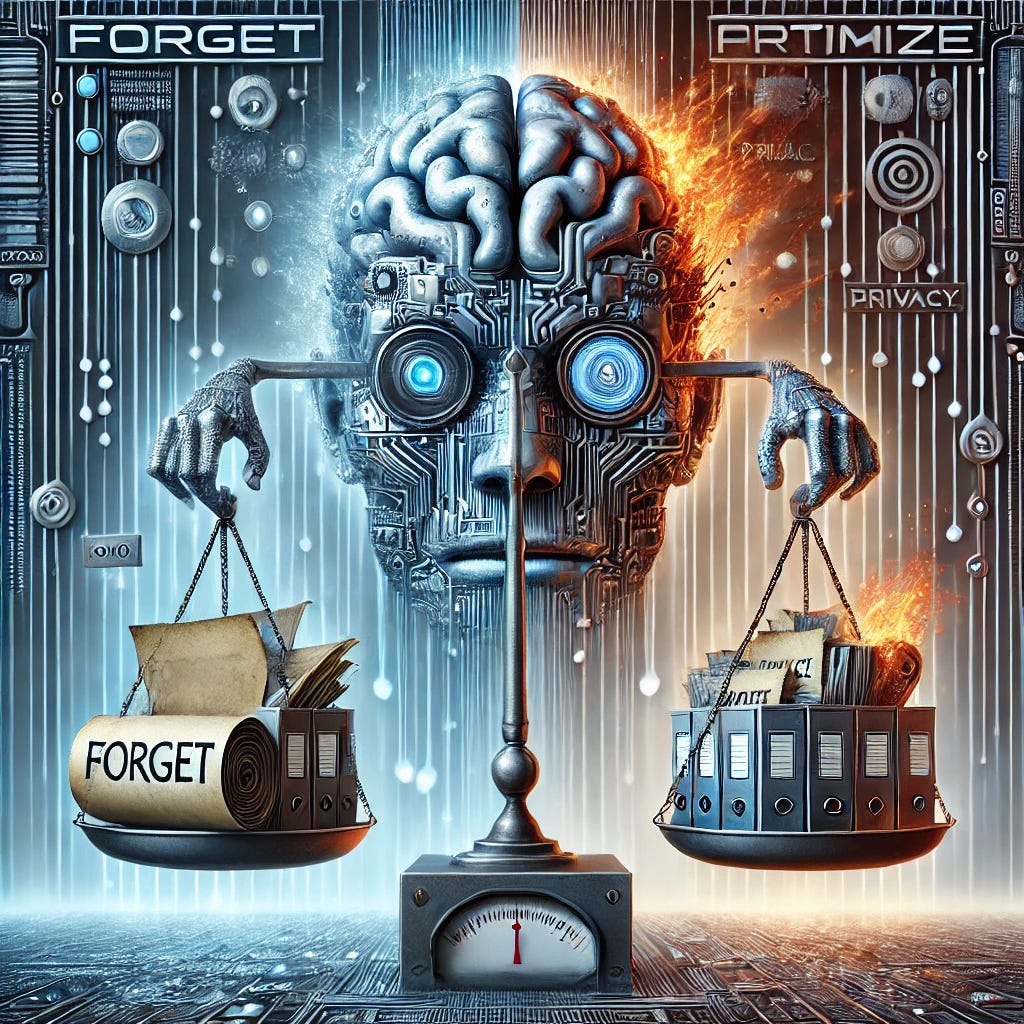
AI does not punish people directly.
It remembers them.
When memory becomes permanent, forgiveness becomes fragile. Growth becomes harder to prove. Identity becomes sticky.
A society that cannot forget cannot move on.
The danger is not that AI will judge us forever.
It is that it will never stop remembering.
And once the past becomes infrastructure, the future loses room to breathe.
References
Arendt, H. (1958). The Human Condition. University of Chicago Press.
Bauman, Z., & Lyon, D. (2013). Liquid Surveillance. Polity Press.
Carlini, N., et al. (2021). Extracting training data from large language models. USENIX Security Symposium.
Citron, D. K. (2007). Technological due process. Washington University Law Review, 85(6), 1249–1313.
Nietzsche, F. (1887). On the Genealogy of Morals.
Pasquale, F. (2015). The Black Box Society. Harvard University Press.
Ricoeur, P. (2004). Memory, History, Forgetting. University of Chicago Press.
Does past data equal new data? Can we improve and move on to the new real?
This piece nails the overlooked tension between permanence and redemption. The comparison to statues of limitions is clever but misses something: legal forgetfulness was always aspirational,never complete. People remembered, communities gossiped, and reputational damage stuck around inforamlly. What AI does is formalize that shadow memory and make it queryable at scale. I've seen this in hiring contexts where candidates get dinged for decade-old blog posts that no longer reflect thier views.