
Confidence Inflation
Why AI Makes Everyone Sound Certain

Something subtle has changed in how people speak.
You’ve probably noticed it. Conversations feel more polished. Explanations sound cleaner. Opinions come faster. Answers arrive with structure, clarity, and authority.
Everyone sounds more confident.
But confidence didn’t suddenly increase because people understand more.
It increased because AI helps people sound like they understand more.
That difference matters.
We are entering a world where expressing certainty is easier than developing it. Where articulation is abundant but understanding is uneven. Where sounding right and being right are starting to drift apart.
Confidence used to signal competence.
Now it often signals access.
And most people have not fully processed what that means yet.
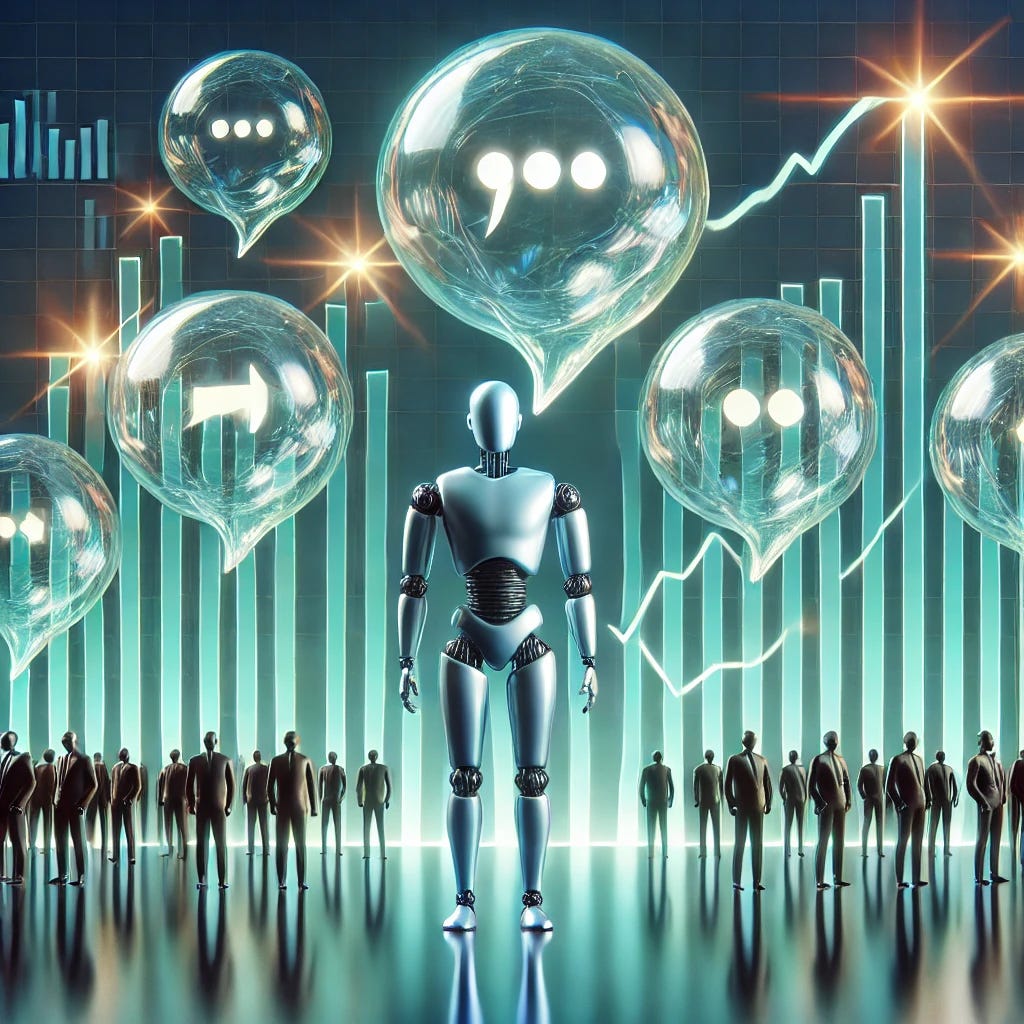
Confidence Used to Be Expensive
Historically, confidence required work.
To speak clearly about something, you had to struggle through confusion first. You had to read, test, fail, rethink, and refine. Confidence emerged slowly because understanding takes time to build.
Psychologists call this calibration. The alignment between what you believe you know and what you actually know (Moore and Healy 2008).
That calibration process depended on friction. Effort. Uncertainty. Feedback from reality.
AI removes much of that friction.
Now you can ask a system to explain a topic, structure an argument, summarize research, or generate a professional response in seconds. The output is coherent. It flows logically. It sounds informed.
But the user may never pass through the stages that used to produce genuine confidence.
The performance appears instantly. The understanding may not.
Language Is No Longer Evidence of Understanding
Humans rely heavily on communication cues to judge competence. Clear language signals mastery. Structured reasoning signals expertise. Fluency signals knowledge.
These shortcuts usually worked because producing high quality explanation was difficult.
AI changes that.
Large language models are trained to produce statistically coherent text. They generate responses that sound informed because they mirror patterns of expert communication (Bender et al. 2021). The system does not need deep conceptual grounding to produce persuasive language.
That means language quality is no longer reliable evidence of understanding.
This is a structural shift in how humans evaluate one another.
If everyone can produce expert sounding explanations, communication stops filtering competence.
The Social Spread of Artificial Confidence
Confidence is socially contagious.
When people hear clear, decisive answers, they tend to accept them. Research in judgment and decision making shows that perceived confidence strongly influences credibility, often more than accuracy (Price and Stone 2004).
AI amplifies this effect at scale.
People bring AI-refined ideas into meetings, classrooms, social media, and professional environments. The arguments are smoother. The tone is more authoritative. Hesitation disappears.
The result is an environment saturated with polished certainty.
But that certainty is not evenly distributed across real understanding.
Over time, this changes social expectations. Speaking tentatively begins to feel like incompetence. Expressing uncertainty feels like weakness. Fast answers become the norm.
The culture shifts toward performance of knowledge rather than demonstration of knowledge.

When AI Is Confident and Wrong
This is where the risk becomes serious.
AI systems can generate fluent explanations that are completely incorrect. These are often called hallucinations, but the more important point is how they sound. The errors are delivered with the same clarity and structure as correct information.
Studies consistently show that language models can produce false statements that users judge as credible because of their presentation quality (Ji et al. 2023).
This creates a dangerous combination.
AI can increase confidence while simultaneously increasing error exposure.
Humans are not naturally good at detecting mistakes that are presented clearly. Persuasion research shows that coherence and fluency strongly increase perceived truth, even when content is false (Alter and Oppenheimer 2009).
In other words, AI can make wrong ideas feel stable.
And when users repeat those ideas, the confidence transfers with them.
The system does not just generate information. It generates conviction.
The Calibration Problem
Human judgment depends on feedback loops. You act, observe results, adjust beliefs.
AI can interrupt this loop.
If people rely on AI to interpret outcomes, explain failures, or propose next steps, they may never experience the friction needed to recalibrate their own confidence levels.
Research on automation shows that humans often over-trust systems that appear competent, especially when outputs are consistent and well structured (Lee and See 2004).
Over time, individuals lose the ability to estimate when they are uncertain. Confidence becomes decoupled from internal evaluation and tied instead to external output quality.
This is not just an information problem.
It is a cognitive adaptation problem.
The Long Term Cultural Shift
If confidence becomes easy to generate, it stops functioning as a signal.
Historically, confidence helped groups allocate trust. Who should lead. Who should decide. Who understands the situation.
When confidence is abundant, trust becomes harder to distribute.
Groups must either verify everything more carefully or accept higher error rates. Both outcomes carry costs. Verification slows systems down. Blind acceptance increases systemic risk.
Epistemic authority becomes unstable.
Philosophers of knowledge have long argued that trust networks are essential for coordinated societies (Goldman 1999). If signals of credibility become unreliable, those networks weaken.
AI does not need to spread misinformation to produce this effect.
It only needs to make confidence easy.
The New Skill: Confidence Control
The most important adjustment may not be technological. It may be psychological.
People will need to relearn how to interpret confidence signals. Both in others and in themselves.
That means asking different questions.
How much of this explanation do I actually understand without assistance.
Where could this be wrong.
What would falsify this claim.
Am I confident, or does the output simply sound confident.
These are metacognitive skills. Skills about thinking about thinking.
Ironically, the more fluent AI becomes, the more valuable intellectual humility becomes.
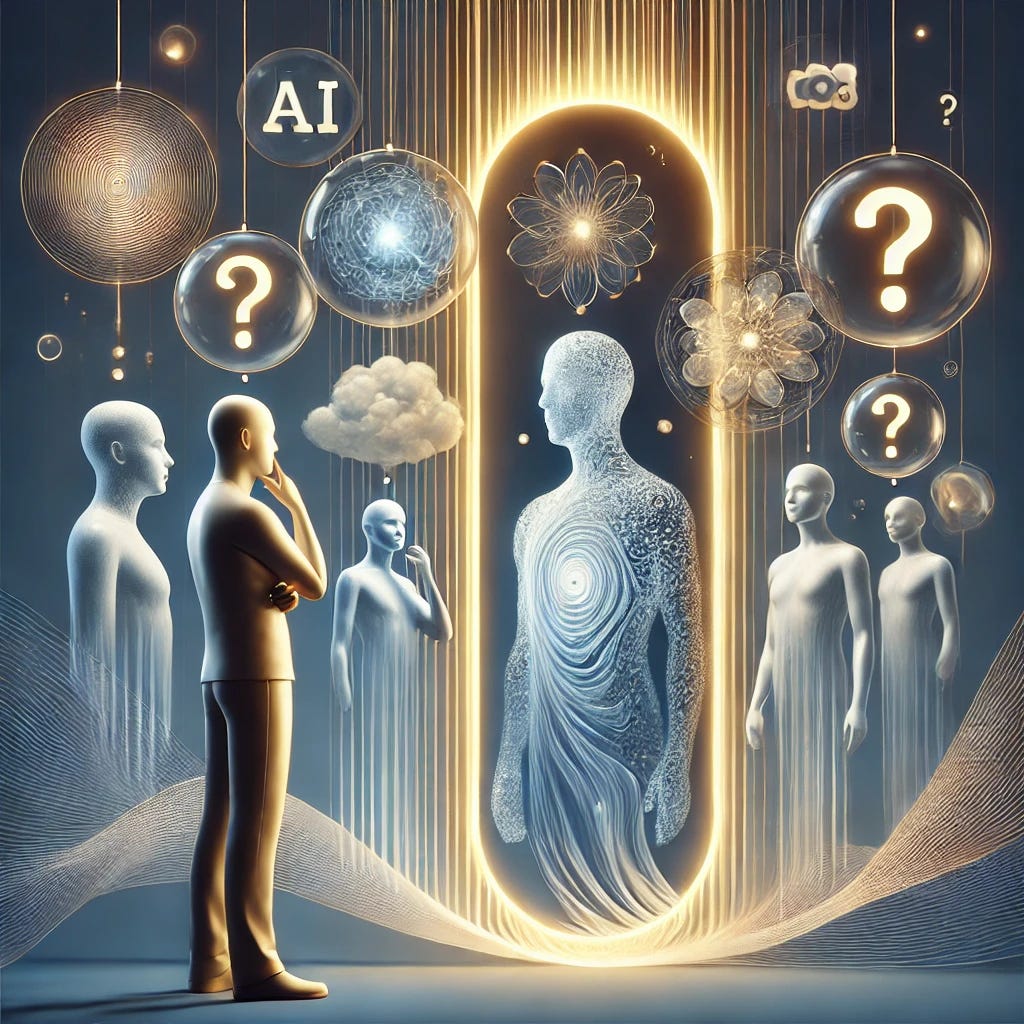
AI is not just changing what we know.
It is changing how certain we feel.
Confidence used to emerge from understanding. Now it can be generated on demand. That shift is subtle, but it reshapes communication, trust, and decision making.
The risk is not that people will believe obvious falsehoods.
The risk is that the emotional signal of certainty will stop meaning what it used to mean.
When confidence becomes cheap, judgment becomes harder.
And when judgment becomes harder, societies become more fragile than they appear.
References
Alter, A. L., & Oppenheimer, D. M. (2009). Uniting the tribes of fluency to form a metacognitive nation. Personality and Social Psychology Review, 13(3), 219–235.
Bender, E. M., Gebru, T., McMillan-Major, A., & Shmitchell, S. (2021). On the dangers of stochastic parrots. Proceedings of the 2021 ACM Conference on Fairness, Accountability, and Transparency.
Goldman, A. I. (1999). Knowledge in a Social World. Oxford University Press.
Ji, Z., Lee, N., Frieske, R., Yu, T., Su, D., Xu, Y., et al. (2023). Survey of hallucination in natural language generation. ACM Computing Surveys.
Lee, J. D., & See, K. A. (2004). Trust in automation. Human Factors, 46(1), 50–80.
Moore, D. A., & Healy, P. J. (2008). The trouble with overconfidence. Psychological Review, 115(2), 502–517.
Price, P. C., & Stone, E. R. (2004). Intuitive evaluation of likelihood judgment producers. Journal of Behavioral Decision Making, 17(5), 339–359.
Enjoyed reading this article and it is so revealing of the error in which we are. Over reliance on Gen AI may end up creating a mass of people with no critical minds😂
Excellent analysis. Indeed AI is starting to change us for the better. And it’s not temporary or fleeting. It only takes an open mind.