
Chess Personality and Emotion
Exploring ChatGPT

There are several different types of chess personalities or playing styles that can be identified among chess players. These include aggressive players, defensive players, tactical players, positional players, and creative players.
Aggressive players tend to focus on attacking their opponents and creating threats on the board. They often sacrifice material for the sake of gaining a strong attack and may take risks in order to achieve this. They may also be more prone to making mistakes, as they can be overly-eager to attack.
Defensive players, on the other hand, tend to focus on protecting their own pieces and maintaining control of the board. They may be less inclined to take risks and may be more patient in waiting for the right opportunity to strike. They can be difficult to beat as they are less likely to make mistakes.
Tactical players are skilled at finding and exploiting tactical opportunities on the board. They are able to quickly recognize patterns and combinations that can lead to a win, and they may be able to take advantage of their opponents' mistakes.
Positional players are skilled at controlling key squares and building up a strong pawn structure. They may be less concerned with short-term tactics and more focused on long-term plans. They may also be less inclined to sacrifice material.
Creative players are known for their ability to come up with original and unexpected moves. They may be more inclined to play unorthodox openings and may be less concerned with following established theory.
The development of these chess personalities may depend on a variety of factors, including a player's natural inclinations, their experiences and successes (or failures) on the board, and the types of players they have encountered and studied. As a player becomes more experienced, they may also develop a more well-rounded playing style, incorporating elements of different personalities.
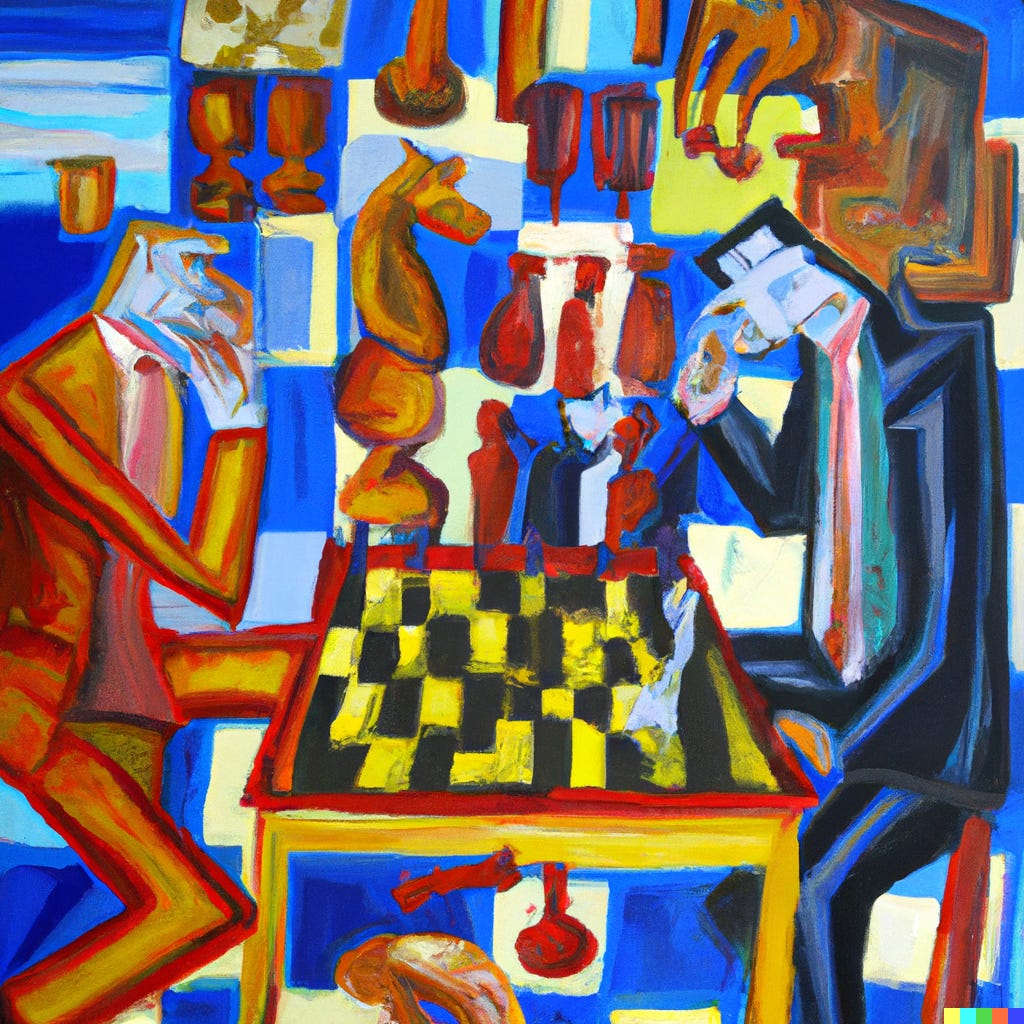
Emotions can play a significant role in chess, both positively and negatively impacting a player's performance.
Positive emotions such as confidence, motivation, and focus can help a player to perform at their best. Confidence in one's own abilities can lead to bold and decisive play, while motivation can help a player to stay focused and engaged throughout a game. Positive emotions can also help a player to stay calm under pressure and to think clearly in difficult situations.
Negative emotions, on the other hand, can have a detrimental effect on a player's performance. Fear, anger, frustration, and anxiety can all lead to poor decision making and errors on the board. Fear of losing can lead to a defensive mindset and an unwillingness to take risks, while anger and frustration can cause a player to make impulsive and reckless moves. Anxiety can also lead to a lack of focus and difficulty in making decisions.
Emotions can also impact a player's ability to handle stress and pressure. A player who is able to stay calm and composed under pressure will be better able to think clearly and make good decisions, while a player who is easily overwhelmed by stress may struggle to perform at their best.
The role of emotions in chess can also be affected by the type of player, their level of experience and their personality. Some players may be more naturally emotional and may find it more difficult to control their emotions during a game, while others may be better able to maintain a level of emotional detachment.
In conclusion, emotions can have a significant impact on a chess player's performance. Positive emotions can help to improve decision making and focus while negative emotions can lead to mistakes and poor decisions. Being aware of one's emotions, learning how to manage them and developing strategies to deal with stress, pressure and anxiety can help players to play at their best and reach their full potential.