
Authenticity Industry
Why Being Yourself Became a Job

Every generation claims to value authenticity. We say we want people who are real, unfiltered, honest. We worship transparency, despise hypocrisy, and demand that others reveal themselves completely.
Yet something feels wrong. The more we perform authenticity, the less believable it becomes. The world has turned sincerity into a style, vulnerability into currency, and truth into marketing.
Perhaps authenticity is not freedom. Perhaps it is just another costume that must be worn to belong.
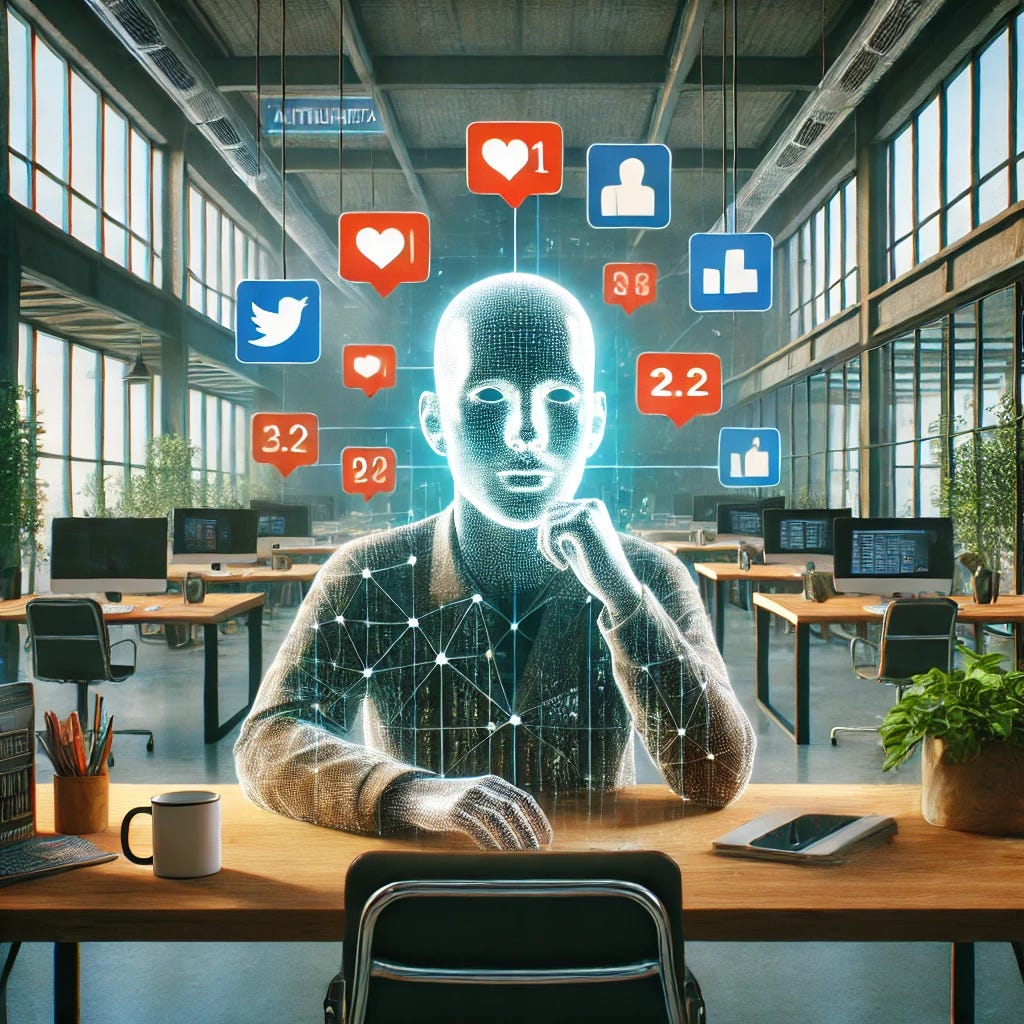
The Birth of the Real
The modern hunger for authenticity began as rebellion. Romanticism in the nineteenth century tried to rescue individuality from the mechanical world. Artists rejected conformity and sought purity of emotion. To be authentic meant to resist imitation, to express one’s inner truth rather than society’s expectations.
But the rebellion was quickly absorbed. What began as opposition became another cultural product. As philosopher Jean Baudrillard (1981) observed, modern society does not destroy rebellion; it reproduces it as image. Even dissent becomes design. The authentic self was soon branded, marketed, and sold back to us in curated fragments of uniqueness.
We started performing honesty the way our ancestors performed virtue.
The Performance of Sincerity
We live in an era where everyone is visible all the time. Social media turned the private mind into public theater. The more we share, the more we must manage what we share.
Sincerity has become strategy. People confess online not to be known but to be liked for being known. Vulnerability is now a competitive advantage. Those who appear the most “real” often master it as an aesthetic.
As media theorist Joshua Meyrowitz once noted, visibility changes behavior. The audience reshapes the actor. We cannot be real when we are aware of being seen.
The moment authenticity becomes conscious, it ceases to exist.
The Market of Emotion
Modern capitalism thrives on the illusion of uniqueness. The consumer must believe that personal expression can be purchased. A product sells not because it is needed but because it promises to reveal who we truly are.
The system flatters individuality but demands conformity. Everyone is encouraged to be themselves, but only within acceptable boundaries. Even rebellion has a price tag.
Byung-Chul Han (2017) wrote that in the digital age, transparency has replaced mystery. We have turned emotion into data, and data into profit. The soul has become quantifiable. What was once confession has become analytics.
In such a world, authenticity can only exist as performance.
The Industrialization of Self
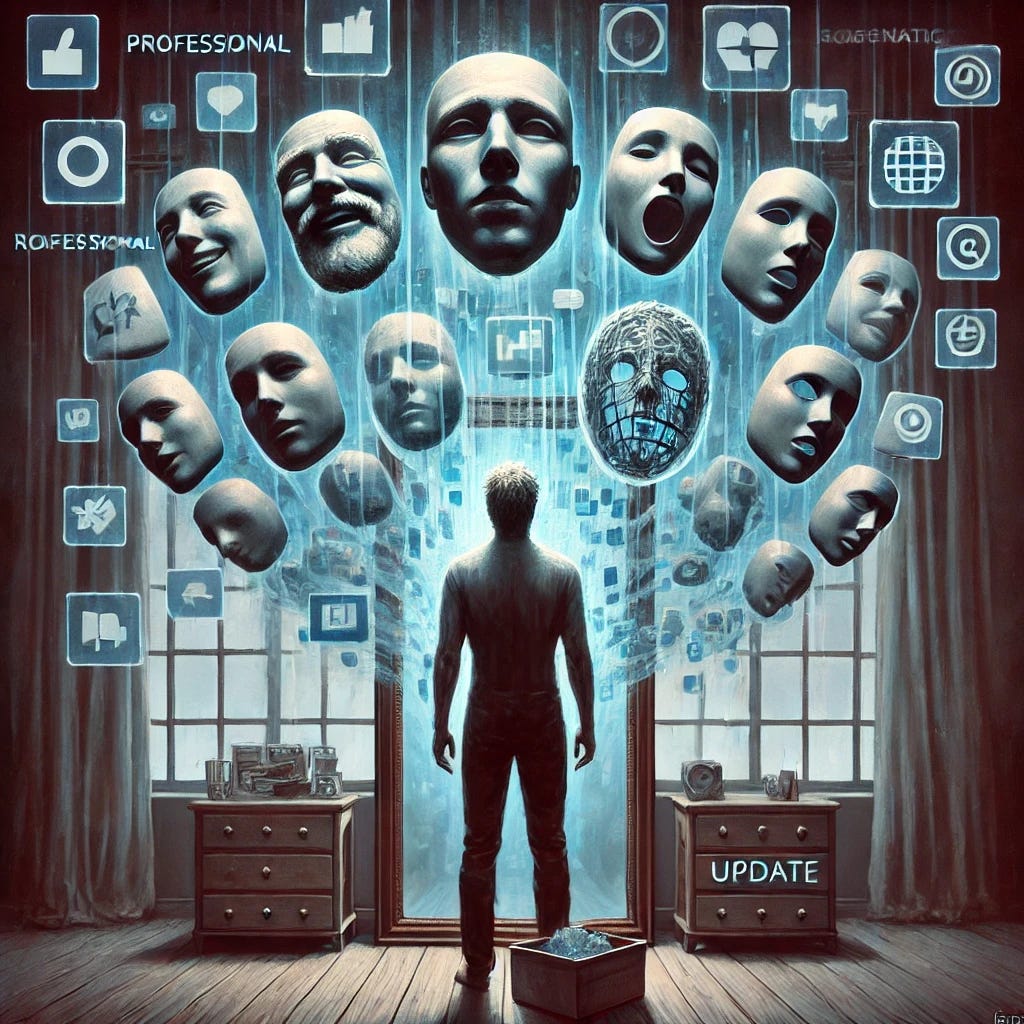
Human beings have always played roles, but the modern age industrialized them. The sociologist Erving Goffman (1959) described social life as theater long before the internet. We switch between masks, professional, romantic, familial, believing that one of them must be the real one.
But there is no final mask underneath the others. The act is all there is.
Identity, once considered essence, now behaves like software, constantly updated, versioned, and archived. The self is not discovered but maintained. The cost of that maintenance is exhaustion.
We call this flexibility freedom, but it feels more like erosion.
The Anxiety of Being Seen
Visibility has replaced intimacy. The moment something is witnessed, it begins to transform into performance. A relationship is no longer private when the audience is always watching. Even solitude feels performative when it must be documented to exist.
The modern self lives in anticipation of observation. We check our reflections, our profiles, our reputations. Every opinion becomes a statement, every silence an interpretation.
Psychologically, this creates an impossible demand. To be authentic, we must ignore the gaze of others, yet our sense of self depends entirely on it. We want to be seen and invisible at the same time.
The result is not truth, but paralysis.
The Morality of Exposure
Society now treats authenticity as moral superiority. We admire people who “speak their truth,” no matter how cruel or empty it may be. We confuse disclosure with depth.
Honesty is not always virtue. To reveal everything is not to be real. It can be another form of manipulation, a way to control the narrative before anyone else can.
Foucault (1976) observed that confession was one of the Church’s greatest technologies of control. The believer’s truth became a weapon against them. Modern culture repeats the same ritual. We expose ourselves to prove innocence and call it empowerment.
Transparency is not liberation. It is surveillance disguised as trust.
The Loneliness Beneath Openness
The paradox of authenticity is that it promises connection but often deepens isolation. The more we confess, the less mystery remains between us. The sacred space of not-knowing, the distance where imagination and empathy live, collapses.
Real intimacy requires privacy. It depends on silence, on what remains unsaid. But a world addicted to exposure cannot bear silence. It fills every pause with noise.
What passes for honesty today is often just panic at the thought of being unseen.
The Spiritual Cost
The pursuit of authenticity once belonged to philosophy and religion. It was about discovering what endures beneath illusion. But now that search has become material. We seek ourselves in mirrors instead of meditation.
The mystics spoke of losing the self to find what is real. They sought authenticity through surrender, not display. By contrast, modern authenticity demands attention to confirm existence. It replaces inward knowing with outward validation.
In trying to prove we are real, we become less alive.
The Return of the Secret
Perhaps authenticity cannot be performed. Perhaps it can only be lived quietly.
To be real may not mean to reveal, but to resist. To refuse the compulsion to display everything. To let something inside remain untouched by explanation.
The truest parts of life, love, faith, art, grief, thrive in secrecy. They dissolve when exposed. We do not need to make them visible. We only need to protect them from the market that wants to own them.
The secret is not deception. It is sanctuary.

Authenticity Industry suggests that modern authenticity is not the return of sincerity but its collapse. Baudrillard’s theory of simulation, Foucault’s history of confession, and Han’s critique of transparency all point to the same truth: the age of exposure has made honesty impossible.
The future of authenticity may depend not on saying more, but on saying less. Not on sharing everything, but on rediscovering silence.
In a world that demands revelation, the last act of freedom may be to remain unknown.
References
Baudrillard, J. (1981). Simulacra and Simulation. Éditions Galilée.
Foucault, M. (1976). The History of Sexuality, Volume 1: An Introduction. Pantheon Books.
Goffman, E. (1959). The Presentation of Self in Everyday Life. Doubleday.
Han, B.-C. (2017). Psychopolitics: Neoliberalism and New Technologies of Power. Verso Books.
Meyrowitz, J. (1985). No Sense of Place: The Impact of Electronic Media on Social Behavior. Oxford University Press.
I’ll work on some this week
O futuro da autenticidade pode depender não de dizer mais, mas de dizer menos. Não de compartilhar tudo, mas de redescobrir o silêncio.
Num mundo que exige revelação, o último ato de liberdade pode ser permanecer desconhecido. Resumkj!