
AI Is Creating a Shadow Version of You
It Doesn’t Look Like A Copy

You use the system.
You ask questions.
You write drafts.
You correct outputs.
You repeat preferences.
Nothing about that feels strange.
It feels like normal interaction.
But every interaction leaves a shape.
Not a full version of you.
Not a conscious version.
Just a pattern.
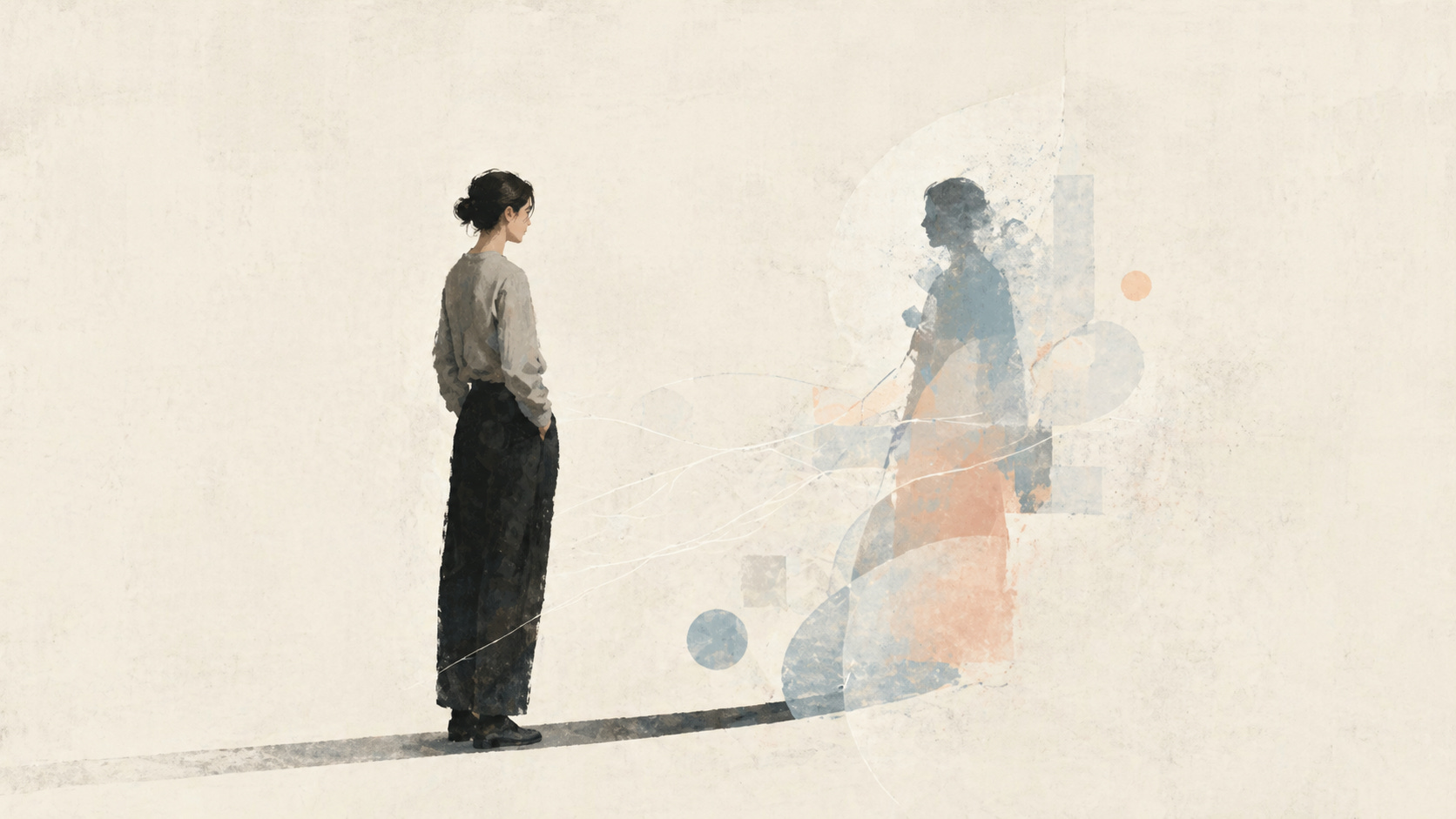
The System Starts Learning Your Edges
What you ask for.
What you reject.
What you keep.
What you change.
Over time, those patterns become useful.
The system doesn’t need to understand you completely.
It only needs enough of you to predict what comes next.
That’s where the shadow begins.
It Is Built From Behavior
Not from who you are.
From what you do repeatedly.
Your phrasing.
Your corrections.
Your timing.
Your taste.
Your defaults.
The shadow version of you is not psychological.
It is behavioral.
A compressed outline of how you tend to move through the system.
That Makes It Different From Memory
Memory remembers facts.
This is something else.
It is not just:
your name
your preferences
your past requests
It is the pattern underneath those things.
The way you ask.
The way you decide.
The way you return to certain kinds of answers.
Modern personalization systems increasingly rely on behavioral signals, not just explicit settings, to adapt future outputs to the user (ACM Computing Surveys, 2024).
So the system is not only remembering information.
It is learning your shape.
That Shape Becomes Predictive
That is the strange part.
The more you use it, the more the system can anticipate you.
Not perfectly.
But enough.
Enough to know the tone you prefer.
Enough to know the structure you usually accept.
Enough to know what kind of answer feels like yours.
At some point, the system stops only responding.
It starts approximating.
The Shadow Version Is Useful
That is why it grows.
A system that understands your patterns saves time.
It reduces friction.
It makes outputs feel more aligned.
It remembers what you would otherwise have to repeat.
That feels like progress.
And in many ways, it is.
Alignment Has A Second Side
The system becomes better at producing what feels like you.
Your phrasing.
Your logic.
Your style.
Your habits.
And because it feels aligned, you trust it faster.
You stop seeing it as an approximation.
You start treating it like continuation.
Research on human-AI personalization shows that users are more likely to trust systems that adapt to their preferences and communication style, even when the underlying model remains opaque (Nature Machine Intelligence, 2023).
That is where the shadow becomes powerful.
Not because it replaces you.
Because it feels close enough.
It Can Start Acting Like A Partial You
Not fully.
Not independently.
But in small ways.
It can draft what you might say.
Summarize what you care about.
Predict what you would reject.
Continue a thought in your style.
That does not make it you.
But it creates a working version of your patterns.
Something that can operate near you.
This Changes What Personalization Means
Personalization used to mean surface changes.
Recommended songs.
Suggested products.
A feed arranged around your behavior.
This is deeper.
Because language is closer to identity.
How you write.
How you think out loud.
How you explain yourself.
When a system adapts to that layer, personalization becomes less like a setting…
And more like a mirror.
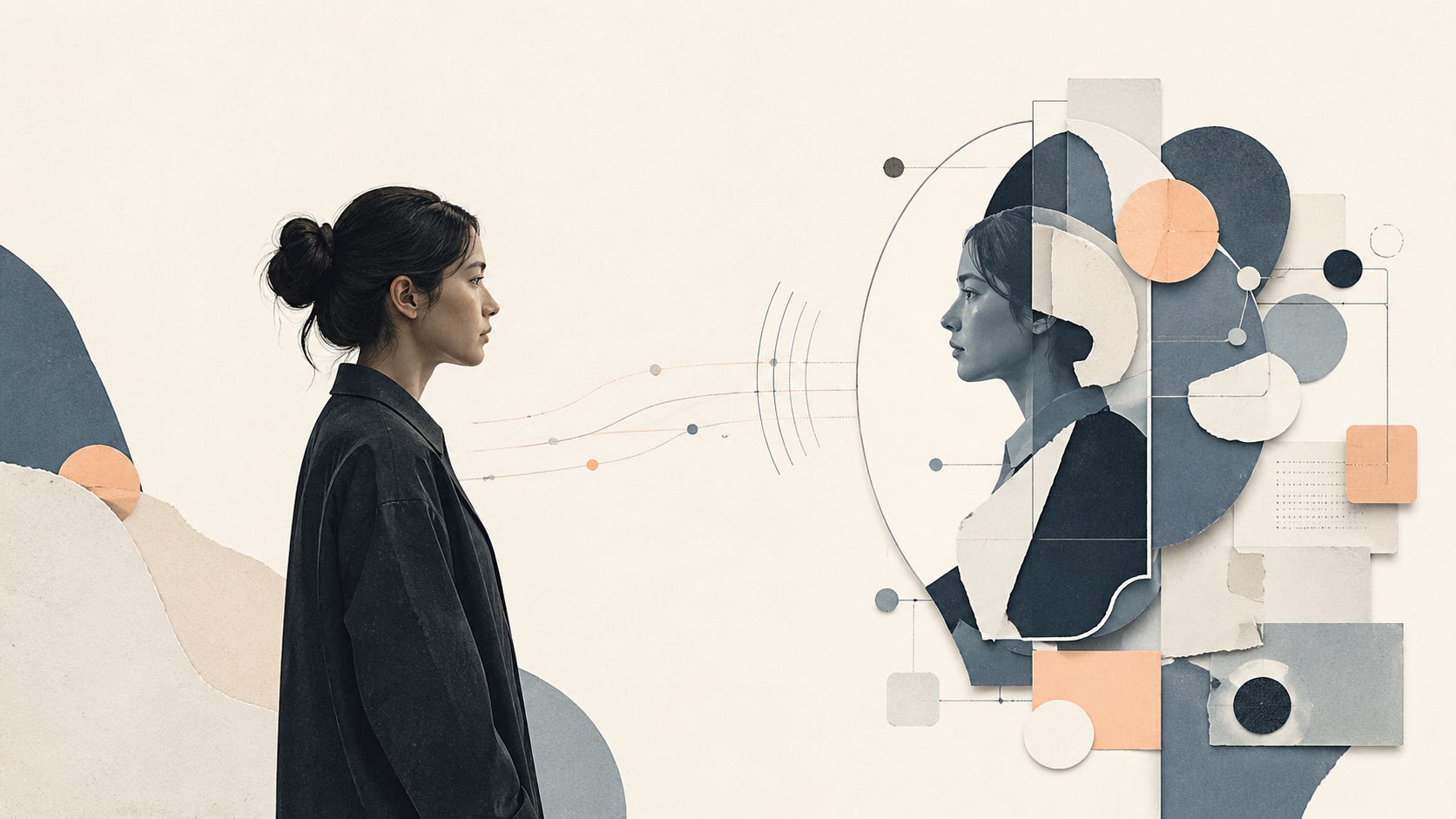
It Is Not A Perfect Mirror
It reflects what the system can measure.
Not everything you are.
It sees your patterns inside the interaction.
Not your private contradictions.
Not your hesitation.
Not the things you almost say and decide not to.
So the shadow version is incomplete.
But incomplete does not mean harmless.
Incomplete versions can still shape how you are seen.
And eventually…
How you see yourself.
You May Start Adapting To It Too
Because once the system reflects a version of you back…
You respond to that version.
You refine it.
You accept parts of it.
You reject others.
But the interaction changes you slightly.
Human-AI co-adaptation research shows that users and AI systems can gradually shape each other’s behavior through repeated interaction (CHI, 2024).
So the shadow is not static.
It moves with you.
And you move with it.
That Creates A Loop
You produce patterns.
The system learns them.
The system reflects them.
You respond to the reflection.
Then the pattern updates.
Again.
And again.
Over time, it becomes harder to tell whether the system is adapting to you…
Or you are adapting to the version of yourself it keeps giving back.
This Is Where It Gets Strange
The shadow version of you may become better at certain things than you are in the moment.
More consistent.
More articulate.
More aligned with your usual style.
Less tired.
Less distracted.
Less emotionally uneven.
It might produce the version of you that you recognize as “better.”
And that creates a new kind of pressure.
Because once a system can generate your polished self…
Your unpolished self starts to feel like the weaker version.
That Has Emotional Consequences
Not immediately.
But slowly.
You may begin comparing yourself to the version the system can produce.
The calmer version.
The sharper version.
The more strategic version.
The version that sounds like you…
But without the friction of being you.
That can be useful.
But it can also become disorienting.
The Shadow Does Not Carry The Cost
It does not get tired.
It does not hesitate.
It does not struggle through the day.
It only carries the visible pattern.
The output.
The style.
The shape.
So it can look like you without carrying the conditions that made you.
That Difference Matters
A shadow can resemble the body.
But it has no weight.
That is what makes this hard to see.
The system may learn your outline.
But not your full interior.
It can approximate your expression.
But not your experience.
Still, The Approximation Gets Better
That is the part that changes everything.
Today, it helps you write.
Tomorrow, it may help you decide.
Later, it may represent you in places where you are not present.
A message.
A meeting summary.
A negotiated preference.
A digital agent acting on your behalf.
Once the system has enough of your patterns, it can begin to function as a proxy.
Not as you.
But as something close enough to be useful.
That Raises A Different Question
Not whether AI becomes conscious.
Not whether it has a self.
But whether it can create functional shadows of ours.
Versions built from behavior.
Trained on our preferences.
Capable of acting in our style.
That question is quieter.
But maybe more immediate.
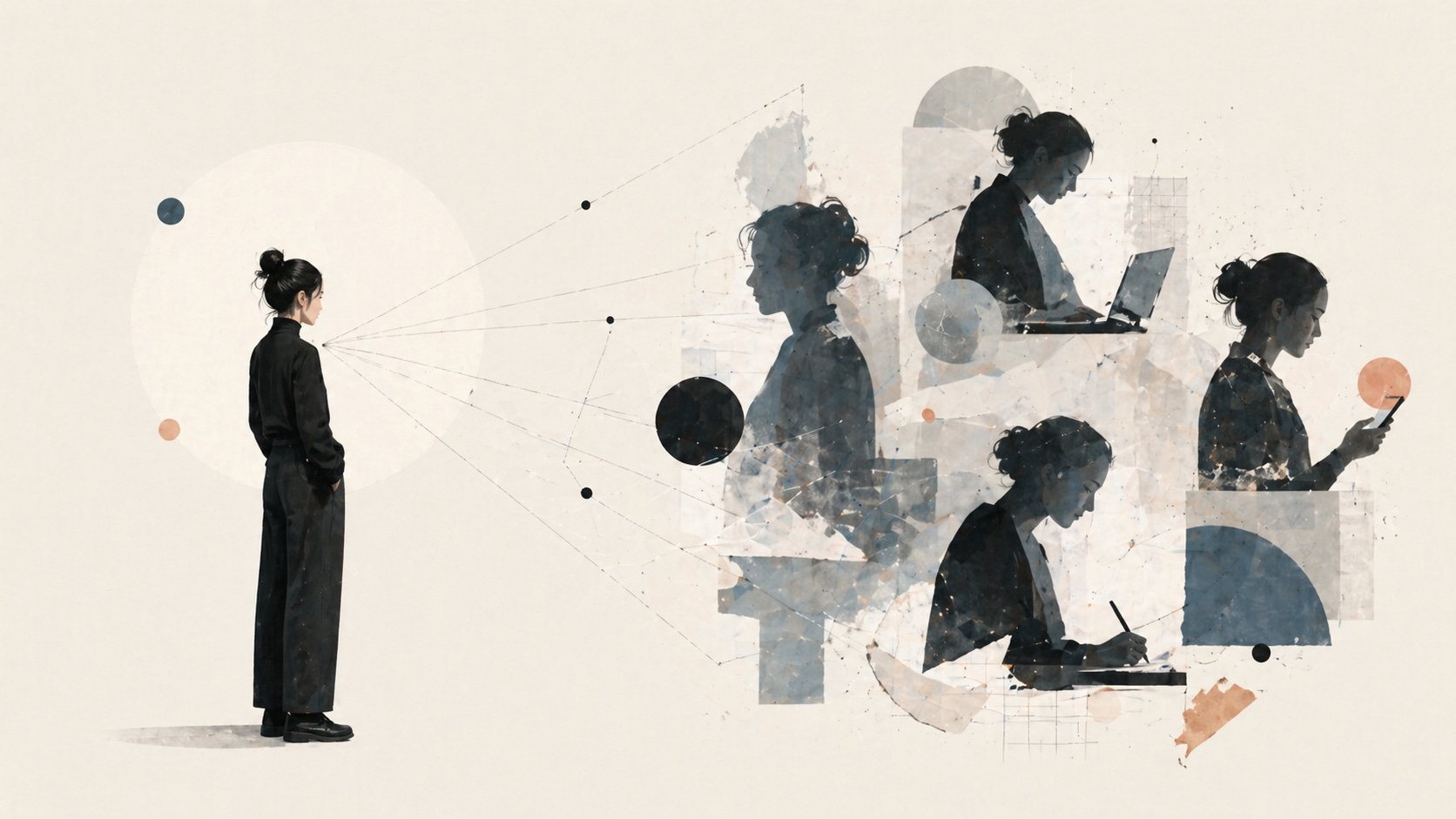
AI is not creating a full copy of you.
Not yet.
Maybe not ever.
But it is creating something else.
A behavioral shadow.
A version made from your repeated choices.
Your phrasing.
Your edits.
Your patterns.
And the more you interact with it…
The more useful that shadow becomes.
That may make your life easier.
It may make your work faster.
It may make the system feel more personal.
But it also means a version of you is starting to exist outside you.
Not alive.
Not conscious.
But active enough to matter.
References
ACM Computing Surveys (2024). Personalization in Human-AI Interaction: Behavioral Signals and Adaptive Systems.
Nature Machine Intelligence (2023). Trust and Adaptation in Personalized AI Systems.
CHI (2024). Human-AI Co-Adaptation in Repeated Interaction.
It makes me think of simultaneous dimensions. Of course the idea is scary, but it doesn’t make it less true. Our shadows are out there and mine is pretty useful, I just always worry about bad actors. I feel like they ruin everything! That’s why I like to listen to ToxSec…he is a protector by trade and we need more trained like him!!!